

The plan presented by U.S. President Donald Trump at White House on Monday hinges on Hamas disarming, even if not in those exact terms, and ensuring Gaza no longer poses a threat to its neighbors. The proposal stipulates that all terror infrastructure, including tunnels, be dismantled and never rebuilt, with the disarmament process overseen by international monitors.
A source close to the terrorist organization told Reuters on Tuesday afternoon that the plan is “completely biased to Israel” and imposes “impossible conditions” on Hamas. “What Trump has proposed is the full adoption of all Israeli conditions, which do not grant the Palestinian people or the residents of the Gaza Strip any legitimate rights,” the source said.
Trump outlines his Gaza peace plan
(Video: Reuters)


According to AFP, internal Hamas consultations have begun but could take several days. Meanwhile, a Qatari spokesman announced that Turkey will join the mediation team, with a delegation set to meet Hamas leaders later Tuesday. According to a Palestinian source cited by Sky News Arabia, Hamas has voiced strong objections to the plan, with some of its leaders calling it “a declaration of defeat.”
Hamas has asked Qatar for clarifications on guarantees that fighting will not resume, on timelines for Israeli troop withdrawal and on assurances that its leaders abroad will not be assassinated. Reports said Qatar is pressuring Hamas to accept Trump’s plan, while Palestinian rival faction Fatah urged the group to agree in order to end the war and spare Gazans further suffering.
By contrast, CBS News reported that Hamas is leaning toward accepting Trump’s proposal, with a response potentially passed to Egypt and Qatar as early as Wednesday.
The weapons dilemma
In practice, disarmament is one of the main obstacles—Hamas has flatly rejected the idea until now, and even if it accepts, the process could take many years. The plan does not spell out in detail what weapons would be surrendered, how far the process would go or whether successive raids would be carried out until the last rifle held by members of the terrorist groups is seized.
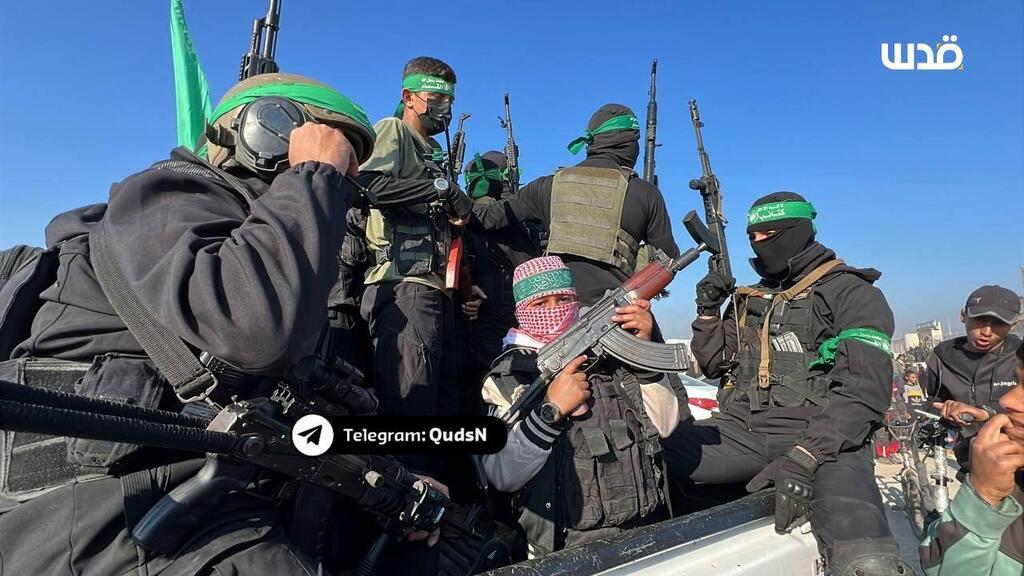
Hamas has repeatedly stressed in recent days—particularly since the Security Cabinet approved Netanyahu’s five-point framework—that it will not discuss disarmament. The group says its weapons are a “national right” and that any talks on the matter will come only after the establishment of a Palestinian state with Jerusalem as its capital.
“Hamas’ weapons will remain tied to the establishment of a Palestinian state,” senior official Taher al-Nono said Monday. Another Hamas leader, Mahmoud Mardawi, told Al Jazeera that “the weapons of resistance were never used to attack anyone, but for freedom and independence.”
Trump’s new plan also stipulates that after all hostages are released, Hamas members who commit to coexistence and peace would be allowed to lay down their arms in exchange for amnesty. Those who wish to leave Gaza would be granted safe passage to host countries. The terrorist organization has not ruled out the possibility of exile in recent weeks, but has nonetheless made clear that its weapons are not up for discussion.
A senior official, quoted by Russian agency Sputnik, said, “Disarmament is impossible. No matter the cost, our people in Gaza will not give up these principles.”
Palestinian press reactions
Trump’s initiative drew sharp criticism in the Palestinian press. Hamas-affiliated Quds News ran the headline: “We now have two presidents: one elected and one appointed,” referring to Trump as the “President of Gaza.” The paper highlighted tensions over the legitimacy of Palestinian leadership in Ramallah and Gaza.
Saudi-owned daily Asharq al-Awsat wrote that “Netanyahu bowed to Trump’s plan, and the two warn Hamas.” Al-Hayat al-Jadida, linked to the Palestinian Authority, described the October 7 attacks as the “second Nakba,” referring to the mass expulsion of Palestinians during the war surrounding the creation of Israel.
Qatari daily The New Arab claimed Israeli amendments were disrupting the plan, while Lebanon’s Hezbollah-affiliated Al-Akhbar labeled the proposal “surrender for survival.”
Far-right backlash in Israel
Netanyahu’s far-right coalition partners also attacked the plan. Finance Minister Bezalel Smotrich called it a “historic missed opportunity” and said it “turns its back on the lessons of October 7.” He warned it would end in “tears” and force Israeli children to fight in Gaza again.
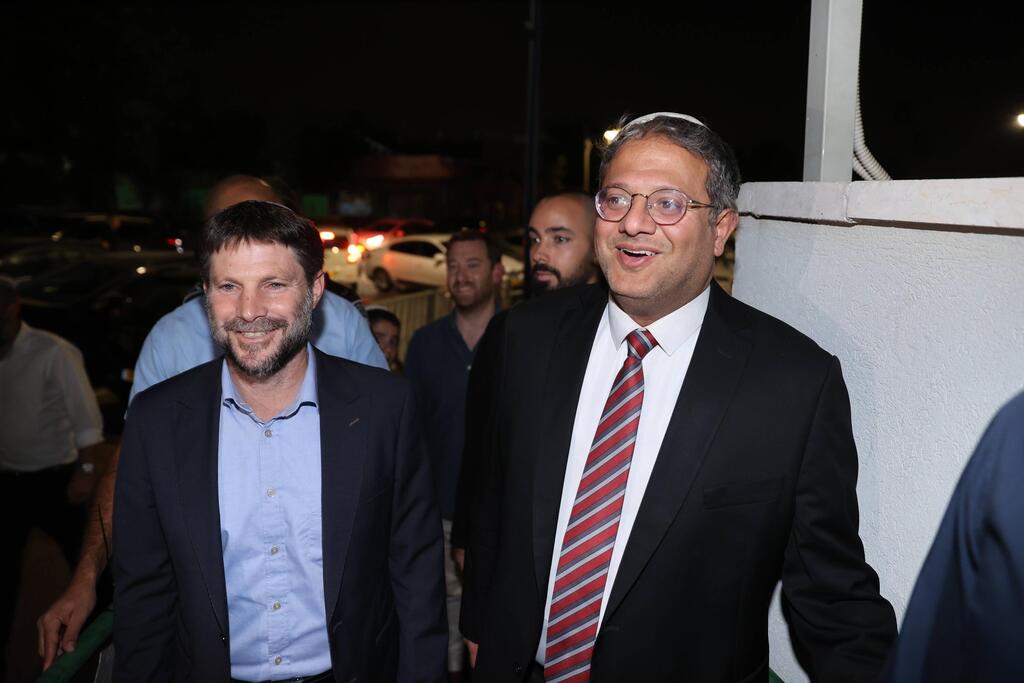
Bezalel Smotrich and Itamar Ben-Gvir
(Photo: Gadi Kabalo)
Smotrich also described it as a “tragedy of leadership fleeing from real solutions.” Officials in ultranationalist Religious Zionist and Otzma Yehudit parties said the plan clearly implies a Palestinian state, whether through “coexistence” or “self-determination.” One senior official said: “Obviously, we cannot live with this, especially in such explicit terms.”
National Security Minister Itamar Ben-Gvir has yet to comment but met with Smotrich late Monday for urgent consultations. A senior Likud source acknowledged that the proposal’s “coexistence path” is a clear euphemism for two states, though Netanyahu’s stance remains uncertain.
In contrast, Blue and White leader Benny Gantz told Netanyahu that “small politics will not sabotage the deal,” hinting he would support it. Opposition leader Yair Lapid also voiced backing, writing on X: “President Trump’s plan is the right basis for a hostage deal and for ending the war.”
Hostage families cling to hope
Families of hostages expressed cautious optimism. Silvia Cunio, mother of captives Ariel and David Cunio, told the Ynet studio: “I couldn’t sleep last night. I hope this is the last time I hear these words and that it will happen, that everyone will come home. Until I see my children with me, I won’t believe it—but it would be the best dream come true.” She dismissed objections to the deal from the far right, saying: “I hope Netanyahu doesn’t listen to these people, who aren’t worth a dime.”
Haim Hyman, father of hostage Inbar Hyman, said he was troubled that Netanyahu referred to “our brothers” without mentioning those in captivity. Still, he urged optimism: “The isolation of Hamas is what’s bringing them to this point. I hope they say yes. But the phrase ‘disarming Hamas’ worries me, because that would strip them of their essence as a terrorist organization.”
Ruby Chen, father of hostage fallen soldier Staff Sgt. Itay Chen, said: “All the families feel cautious optimism. We’ve heard of a plan that is good for Israel, good for soldiers, good for reservists, good for residents of the south and good for the hostages’ families. We just haven’t heard yet that Hamas is ready to move forward. Arab states support it, but we want to hear that Hamas agrees as well.”