


In recent days, Israel has faced what appears to be a tsunami of international sanctions targeting Israeli government officials, settlers and institutions, escalating pressure from multiple countries and long-standing pro-BDS organizations.
These measures have intensified since October 7, 2023, when Hamas terrorists carried out attacks, drawing global scrutiny and support for boycott and sanction campaigns against Israel.
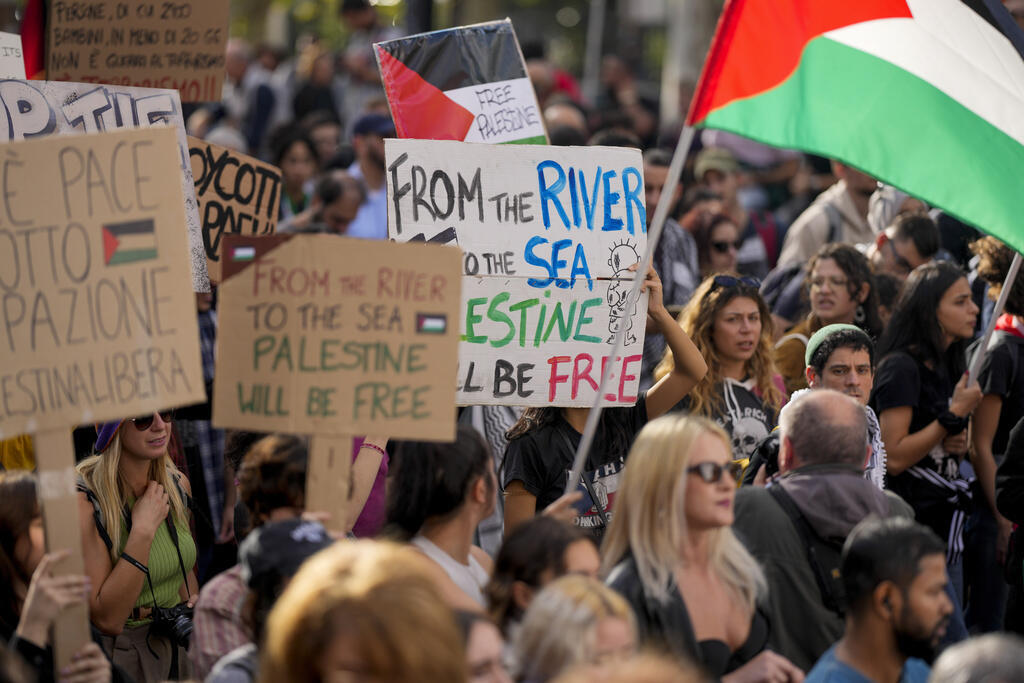
The sanctions target Israeli ministers, settlers and organizations in a coordinated front supported by countries including Qatar and Islamic organizations aligned with Hamas. French authorities recently announced a ban on Finance Minister Bezalel Smotrich after previously banning National Security Minister Itamar Ben-Gvir, citing their active promotion of West Bank annexation, new settlements and policies perceived as undermining the Palestinian Authority.
French Foreign Minister Jean-Yves Le Drian said Smotrich’s policies “cannot be accepted by the overwhelming majority of the international community, committed to a two-state solution.”
Until October 7, Israel had managed to limit the impact of boycott, divestment and sanctions (BDS) campaigns. Economic sanctions had little effect because Israel’s strong economy discouraged divestment, while academic and cultural boycotts were largely symbolic. Since the attacks, however, the phenomenon has intensified, with BDS achieving successes in multiple fields. The movement has damaged Israel’s reputation internationally, evident in public opinion surveys showing growing negative perceptions.
The sanctions have targeted Israeli actions abroad and domestic policies. Anti-Israel sentiment manifests in attacks against Israeli citizens overseas, artists refusing to perform in Israel, authors refusing Hebrew translations of their work and campaigns to remove Israel from events like Eurovision or FIFA competitions.
Efforts to withdraw foreign investment have increased, including the Norwegian sovereign wealth fund divesting from Israeli companies. The UN Human Rights Council blacklist targets Israeli and international companies operating beyond the Green Line.

National Security Minister Itamar Ben-Gvir and Finance Minister Bezalel Smotrich
(Photo: Amit Shabi)
Reports and videos from the West Bank showing settlers engaging in violent behavior against Palestinians and property damage have further fueled the sanctions. The videos highlight aggressive settlement activity backed by the Israeli government, along with legislation such as the death penalty law for terrorists. Public statements and actions by ministers, especially Ben-Gvir’s widely circulated video humiliating flotilla participants bound for Gaza, drew condemnation from multiple countries as crossing a red line.
Yesterday, French Foreign Minister Le Drian announced France would bar Smotrich from entering the country. Similar measures were previously applied to Ben-Gvir. Le Drian accused Smotrich of promoting West Bank annexation, settlement construction and the collapse of the Palestinian Authority, saying the policy’s effects on Palestinians were “destructive.” France joins Ireland, the United Kingdom, Canada, Australia, New Zealand and Norway in restricting entry to Israeli ministers.
Six countries—France, the United Kingdom, Canada, Australia, New Zealand and Norway—have coordinated sanctions against settlers and organizations “promoting violence in the West Bank.” France additionally restricted entry for four settler leaders and 21 settlers, though the full list of names has not been published.
The United Kingdom launched a “plan of action” targeting the funding networks and support of settler attacks, urging businesses to avoid operations in West Bank settlements. Canada imposed entry bans and financial restrictions on two citizens and five organizations, while Australia sanctioned three citizens and six outposts. New Zealand barred three Israeli citizens, joining a blacklist of 35, including Ben-Gvir, Smotrich and settler leaders such as Daniela Weiss, Ze’ev Haber, Elisha Yered, Noam Federman, Baruch Marzel and Bentzi Gopstein.

(Photo: AHMAD GHARABLI / AFP)
In addition to sanctions, France has opened investigations into alleged torture and war crimes linked to the flotilla incident and Italy announced an inquiry into Ben-Gvir for humiliating Italian civilians. Ben-Gvir defended his actions, calling Italy “a country of hypocrites” and asserting he would continue to stand proudly with Israeli forces. Italian Foreign Minister Antonio Tajani condemned Ben-Gvir’s statements as unacceptable.
EU discussions are ongoing regarding personal sanctions against Israeli ministers. Germany reportedly opposes measures against Smotrich but may support restrictions on Ben-Gvir, though a Czech veto could prevent action. Analysts say large-scale economic sanctions against Israel are unlikely in the short term, but personal sanctions against ministers are expected to remain under consideration.
The Israeli Foreign Ministry condemned the sanctions as “shameful measures” designed to impose political positions regarding Jewish rights in Israel. Officials said the measures ignore the real drivers of violence, including Palestinian Authority payments to terrorists and incitement campaigns.
Observers note that the current wave of sanctions and BDS activity reflects a shift in strategy. While previous efforts sought to pressure Israel into negotiations over a two-state solution, today the movement aims to undermine Israel’s legitimacy worldwide. Experts say the government has not effectively countered these developments, mobilized friendly nations, or engaged the global Jewish community. Even with changes in government, effective action is expected to take at least one to two years to have a visible impact, depending on developments on multiple fronts.