


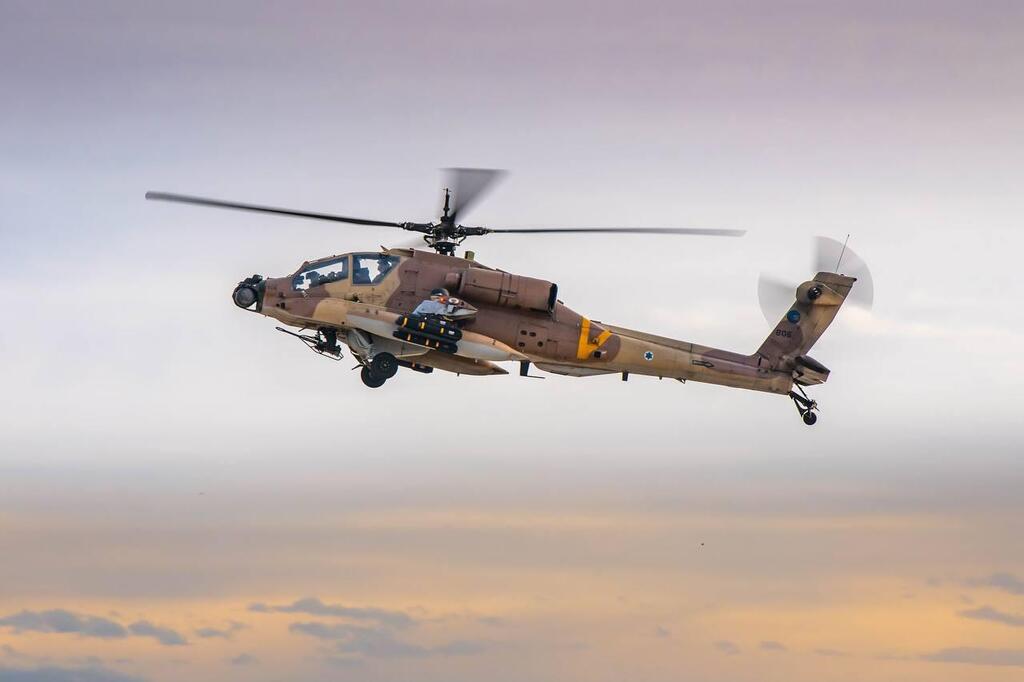
The Israeli Air Force has permanently relocated its 190th “Magic Touch” attack helicopter squadron from Ramon Air Base in southern Israel to Ramat David in the north, a major change in its deployment stemming from lessons learned after the October 7 massacre.
For years, the Air Force maintained only a limited attack helicopter presence in northern Israel. The new arrangement places a full squadron there, reflecting the military’s conclusion that it needs a permanent and immediately available force capable of responding to threats along the northern border.
Israel moves Apache squadron north in post-Oct. 7 readiness overhaul | Watch
(צילום: לפי סעיף 27 א', מחוק זכויות יוצרים)


The move also divides Israel’s attack helicopter force between opposite ends of the country rather than concentrating it primarily in the south, allowing faster responses to threats in multiple arenas.
Maj. G., the helicopter maintenance flight commander at Ramat David who is overseeing the logistical side of the relocation, said the Air Force had long recognized the possibility of a northern threat, including terrorist infiltrations and enemy ground forces.
“Even before October 7, attack helicopter squadrons were deployed at northern bases to defend the northern border,” he said. “Following the lessons of October 7, we understood that a squadron needed to be moved and the attack helicopter force split, rather than concentrating it in one place. Spreading it between the two ends of the country gives a better response to the borders.”
Maj. O., an aircrew member and helicopter pilot in Squadron 190, said the move substantially expands the Air Force’s ability to deal with a surprise attack in the north.
“One of the Air Force’s lessons regarding the attack helicopter array is that its response in the north was limited, and it wants to expand it,” he said. “That is what we are doing with this move.”
“If 500 drones arrive in the north, it is good to have an attack helicopter squadron there that knows how to respond,” he added. “Splitting the attack helicopter squadrons, one in the north and one in the south, gives a more complete response for the entire country, for any scenario. That is the goal.”
From ground support to drone interception
The 190th Squadron was established in 1980 at Palmachim Air Base, initially operating Defender helicopters. It later moved to Ramat David because of difficulties operating the aircraft in hot conditions. The squadron was disbanded in 1994 as the Air Force began absorbing Apache helicopters, known in Israel as the Peten, and reopened a year later at Ramon.
Its primary missions are supporting maneuvering ground forces and defending Israel’s borders. Over the years, the squadron has taken part in major conflicts and operations, including both Lebanon wars and the Second Intifada.
During the current war, the squadron provided fire support to ground forces in Gaza and along the northern border and also participated in intercepting drones during the confrontations with Iran.
“The bread and butter of the attack helicopter force is supporting ground troops,” O. said. He described crews joining battalion, brigade and division planning in advance, striking threats before forces move in and accompanying troops during combat.
“We can arrive early and deliver fire, take down cameras that threaten them and that are difficult for them to deal with by other means,” he said. “We accompany them, scan locations threatening them in real time, and when they encounter the enemy or are in combat, we already know their objectives and locations.”
Helicopter crews communicate directly with troops on the ground, he said, allowing them to respond quickly.
“You feel that you are helping in a practical way. You are speaking with someone who is being shot at, along with his soldiers, and our direct response is intended to be very fast and effective.”
The war also expanded the role of attack helicopters in countering drones. Their relatively low speed, ability to remain with a target and dedicated weapons have made them particularly useful for interception missions.
“We discovered that we have several advantages that make us very effective in this mission,” O. said. “You are slower, our weapons are better suited to it, and our systems allow us to stay with the target for a long time without it escaping. It is not a one-shot situation if you miss, and it is also considered inexpensive.”
He said the 190th Squadron recorded a relatively high number of drone interceptions during the war.
On one mission, O. said, his crew intercepted a drone over Israeli territory as it headed toward a community in the south.
“You feel the pursuit, and you know the time you have is short,” he said. “It is a very tense situation and you have to keep your composure. You understand completely what is at the other end.”
Moving a squadron across the country
Relocating an operational squadron from the Air Force’s southernmost base to one of its northern bases has required extensive preparations while the military remains engaged in active operations.
“Moving a squadron from the southernmost base to the northernmost Air Force base is a very complex move, with quite a few challenges during wartime,” G. said. “There are many teams dealing with it, operationally, logistically and on the human side, all to achieve one goal: defending the northern border.”
The transition has also required career personnel and their families to relocate from southern to northern Israel.
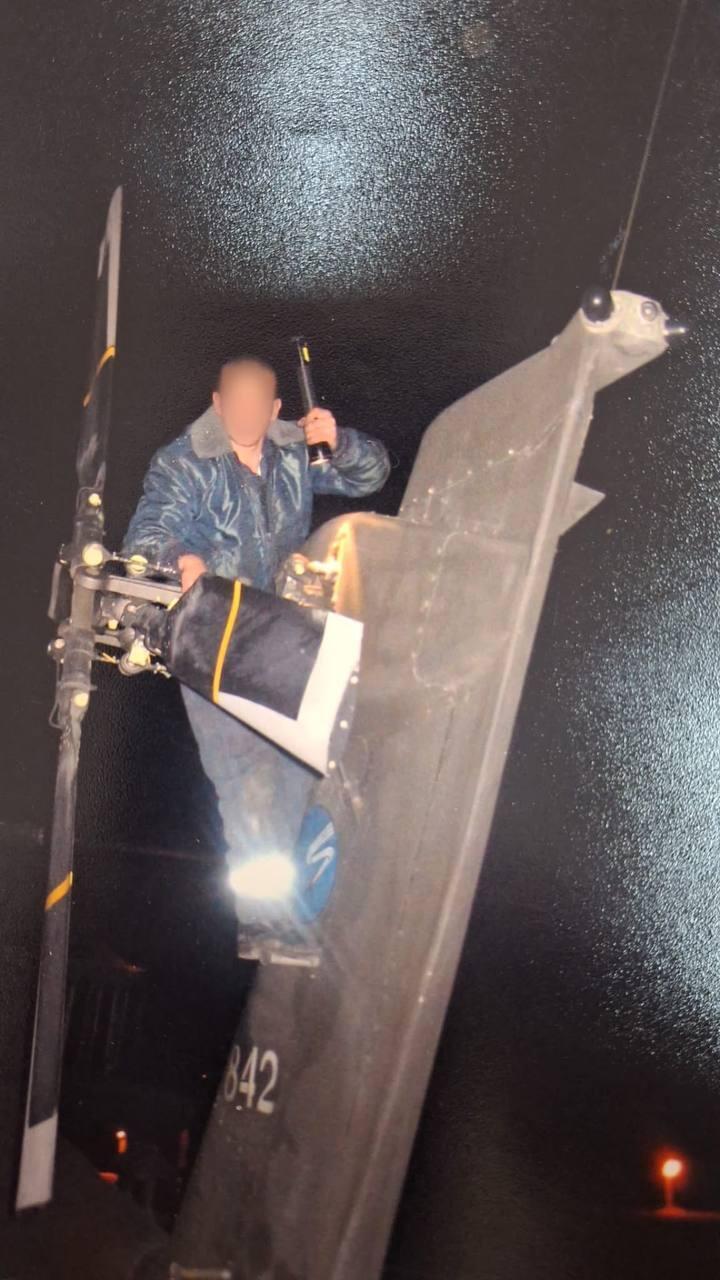
Maj. G.
(Photo: IDF)
“Moving people from south to north is emotionally complicated as well,” G. said. “Veteran personnel who built families and careers in the south now have to move their homes north.”
Technical crews at Ramat David also spent about a year preparing to maintain aircraft that had not previously been permanently based there.
“We have been going south every day to learn and train ourselves to maintain an aircraft that does not currently exist at Ramat David,” he said. “We have spent about a year learning what an attack helicopter is so we can provide maintenance, maximum flight safety and full operational readiness.”
The result is a permanent change in the Air Force’s deployment. Rather than relying on a small forward presence of attack helicopters in northern Israel, a full Apache squadron will now be positioned there, ready to support ground forces, defend the border and respond to the kind of large-scale surprise scenarios the military says it can no longer afford to treat as remote possibilities.