


The Trump administration imposed a sweeping new round of tariffs on imports from more than 80 U.S. trading partners just minutes before its previous tariff authority expired, including a 12.5% duty on Israeli goods, one of the highest rates announced in the latest package.
The new tariffs, which took effect at midnight U.S. time, were announced Thursday night by the Office of the U.S. Trade Representative (USTR), which said the measures were intended to pressure countries to strengthen enforcement against goods produced with forced labor.
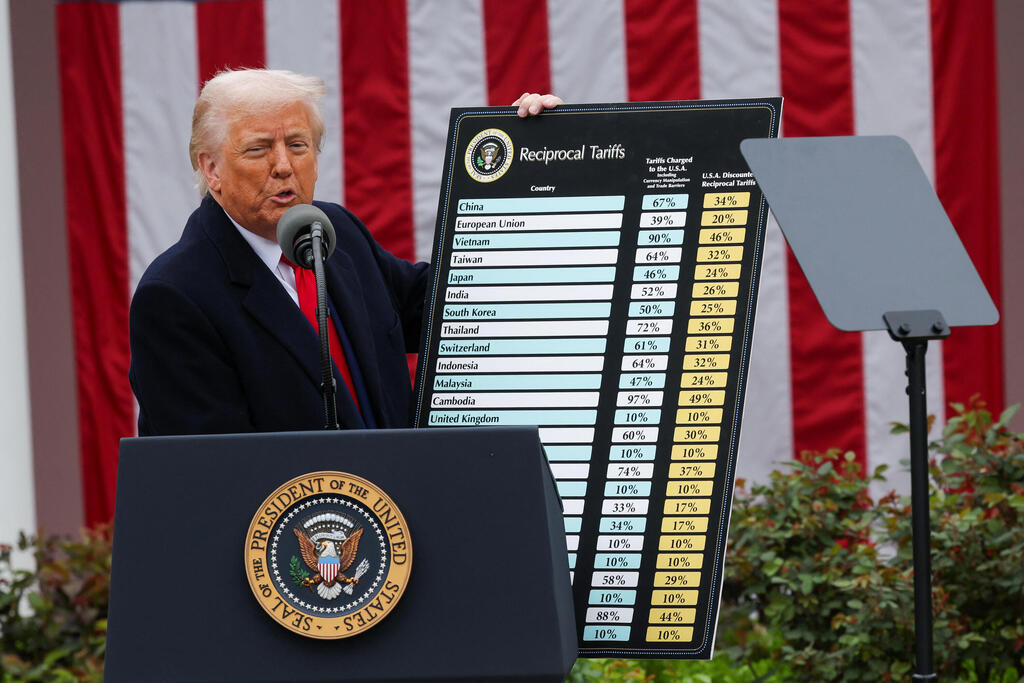
The move effectively replaces temporary tariffs previously imposed by President Donald Trump and marks another escalation in his administration's broader effort to reshape global trade, extending tariffs to allies as well as rivals.
According to administration documents, Israel was assigned the maximum 12.5% additional tariff under the new framework. By comparison, countries including Canada, Mexico, India and neighboring Jordan received lower 10% tariffs, either because of existing trade agreements or other exemptions. The European Union, Japan, South Korea, Switzerland and Taiwan were also granted tariff ceilings that Israel did not receive.
Because the new measure is an additional duty rather than a replacement for existing tariffs, products that previously entered the United States duty-free under the U.S.-Israel Free Trade Agreement are not automatically exempt.
The U.S. government did not accuse Israeli manufacturers of using forced labor. Instead, it argued that Israel lacks an explicit legal prohibition on importing goods produced through forced labor and therefore does not effectively enforce such restrictions. The USTR described that situation as an unreasonable obstacle to U.S. trade.
Forced labor justification questioned
The administration said every country included in the new tariff package had failed to effectively prohibit or enforce restrictions on imports produced with forced labor.
"The United States has had a forced labor import ban for nearly a century, and rigorously enforces it," U.S. Trade Representative Jamieson Greer said. "[I]t’s well past time for our trading partners to do the same."
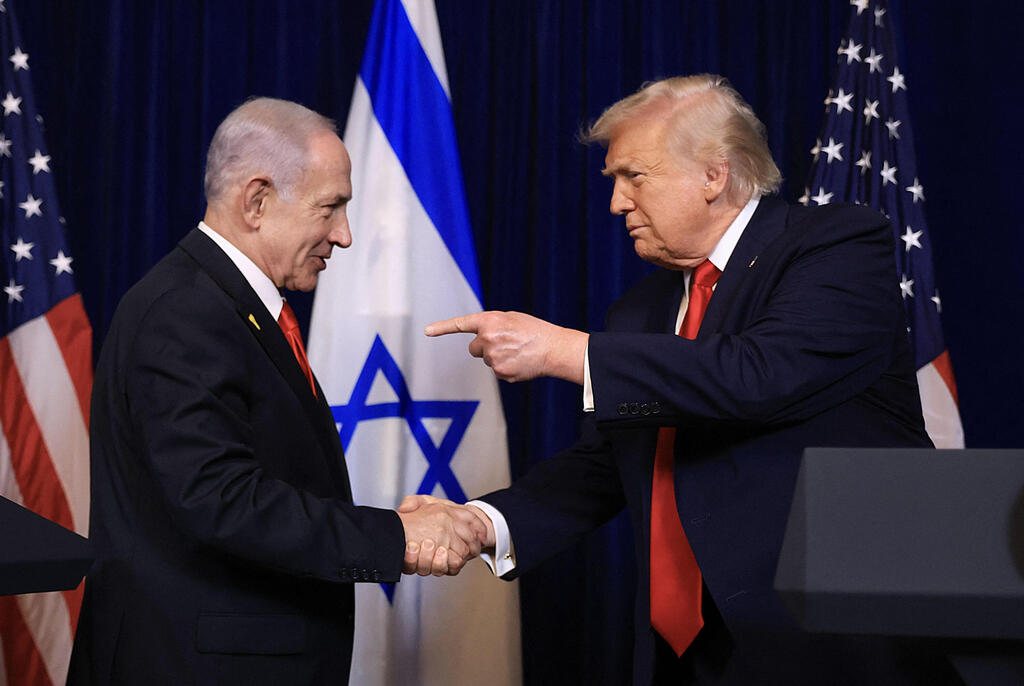
Prime Minister Benjamin Netanyahu and Trump
(Photo: JOE RAEDLE / GETTY IMAGES NORTH AMERICA / AFP)
However, several countries frequently cited in international reports on forced labor, including Myanmar, Afghanistan, Turkmenistan, Uzbekistan and Laos, were absent from the list, raising questions about how the administration selected countries for the new duties.
The administration also announced several exemptions intended to limit disruption to the U.S. economy. Oil, natural gas, agricultural fertilizers, civilian aviation equipment and generic pharmaceuticals will not be subject to the new tariffs. Trump separately announced that generic drug imports will continue to face zero tariffs for the next two years.
Products already covered by separate tariffs on steel, aluminum and automobiles were also excluded.
For Israel, however, the tariffs could significantly affect exports ranging from technology products and medical devices to chemicals, food products, industrial equipment and consumer goods.
According to U.S. government data, the United States imported approximately $20.6 billion in goods from Israel in 2025, while total bilateral goods trade reached about $34.4 billion.
A new legal strategy
The latest tariffs follow months of legal and political battles over Trump's trade agenda.
Earlier this year, the U.S. Supreme Court struck down the administration's use of emergency economic powers to impose broad tariffs and ordered the government to refund approximately $160 billion in tariff revenue collected under that authority.
Trump
(Photo: AP Photo/Erik S. Lesser)
Trump then turned to Section 122 of the Trade Act of 1974, which permits temporary 10% tariffs for up to 150 days to address balance-of-payments concerns.
That authority also faced legal challenges and expired at midnight Thursday.
To preserve his tariff policy, Trump has now invoked Section 301 of the Trade Act of 1974, the same legal authority he used during his first term to impose tariffs on Chinese imports. This time, however, the administration has applied it on an unprecedented global scale, covering about 60 economies, with the European Union counted as a single trading bloc.
The tariffs represent a political gamble ahead of next year's midterm elections.
Although the administration argues the measures will reduce the U.S. trade deficit and encourage domestic manufacturing, tariffs are paid by U.S. importers rather than foreign exporters. Those higher costs are often passed on to American consumers, who continue to face elevated living costs.
For Israel, the move underscores that even close allies are not exempt from Washington's increasingly protectionist trade policy.
Critics have questioned the administration's legal justification.
Sen. Ron Wyden, the top Democrat on the Senate Finance Committee, argued during a congressional hearing that the forced-labor rationale was merely a legal pretext.
"Trump's next trade scheme is ordering U.S.T.R. to reconstruct his illegal global tariffs under the guise of addressing forced labor," Wyden said.
Greer rejected that criticism, saying the administration's legal authority had changed but its trade policy had not.
"The specific authorities this administration is using have changed, but the trade strategy has not," Greer said. "We are committed to continuing to use tariffs and to negotiate deals to support the re-industrialization of our economy, protect American workers and increase their wages and shrink our trade deficit."