

Israel raised its alert level Sunday and prepared for the possibility of Iranian fire within hours, after U.S. President Donald Trump said an agreement with Iran could be signed within two to three hours and revealed that he had sharply warned Prime Minister Benjamin Netanyahu against carrying out further strikes.
Trump, speaking to Fox News, said he told Netanyahu after Israel’s strike in Beirut: “What the f**k are you doing?” He also said he told the prime minister not to conduct any more strikes.
IDF strike in the Dahieh
(Video: IDF)


Axios later reported that Trump said the U.S.-Iran deal to end the war remained on track for Sunday, despite the Israeli strike in Beirut and Iran’s threat to retaliate.
“It shook it up. It delayed the signing by a few hours. It was supposed to be now. Now it is scheduled for a few hours from now,” Trump told Axios.
Trump said he was shocked when advisers briefed him on the Israeli strike, which came shortly before the planned signing.
“It is so bad — I couldn't believe it. An hour before we are supposed to sign the deal,” he said.
Trump acknowledged that Hezbollah had attacked Israel first, but stressed that the attack caused no damage and that no one had been killed.
“Why did Bibi have to do a fucking attack? I was so pissed off. I let him know. He has no fucking judgement. I let him know that,” Trump said.
Gallery
US President Donald Trump publicly rebuked Israel, saying the attack 'should not have happened'
The remarks came after Iran threatened to “punish Israel” over the IDF strike in Beirut’s Dahieh district, and amid continued uncertainty over a possible memorandum of understanding between Washington and Tehran.
The head of the Iranian parliament’s National Security Committee also said that “a strong response is coming” after the Israeli strike on Beirut’s southern suburbs, further raising concerns in Israel that Tehran or its proxies could act within hours.
Trump also publicly criticized the Israeli strike, saying it “should not have happened” at a moment when the United States says it is close to a deal with Iran.
“This morning’s attack on Beirut should not have happened, particularly on a special day when we are so close to a Peace Deal with Iran,” Trump said. “Israel has the right to defend itself against threats, but the attack it was responding to was very small and meaningless, nobody was hurt, injured, or killed, and should not disrupt this important process.”
“We are very close to a Deal that will bring peace to the region, including to Lebanon, and all sides should stand down,” Trump added. “There should be no more attacks by Israel anywhere in Lebanon, but there should also be no more attacks by any other party, including Hezbollah, against Israel. This could be the beginning of a long and beautiful peace — Let’s not blow it! Thank you for your attention to this matter.”
Trump’s remarks mark a sharp escalation in U.S. pressure on Israel. The president is effectively calling for a broader halt to strikes in Lebanon, a demand that overlaps with Iran’s position in the emerging understandings. Under such a framework, Israel would likely retain the ability to act against an immediate emerging threat, but would face new pressure not to initiate strikes.
The IDF said Chief of Staff Lt. Gen. Eyal Zamir was holding ongoing situation assessments with all relevant commanders.
“In accordance with the assessments, the IDF is preparing for the possibility of fire toward the territory of the State of Israel in the coming hours,” the military said. “The IDF continues to maintain readiness and alertness for a range of scenarios in defense and offense. At this stage, the public must remain vigilant, act responsibly and follow Home Front Command instructions. The IDF will not tolerate fire toward the territory of the State of Israel.”
Home Front Command announced a limit on gatherings of up to 5,000 people, and major concerts in central Israel are expected to be canceled.
Fars, Iran’s semi-official news agency, cited a source close to the negotiations who said Iran had sent a message to the United States through a Qatari mediator before the Dahieh strike. The source stressed that nothing had yet been agreed between the sides.
“Iran’s basic condition is that, in the end, all its points be fully taken into account,” the source said. “Even if all of Iran’s views are implemented, no agreement will be signed at the time of Trump’s announcement.”
An Iranian lawmaker who opposes the agreement warned that signing the memorandum would turn Tehran into “a U.S. colony.”
The Israeli strike in Dahieh came after Hezbollah launched drones toward Israel. Israel said the strike targeted Hezbollah infrastructure in response to fire toward Israeli territory. Iranian officials then threatened retaliation, saying Israel must be “punished” for the attack.
‘Stalemate wars’
Meanwhile, The New York Times examined Trump’s handling of the war with Iran and compared it to Russia’s war in Ukraine. In an article headlined “Stalemate Wars,” the paper argued that Trump, like Russian President Vladimir Putin, misread the country he attacked.
“Trump and Putin both resist the idea that supposedly weaker countries have fought them to a standstill, and are relying on negotiations to win the submission they failed to achieve on the battlefield,” the article said.
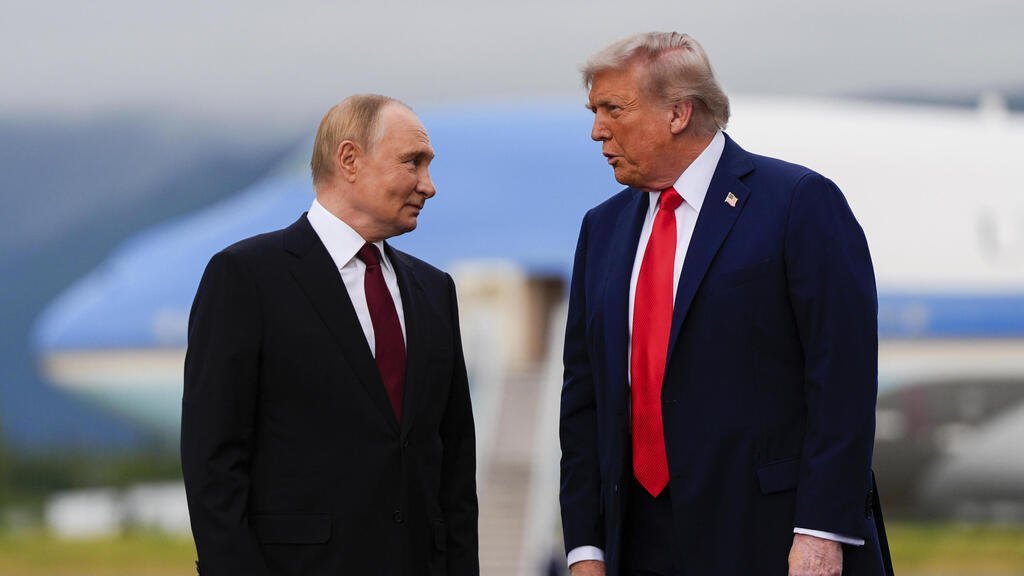
Vladimir Putin and Donald Trump
(Photo: AP Photo/Julia Demaree Nikhinson)
The report noted that both Iran and Ukraine strongly resisted the idea that “might makes right,” and said Ukrainian President Volodymyr Zelensky had mocked Putin in the same way Iranian officials have mocked Trump.
“Their defiance reflects the reality of two stalemated wars, with deep mistrust everywhere holding back progress,” the report said.
The Times noted that talks over Ukraine had reached an impasse shortly before the Iran war began, after which Washington, which had been trying to mediate between the sides, shifted its focus to another front.
“Both conflicts led to a similar outcome: a weaker power trapped a stronger one in a costly confrontation,” wrote Fiona Hill, who handled Russia and Europe at the National Security Council during Trump’s first administration. “Like Putin, Trump had no plan for what would happen next.”
Hill said the root of the problem was that both presidents launched wars with a limited understanding of the other side.
“Both projected their centralized views of their own roles onto Iran and Ukraine, and therefore thought that if they could decapitate the system, it would fall,” she said.
Putin did not expect fierce Ukrainian resistance, she said, while Trump ignored warnings that Iran could close the Strait of Hormuz and appeared to underestimate the ayatollahs’ regime’s ability to respond. The Iranian public also did not rise up against the regime, as Israel and the United States had urged it to do.
Although the many U.S. and Russian strikes had devastating effects, air power alone has not proved decisive. In the meantime, inflexibility has prolonged both wars. The United States and Russia presented sweeping demands to the other side, while the list of concessions from their opponents remained short.