


A heated on-air confrontation erupted Friday night on the Emirati-funded Al Ghad television channel when senior Hamas official Mousa Abu Marzouk angrily cut off a live interview after being pressed with tough questions about the Oct. 7 attacks and the devastating impact of the war on Gaza.
Abu Marzouk, one of Hamas’ founding members, sought to justify the group’s actions, saying Hamas had “fulfilled its national duty.” He added that “we did what reality imposed upon us — resistance to occupation, against oppression, settlements and the imprisonment of our people in Israeli jails.”
Abu Marzook Interview


When asked whether the war had truly advanced the goal of Palestinian liberation, Abu Marzouk replied vaguely: “We will assess everything — where we succeeded and where we erred. But this is not how a campaign is measured. No one expects a liberation movement to achieve everything in one day.”
Tension rose when the interviewer pressed further, asking whether Oct. 7 was ever a path toward freedom or independence. Visibly irritated, Abu Marzouk responded, “No sane person would claim that on October 7, with just a thousand or so fighters, it was possible to liberate Palestine.” He then demanded, “Please, at least make your questions respectful.”
The interviewer, maintaining a calm tone, replied that he was raising “the questions being asked on the Palestinian street, from the residents of Gaza.” At that point, Abu Marzouk lost his temper, shouting, "These are your questions! Show some respect for yourself. I don’t want to speak with you. I don’t want to see you. Cut it. Cut it. Go to hell!
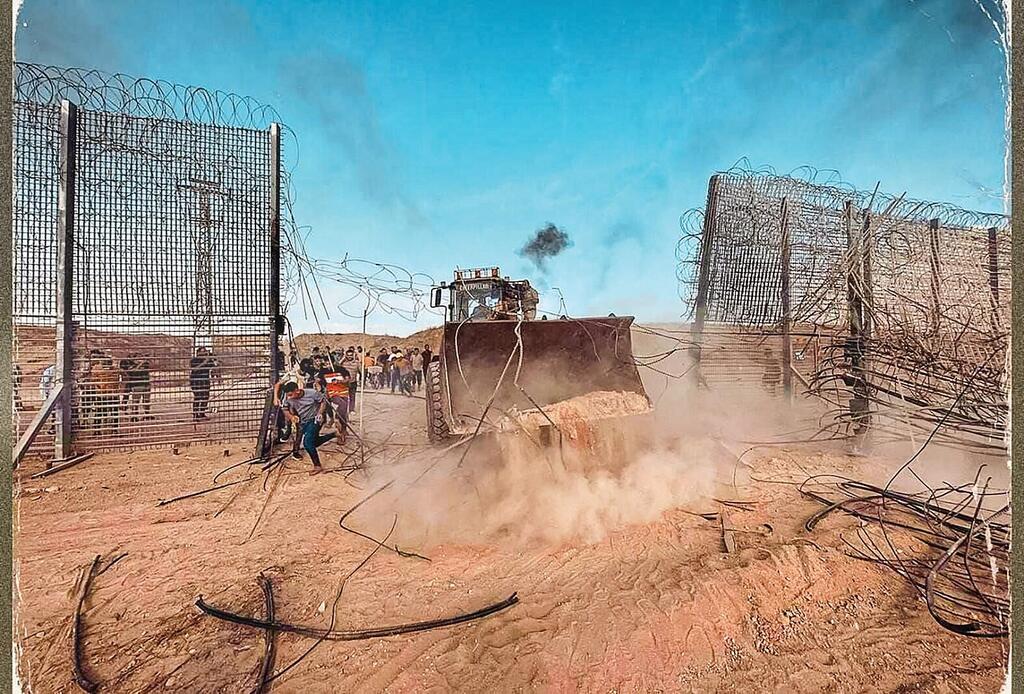
Palestinian bulldozer breaches the Gaza border fence during the October 7, 2023, Hamas arrack
Taken aback but composed, the interviewer responded, “Excuse me, Mr. Mousa Abu Marzouk, I will not allow you to speak to me this way. This reaction sadly exposes the mindset of the Hamas leadership—the attempt to evade serious questions and real dialogue at this stage, in the face of the genocide against the Palestinian people.”
The exchange quickly went viral on social media and was seen as a rare public display of anger by a senior Hamas figure toward Arab media. Commentators in Arabic outlets described it as evidence of growing internal strain within Hamas since the war began — and of rising frustration among Arab audiences, particularly in the Gulf, over the destruction in Gaza.
The incident also underscored the widening gap between Hamas leadership and much of the Arab public, who have been increasingly critical of the heavy human toll in Gaza.
Fatah spokesman Jamal Nazzal called the exchange “a disgrace that exposes the moral and political bankruptcy of a crumbling group that can no longer look people in the eye.”