

After a ninth consecutive night of American strikes, Iran responded Sunday morning with fire toward Bahrain and Kuwait, while senior Israeli officials assessed that the confrontation with Tehran was moving closer to a broader escalation, though it could still take time.
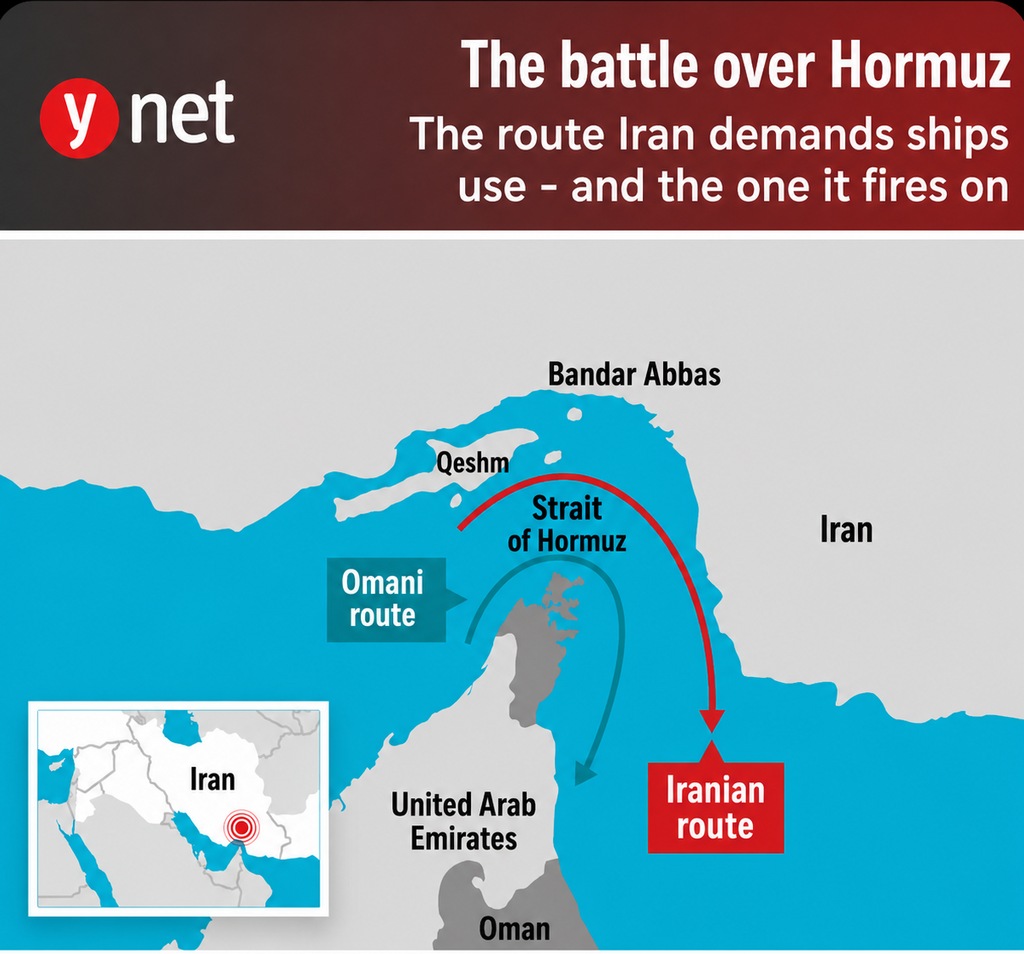
Explosions were heard in Manama, Bahrain’s capital, following Iranian fire. At the same time, Iran’s Revolutionary Guard Corps claimed that two oil tankers had “exploded” and been put out of operation after attempting to pass through the southern route in the Strait of Hormuz, which Tehran does not authorize. The IRGC alleged that the vessels had been encouraged by the U.S. military to use the route.
Footage from US strikes in Iran


Iranian media also reported an explosion in Isfahan, one person killed and several others wounded in strikes on Tabriz, as well as attacks in Bushehr and Urmia.
U.S. Secretary of State Marco Rubio said Washington remained “open to a diplomatic solution.” However, a U.S. official familiar with internal administration discussions told The Washington Post that “the United States is preparing for a broader war.”
The official said the Pentagon was increasing the number of military aircraft deployed to the region, as reflected in the arrival of refueling aircraft and fighter jets in Israel. The same official warned, however, that any expansion of the American operation would be constrained by dwindling stocks of air defense systems and long-range munitions.
The United States is also facing limitations on its ability to move additional forces and aircraft into the region because of damage sustained during the fighting, the official said. “We simply don’t have enough to sustain the operations safely, and I don’t think the White House is aware of that,” the official said.
Military experts said that beyond the erosion of American equipment and ammunition stocks, the U.S. military was not prepared for the possibility of a ground operation inside Iran.
U.S. President Donald Trump declined last week to rule out such an operation. In a brief telephone interview with NewsNation published Sunday, Trump said he “really doesn’t care” about Iran’s announcement that it no longer intends to honor the memorandum of understanding reached with Washington one month ago.
According to the Israeli assessment, the conclusion of the World Cup gives Trump a window to act until September, assuming he does not want to enter a war shortly before the U.S. midterm elections. That assessment suggests the fighting is likely to intensify in the absence of an agreement.
Regarding the possibility of Israel entering the campaign, officials in Jerusalem are waiting for a justification to do so and believe one is unlikely to emerge. Should no such justification arise, however, Israeli officials believe one could eventually be found.