

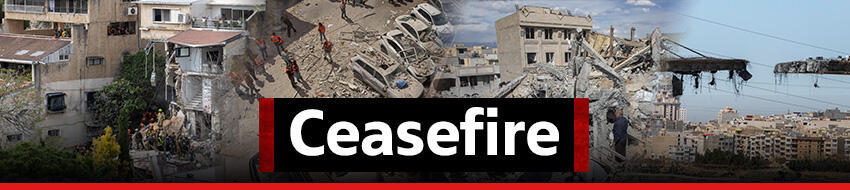

U.S. President Donald Trump announced last Thursday a temporary 10-day ceasefire between Israel and Lebanon, set to expire in exactly one week on April 27, and said he would invite Prime Minister Benjamin Netanyahu and Lebanese President Joseph Aoun to the White House for talks on a permanent agreement.
From Israel’s perspective, the ceasefire has left a bitter taste, as it did not fully achieve its stated objectives and exposed what officials see as the surprising strength of Hezbollah. The Americans, for their part, were displeased with what they viewed as Israel’s “excessive” military actions in Lebanon and moved to restrain them twice: first, when Israel halted strikes in Beirut at Trump’s request, and again with the ceasefire imposed on Israel.
Gallery
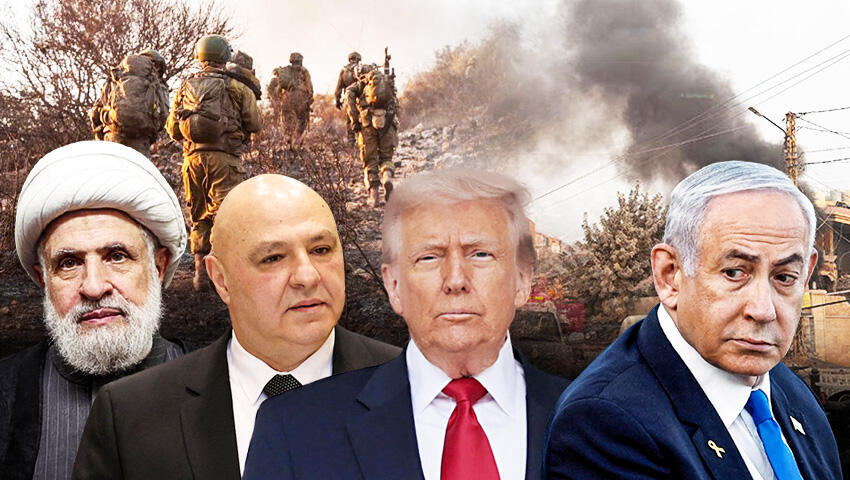
Prime Minister Benjamin Netanyahu, US President Donald Trump, Lebanese President Joseph Aoun and Hezbollah Secretary-General Naim Qassem
(Photo: ANWAR AMRO / AFP, REUTERS/Amir Cohen, REUTERS/Jessica Koscielniak, Reuters)
Following the ceasefire announcement between the United States and Iran, Israel insisted there was no linkage between the war in Iran and the situation in Lebanon, maintaining that fighting Hezbollah would continue even if a ceasefire were reached with Tehran. That position did not fully convince U.S. officials, who appeared inclined to accept Iran’s demand for a ceasefire in Lebanon as a condition for negotiations.
In effect, if Iran has created such a linkage, a renewal of fighting with Iran could also lead to renewed hostilities in Lebanon. However, unlike the more permanent ceasefire reached in November 2024 — which Hezbollah violated on March 2 by joining the fighting — the current ceasefire is temporary by design and is set to expire April 27 unless Trump seeks to extend it.
For now, U.S. attention appears focused primarily on negotiations with Iran, leaving Lebanon lower on the agenda, though a request by Trump to extend the ceasefire remains possible. A second meeting with Lebanese representatives is scheduled in Washington on Thursday, a week after what was described as a historic meeting between Israel’s ambassador to the United States, Yechiel Leiter, and Lebanon’s ambassador in Washington. Leiter is currently in Israel for Memorial Day commemorations for his son, Moshe Leiter, who was killed in combat in the Gaza Strip.
Despite the meetings, substantive negotiations with Lebanon have yet to take shape. Meanwhile, the Israel Defense Forces continues to operate along the “Blue Line,” targeting Hezbollah operatives when ceasefire violations occur, in a pattern similar to the fragile ceasefire along Gaza’s perimeter. Between the November 2024 ceasefire and March 2, 2026, Israel killed about 500 Hezbollah operatives. Israeli officials believe this model — allowing defensive action under a ceasefire — can continue.
Lawn mowing on steroids
If the war with Iran resumes, Israel is likely to seek a return to broader fighting to complete its objectives. At the same time, Trump has emerged as the key decision-maker, and if he opposes renewed fighting, Netanyahu may find it difficult to defy him.
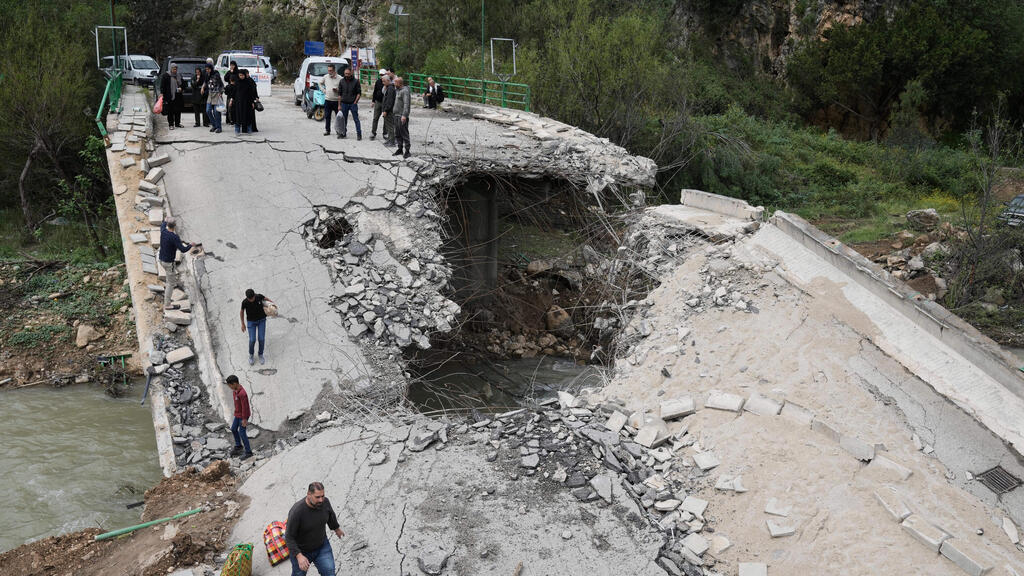
A bridge struck in southern Lebanon, near Tyre
(Photo: AP Photo/Bilal Hussein)
Before the ceasefire was imposed, the IDF had intensified operations against Hezbollah, aiming to destroy infrastructure up to the Litani River, including tunnels, bunkers and large stockpiles of weapons. Trump’s intervention effectively halted those operations while forces were still prepared to continue.
A central question is whether Trump will indeed convene Netanyahu and Aoun in Washington. Netanyahu faces a difficult political dilemma: much of the Israeli public, across political lines, supports resuming the war to defeat Hezbollah, with many feeling the campaign was halted prematurely, particularly affecting residents of northern Israel. Security officials and many cabinet ministers also support renewed fighting, and the issue is expected to be discussed at an upcoming cabinet meeting.
‘Negotiations unlikely to yield results’
Against this backdrop, an Israeli official familiar with the matter said Israel has been fighting on multiple fronts over the past two years and has “dealt significant blows to the axis of evil.” According to the official, “They are weaker than ever, and in some respects we are stronger than ever — though not in all areas. We need to complete the mission. We’ve achieved unprecedented gains but have not finished the job.”
The official added that one key achievement has been coordination with the United States, particularly on preventing Iran from acquiring nuclear weapons. “If we act wisely, there will be opportunities to complete the campaign against Hezbollah and Hamas, which are Iranian proxies,” the official said.
Eyal Zisser, an expert on Syria and Lebanon, said that if fighting with Iran resumes, Hezbollah is likely to rejoin the conflict. “That is the foundation on which it is built — loyalty to Iran and adherence to its directives,” he said. “From a rational standpoint, Hezbollah might seek quiet after the damage it and its supporters have suffered. But that is not its logic.”
Zisser said Hezbollah may see long-term benefit in aligning with Iran, which he said pressured the United States to secure a ceasefire in Lebanon as part of broader negotiations. He added that while the Lebanese government has no interest in renewed fighting, it has limited influence over Hezbollah.
 Prof. Eyal Zisser
 He also expressed skepticism about the prospects for negotiations. “You cannot expect a conflict of this scale and duration, with such a complex actor as Hezbollah, to be resolved in one or two meetings,” he said.
According to Zisser, Lebanon’s priority is a ceasefire and an Israeli withdrawal, and while it may offer concessions, they are unlikely to meet Israel’s demands. “This negotiation is primarily aimed at maintaining quiet along the northern border and is unlikely to produce significant results,” he said, noting Hezbollah’s continued influence over Lebanese decision-making.
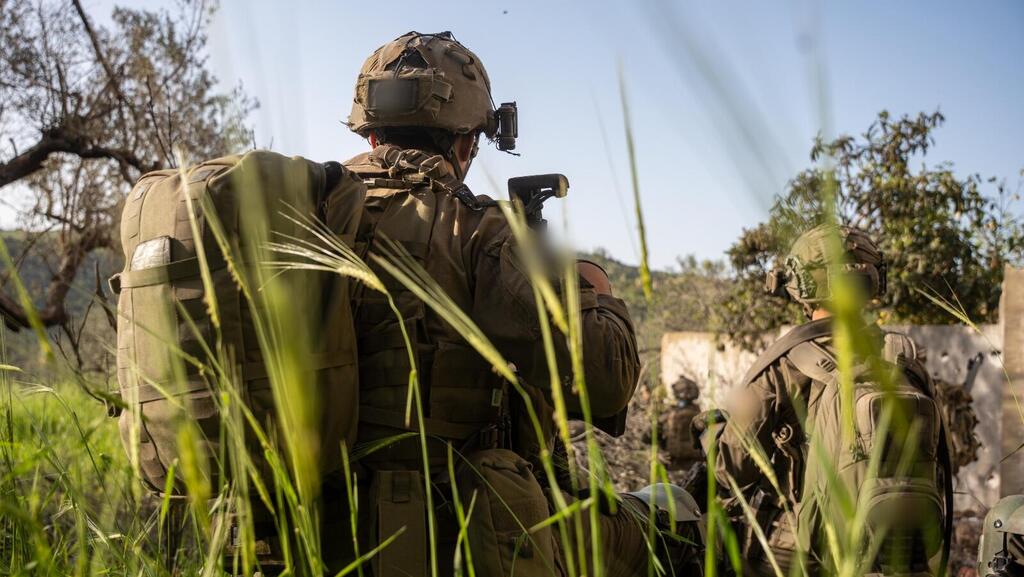
IDF forces in southern Lebanon
(Photo: IDF Spokesperson’s Unit)
Lt. Col. (res.) Sarit Zehavi, founder and president of the Alma Research and Education Center, which focuses on Israel’s northern security challenges, said Trump’s priority was to focus on Iran. “From an American perspective, he wanted to remove distractions and center attention on Iran to see what could be achieved in negotiations,” she said.
Zehavi added that a return to fighting in Lebanon before the ceasefire deadline remains possible, particularly if developments with Iran accelerate. However, she noted Hezbollah may initially hold back, as it did after the launch of Operation Roaring Lion.
“There is a fundamental problem with negotiations with Lebanon,” she said. “The Lebanese are not prepared to deliver what Israel demands, which ultimately involves confronting Hezbollah or demonstrating that the Lebanese government is willing to act against it — something they are not ready to do.”
She added that meaningful change in Lebanon depends on a stronger government and a weaker Hezbollah, but warned that halting military pressure could undermine that goal. “We are still in the middle of the campaign,” she said. “Both ceasefires — in Iran and Lebanon — are temporary. It will take time, and considerable patience, before any reconstruction phase. It is difficult to say, but it does not appear we are anywhere near the end.”