

Iran's leaders are splashing propaganda posters across Tehran boasting of national unity and victory over a global superpower, just months after crushing protests with mass killings and as war worsens economic pain for their people.
Alongside the images of Revolutionary Guardsmen and a blockaded Strait of Hormuz, authorities are staging military-themed mass weddings and public gun training sessions in mosques to vaunt a spirit of national resistance.
Iran propaganda push swaps martyrdom for Western villainy to project unity


Unlike the revolutionary religious messages of the past, today's propaganda emphasises nationalist themes aimed beyond a hardline support base.
"The old ideology of the Islamic Republic no longer really had much traction within the society. And therefore there was a need to draw on other elements of Iranian identity that could mobilize masses," said Ali Vaez, Iran project director at the International Crisis Group.
How far it may enjoy any success among a deeply disillusioned population, however, is debatable, Vaez and other analysts say.
While Iran has managed to withstand U.S. and Israeli airstrikes and brought U.S. President Donald Trump back to the negotiating table by closing the Strait of Hormuz, a vital global oil supply route, it faces a dire situation internally.
The economy, already in desperate straits before the war, risks disintegration and a growing campaign of repression demonstrates the authorities' fear of renewed internal unrest.
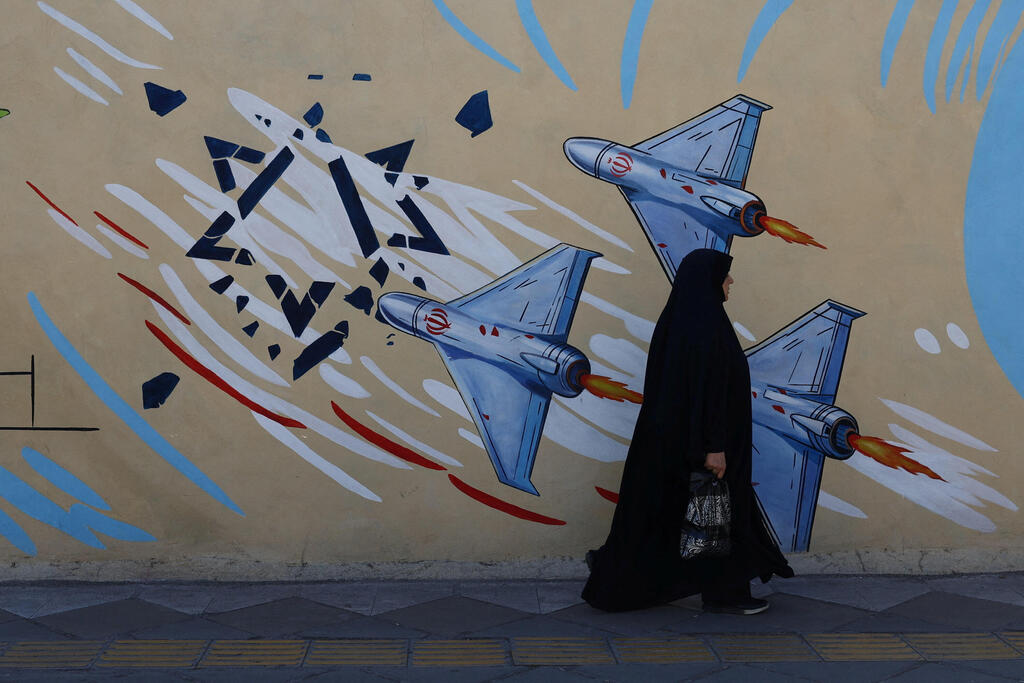
Set against that difficult backdrop, the authorities are still drawing on established Iranian propaganda motifs of national resistance and Western villainy, but downplaying some old revolutionary imagery.
Shi'ite Muslim iconography of martyrdom, a mainstay for decades, has partly given way to Persian national and historical symbols once disdained in the Islamic Republic as harking back to a monarchist past.
(Photo: Majid Asgaripour/WANA (West Asia News Agency) via REUTERS)
Meanwhile, state television coverage of the frequent rallies staged by the authorities features interviews with women without headscarves, something long unshowable in Iranian media.
"It's an attempt to show that everything is normal in Iran, we're all united and we don't butcher our own people," said Ali Ansari, professor of modern history at the University of St Andrews in Scotland.
"It'll work to some extent with waverers in the middle but most Iranians don't believe it really."
Strait of Hormuz
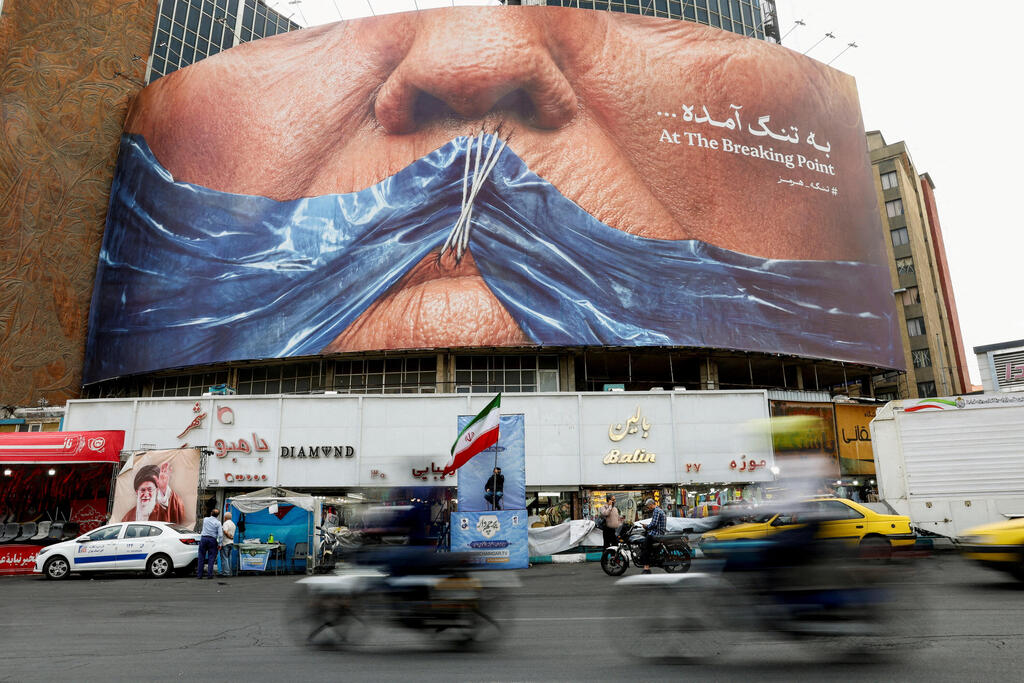
Iran's success in closing the Strait of Hormuz has been central to a propaganda push abroad with online memes targeting Trump, but also in Iran's internal messaging.
One poster depicts Revolutionary Guardsmen holding a fishing net that has caught U.S. ships and warplanes. Another shows a cloth stapled across Trump's face in the distinctive shape of the strait.
Those images fit into a long tradition of extolling Iranian heroism and castigating the United States, including in a well-known mural showing the Statue of Liberty with a skull face.
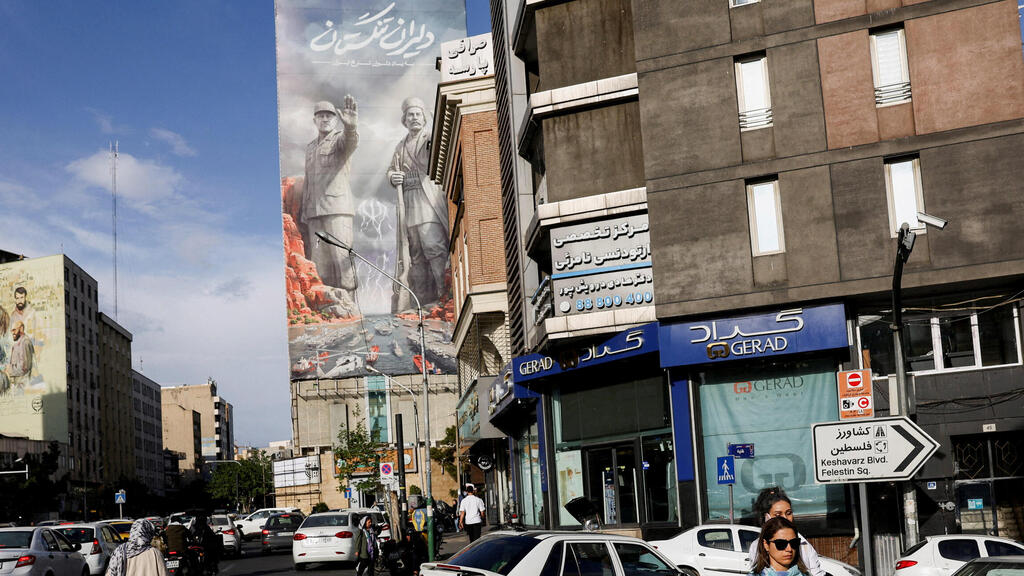
But in a break from the past, another huge poster in Tehran shows Rais Ali Delvari, a guerrilla leader against British occupation of Iran's Gulf coast a century ago, standing alongside a Revolutionary Guards commander to block the strait with stern hands outraised.
(Photo: Majid Asgaripour/WANA (West Asia News Agency) via REUTERS)
"These banners showing national heroes are for wartime purposes. After that they will come back against us and the repression will begin," said Narges, 67, a retired government employee in Shiraz who asked not to give her family name.
Power in Iran has veered sharply during the war from clerics to Revolutionary Guards commanders, Iranian political insiders have said, capping a gradual shift that had already been happening for years.
"The direction of travel when it gets to the narratives that the regime is putting out there is actually indicative of the transformation that the regime is undergoing. It is moving from a theocratic system into a military one," said Vaez.
Images of the Iranian national football team saluting, and of new Supreme Leader Mojtaba Khamenei with an outsize Iranian flag, play into the patriotic theme.
Scepticism about propaganda
Airstrikes on infrastructure and Trump's threat of "civilisational erasure" have strengthened the efficacy of such tactics, Vaez said.
"These have all helped the Iranian regime to portray this war, not as a war against the Islamic Republic, but a war against Iran as a state," he said.
The authorities have staged near-nightly rallies during the war to secure the streets as a bastion of support, but backers and opponents of the system are sceptical about the results.
(Photo: Majid Asgaripour/WANA (West Asia News Agency) via REUTERS)
"It's all a game, a performance meant to show the world that people are with the system. Instead of these displays they should fix the economic situation," said Arshia, 23, a recent French-language graduate from Yazd.
For Mohammed, 26, a hardline student in Tabriz, the patriotism was real, but he was angered by the presence of unveiled women mixing with unrelated men in the rallies. "This is not what the revolution was for," he said.
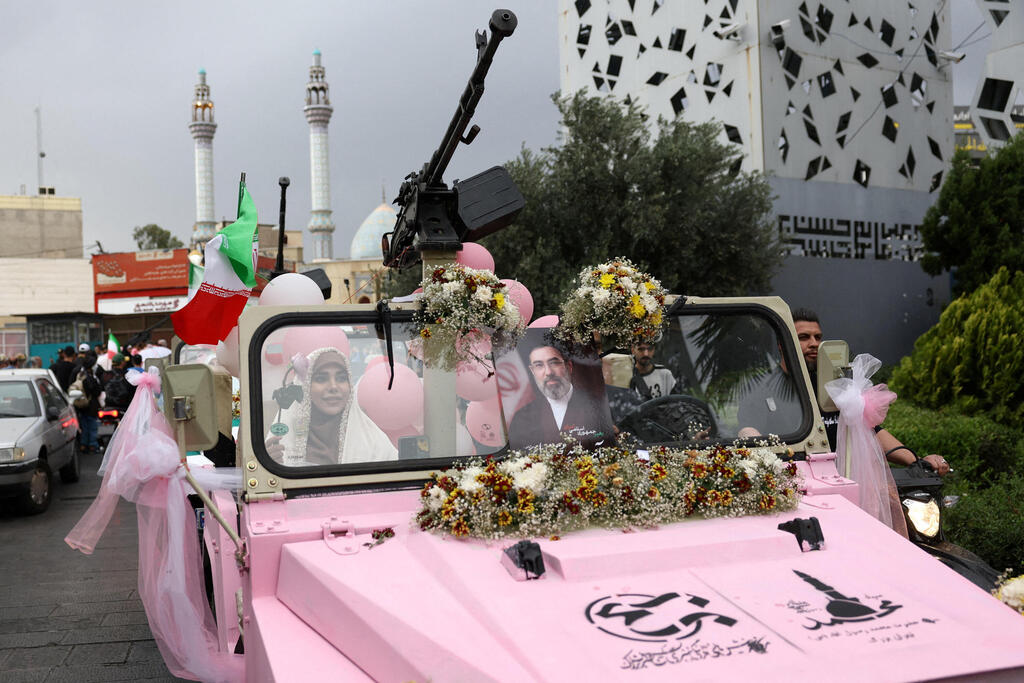
A mass wedding this week involved couples being paraded in Revolutionary Guards vehicles decked out with balloons and machineguns, next to models of ballistic missiles painted an incongruous flamingo pink.
State television showed weapons training sessions in mosques, where military instructors taught men and women to strip and fire assault rifles.
Such imagery may have had the double edge of reminding dissenters in Iran that the authorities can count on heavily armed support, Ansari said.
"It goes to the heart of the fact that the regime is not as secure as it's pretending to be. They're presenting to their own people that this is a regime that is tough," he said.