


The State Attorney’s Office filed charges Friday against two men from the northern town of Nesher, alleging they carried out a series of intelligence-gathering operations inside Israel on behalf of operatives working for Iranian intelligence services.
According to the indictment filed in Be’er Sheva District Court, Roy Mizrahi and Almog Atias, both 25, were recruited to place surveillance cameras and transport “objects” at various locations across the country. One of the targeted areas included the village of Kfar Ahim, home to Defense Minister Israel Katz.
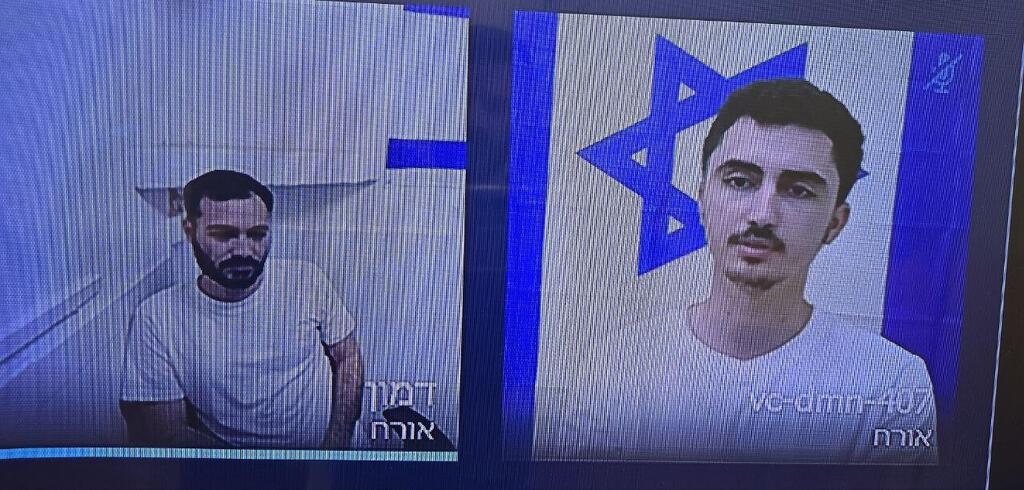
Prosecutors said Mizrahi was first contacted by Iranian agents after he posted a message seeking partners in a swingers' group on the messaging app Telegram. Instead, he received a private message reading, “I’m from the Iranian agency, come earn a lot of money with us doing simple tasks.”
The indictment outlines how Mizrahi received assignments to collect information on civilian infrastructure, record sensitive sites and install surveillance cameras in several locations. He was reportedly paid in cryptocurrency and used encrypted communication and remote control apps such as Session, Clock and UBIA to coordinate with his handlers. He also acquired operational gear, including phones, cameras and SIM cards.
In one task, he was instructed to burn a piece of paper bearing the name of Prime Minister Benjamin Netanyahu. In another, he was told to gather personal information about a woman whose name he had provided. Mizrahi initially refused a request to place a camera at a mall in Haifa or a lookout over the bay, but later agreed to mount one on a tree in Nesher, streaming a live feed to his handler.

Prime Minister Benjamin Netanyahu
(Photo: REUTERS/Ronen Zvulun)
Early assignments paid modest sums, such as 120 shekels ($34) for photographing a street sign or 400 shekels ($112) for a parking lot. Mizrahi eventually expressed dissatisfaction with the payments but continued to take on missions, including filming part of the Tel Aviv promenade. He was later asked to install a camera in Kfar Ahim for several thousand shekels.
Mizrahi recruited Atias to assist with the Kfar Ahim task. The two purchased equipment and drove to the location at night, but aborted the mission when they saw a suspicious vehicle they believed to be a security patrol. Later, after Mizrahi refused to relocate the camera as instructed, his handler sent him a photo of his face with a threat to hand him over to Israeli authorities. Mizrahi then complied and installed the device at a site in southern Israel.
Get the Ynetnews app on your smartphone: Google Play: https://bit.ly/4eJ37pE | Apple App Store: https://bit.ly/3ZL7iNv
Following the end of contact with the first handler, Mizrahi sought a new Iranian contact, eventually connecting with someone identifying himself as “Guest.” This handler assigned new missions, including recording cameras inside a restaurant in Haifa and transferring a bag between two points. Although Mizrahi was told the bag contained soap, he suspected it held explosives after noticing 10 suspicious packages, but completed the delivery for 4,000 shekels ($1,120).

The Tel Aviv promenade
(Photo: AP Photo/Ohad Zwigenberg)
A parallel detention request read, “The defendants committed national security offenses while Israel is engaged in one of the most intense wars it has faced, on multiple fronts, including Iran. They were aware that these foreign agents are hostile actors, yet continued to cooperate. Their actions were stopped thanks to the work of security forces, which led to their arrest.”
Atias’s attorney, Yuval Zemer, responded that his client’s involvement was “minor and secondary,” asserting Mizrahi was the primary actor who initiated contact, accepted money and carried out the missions even before Atias was approached. Zemer argued that Atias withdrew once he realized the nature of the activities, and said the core legal question is whether Atias understood who Mizrahi was working for.
“I’m confident that once the full evidence is presented, it will be clear that Almog was unaware and deceived throughout,” he said.