


The breakthrough did not come from a DNA test or a newly discovered official document. It came from five fragments of an old cemetery map, scattered archival records and a sequence of seven names that investigators eventually realized held the key.
For more than four years, a team from the IDF’s Missing Persons Branch, the Military Rabbinate and the Defense Ministry worked to determine the burial place of Shlomo Haimson, who was killed nearly 78 years ago while trying to escape the Karaolos detention camp in Cyprus. The IDF announced Wednesday that his burial site had finally been identified, but behind that announcement was a painstaking investigation that officials described as part intelligence work, part historical research and part puzzle-solving.
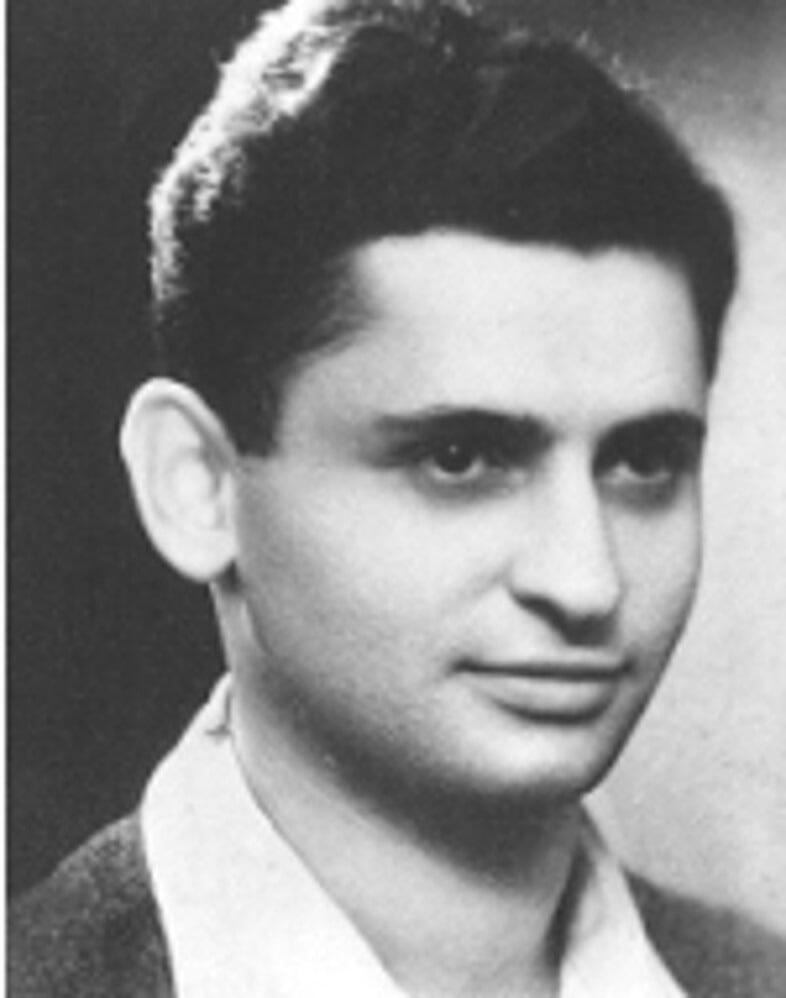
Shlomo Haimson
(Photo: IDF)
“It really is like a treasure map in the movies,” Col. Y., who coordinates investigations into fallen soldiers whose burial places are unknown, told ynet. “Some of the clues exist and some don’t, and you try to connect what you have into an unequivocal finding. And that certainty is extremely important.”
Haimson was killed by guards at the detention camp during the night of September 29-30, 1948. Because he was killed in Cyprus, however, his name was not initially included in the lists investigators normally work from. “Because he was killed in Cyprus, Haimson wasn’t on the lists at all,” Col. Y. said.
The investigation began almost by chance. Maj. Y., a reservist who eventually headed the case, had written his doctoral research about cemeteries and learned that an entire cemetery had once been transferred from Cyprus to Israel and reburied in Haifa. “I learned that they had brought an entire cemetery from Cyprus to Israel and that it was in Haifa. That interested me very much,” he said.
He contacted the Cyprus Detainees Association, which maintains the burial plot. “Somehow they told me they had 136 graves, and 120 of them were unidentified,” he recalled. Among the documents connected to those graves, investigators found Haimson’s name, turning the search into a military investigation.
The team first had to reconstruct what had happened after his death. Haimson had been buried in the Margo cemetery in Cyprus, and his remains were later transferred to Israel in 1970 along with other graves from the cemetery. “If I know where he was buried in Margo, I can know which section he was buried in here in Israel,” Maj. Y. explained.
A cemetery map in five pieces
That was where the real detective work began. Investigators obtained a map of the cemetery, but it had been photographed in five separate pieces, at different resolutions and from different angles, with each fragment coming from a different archive.
“The map we received from Margo came to us in five pieces that didn’t connect,” Maj. Y. said. “It was collected from all kinds of archives. Every piece of paper came from somewhere else.”
At the same time, the team had to work through burial lists prepared by a succession of rabbis sent to Cyprus. There had been no uniform recording system, with each rabbi documenting the graves in his own way. Investigators therefore had to make two incomplete systems fit together: a fragmented visual map and inconsistent handwritten burial records.
After lengthy work, Maj. Y. succeeded in reconstructing the five fragments into a single map. The team then began searching for fixed reference points, identifying the cemetery gate to establish the map’s orientation and using surviving inscriptions on some headstones as anchors.
“We found the cemetery gate and then understood the directions,” Maj. Y. said. “On some of the graves, the writing survived, so that gave us anchors. Then you start, like a puzzle, placing names according to the anchors you have.”
Col. Y. compared the method to a classic intelligence technique known as anchoring. “What’s important is understanding that the work of connecting the pieces has to be precise,” he said. “It’s like a very clumsy puzzle.”
The ‘golden sequence’
The second major breakthrough came when investigators figured out how the rabbis had ordered the rows of graves in Margo. That led them to what Maj. Y. called the “golden sequence.”
One rabbi had recorded seven names consecutively, and some of them could be matched to surviving headstones already established as anchors. Then tiny physical clues began to line up. “Suddenly we found parts of letters, sometimes a word,” Maj. Y. said.
Investigators realized that six of the names belonged to the same row. That left the seventh. “It meant that the seventh, Haimson, was the last one,” he said.
The map fragments, burial records, surviving inscriptions and sequence of names had finally converged on one location. For the investigators, that level of certainty was essential because the finding would ultimately have to be presented not only to military authorities but to Haimson’s family.
After the burial site was identified, the Defense Ministry was notified and the IDF attaché in Brazil went to meet the family. Investigators and representatives of the Defense Ministry and Cyprus Detainees Association then joined the relatives on a video call and walked them through the evidence.
“You see the sparkle in their eyes and the tremendous emotion,” Col. Y. said. “They understand that they have a heroic father in this case.”
Haimson’s daughter Miriam was only four days old when he was killed. “She is receiving the grave of a father she never knew,” Maj. Y. said.
For the investigators, cases like this do not end when the workday does. “Investigations take years,” Maj. Y. said. “You sleep with it at night. It accompanies you every moment of the day. There are a lot of frustrations and disappointments and dead ends.”
But every breakthrough, he said, restores the momentum. “Every time you get a ‘bingo’ like this, it gives you an enormous drive to continue. What I get out of it is seeing the families’ eyes when you bring them a grave.”
“And I truly hope we find everyone in the end,” he added. “We haven’t forgotten anyone, and we hope we manage to solve every mystery.”