

IDF Chief of Staff Lt. Gen. Eyal Zamir and Central Command chief Maj. Gen. Avi Bluth warned the political leadership Monday evening that the West Bank is on the verge of an explosion because of nationalist crime, and that the growing number of incidents is diverting the military’s attention from thwarting terrorism.
At the meeting, which was convened unexpectedly at Central Command and attended by Prime Minister Benjamin Netanyahu and Defense Minister Israel Katz, data were presented showing a significant decline in Palestinian terrorism, but at the same time an increase in nationalist crime. Bluth said nationalist crime is “like a match that can ignite everything in an instant,” and warned that the IDF’s attention is being constantly diverted to dealing with nationalist crime instead of thwarting Palestinian terrorism.
When Netanyahu pressed the chief of staff and asked what the military’s plan would be in the event of an outbreak of violence in the West Bank, Zamir replied: “We did not come prepared to the discussion to present that.”
Gallery
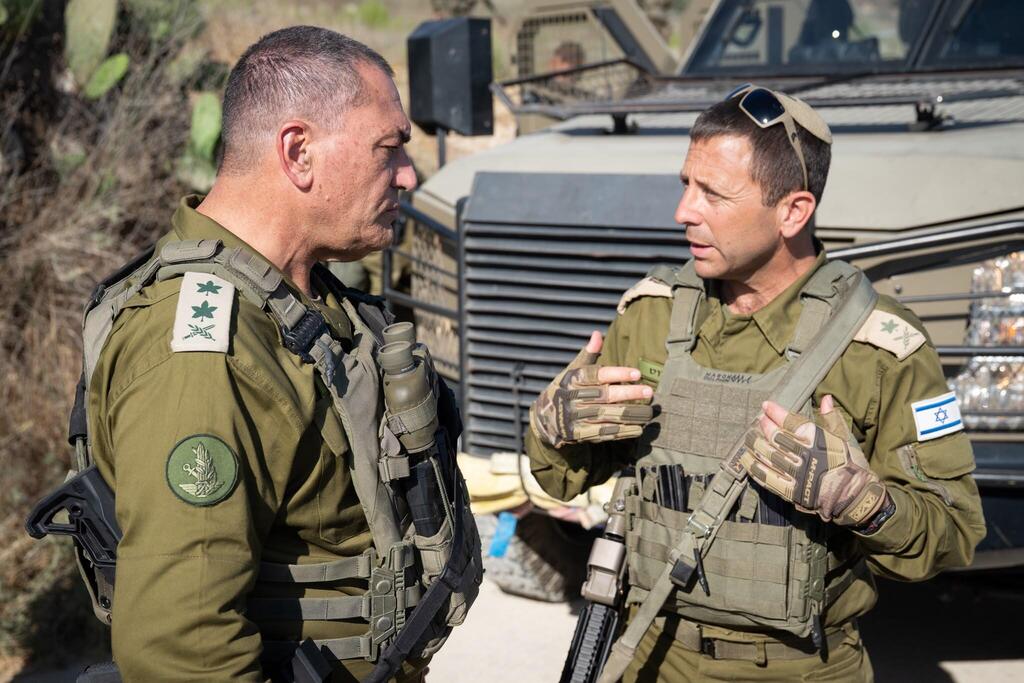
IDF Chief of Staff Lt. Gen. Eyal Zamir in the West Bank village of Tell
(Photo: IDF Spokesperson's Unit)
In recent days, amid the pace of evacuations of illegal outposts, the level of incitement against senior commanders has also increased, including against Bluth and Judea and Samaria Division commander Brig. Gen. Kobi Heller. The two, despite Palestinian terrorism figures being at their lowest in decades, have become targets of several groups claiming they are coordinating with the Palestinian Authority, even though this is a directive from the government.
The IDF’s senior command is deeply concerned about incidents of nationalist crime that are receiving significant attention in the United States and generating American pressure, which in turn has led to a slowdown in the pace at which agricultural farms have been established on the ground in recent weeks.
Senior officers said Sunday that “the sector is getting out of control,” and security officials warned the political leadership that it is “on the verge of an explosion” because of the growing number of nationalist crime incidents involving extremist rioters.
Wave of evacuations is troubling the extremists
“There are many settlement-related missions the IDF is carrying out,” a senior official said. “Opening roads, establishing communities and creating areas for residents in accordance with directives from the political leadership. None of that is being delayed or stopped. The IDF is stretched to the limit in the West Bank, but at the same time we are being forced to deal with these incidents, which divert attention and are becoming increasingly brazen. It seems no one understands what is really happening here and where this could lead.”
Shooting in the village of Hamrush on Friday


The latest escalation began several days ago. During the past week, after previously refraining from doing so, the IDF began evacuating dozens of outposts that had been established illegally in the West Bank. This came after the deadly attack in the village of Tell. The pace of evacuations rose to nearly two per night, something that greatly disturbed the Jewish extremists on the hilltops. At first, they attacked Bluth, but realized that this was less effective because he enjoys broad support among Jewish extremists due to his understanding of residents’ needs.
The extremists then singled out Heller as the figure allegedly behind the evacuations.
“These are extremists who, no matter who serves as commander of the Judea and Samaria Division or head of Central Command, will attack him,” a senior official from the West Bank farms told ynet and Yedioth Ahronoth on Sunday. “This is the best period settlement has had. You can see what is happening on the ground. We on the farms feel that there is a response to our needs and that there are people listening.”
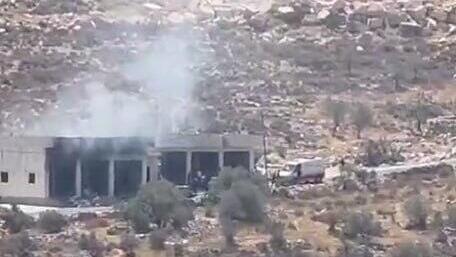
Arson of a house in Ma'ale Tidhar
Several days ago, a poster was circulated showing Bluth and Heller in uniform saluting a man wearing a keffiyeh, under the caption: “11 evacuations in one week. Bluth and Heller, champions of evacuations. Those who destroy you and lay you waste.” Heller, settlement officials say, arranged the area to allow residents to return quickly to northern Samaria.
At the same time, one settlement official explained: “Recently there has been a decline in the number of farms being established, and you can see it. Almost a freeze. It works according to the trend of these incidents [the attack, nationalist crime] and all the chaos they create on the diplomatic level has an impact. Here, in fact, it is more at the political level. On the ground, Heller maintains an open dialogue and pushes for ties with settlement officials and farm owners. He supports contacts between his brigade commanders and farmers. The attacks on him are unclear, but this is familiar.”