

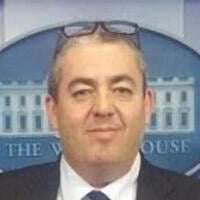
An Israeli‑Argentinian businessman held in a Venezuelan prison for more than a year following his arrest on suspicion of being a mercenary returned to Israel Tuesday, describing harsh conditions behind bars and expressing gratitude that he is finally home.
Yaakov Harari, 72, arrived in Israel Tuesday afternoon after being released from a Venezuelan prison the night before, amid a wider backdrop of Venezuelan President Nicolás Maduro’s detention drawing international scrutiny.
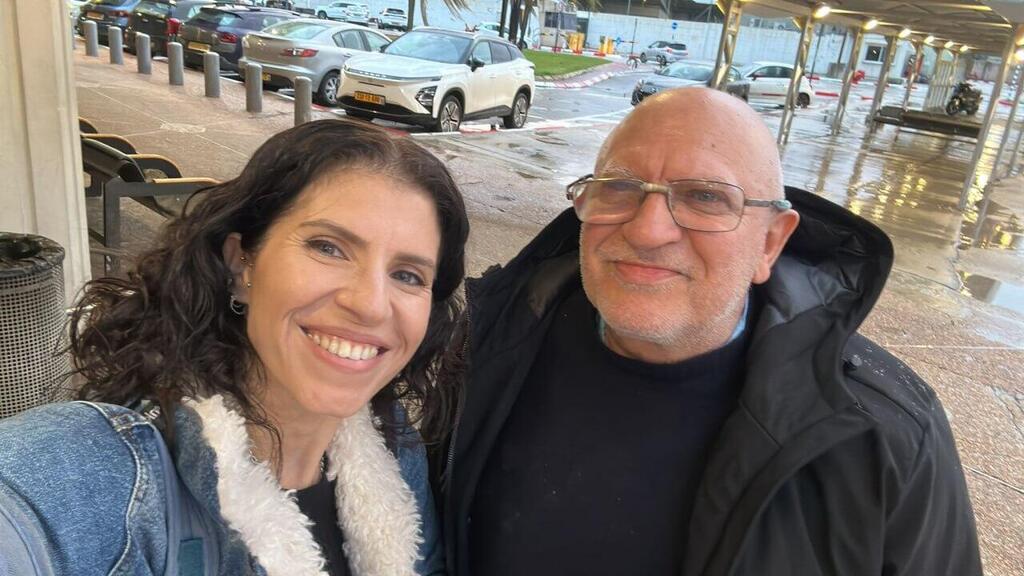
“I believed all along that I would come home,” Harari told ynet in an interview. “I knew my daughters were working for my release and that the state would not forget me.”
Harari, who has conducted business throughout Central and South America, traveled to Venezuela via Colombia in October 2024 for work. Venezuelan authorities later arrested him, claiming he was a mercenary, and cut off all contact with his family.
He was held in El Rodeo I prison under what he described as extremely harsh conditions, with no formal legal process and limited medical care alongside dozens of local and foreign inmates. “I have no connection to security matters,” Harari said. “I’m a 72‑year‑old man with health issues who takes medication. I’m not a mercenary, just a simple businessman.”
Harari said fellow inmates in his cellblock had killed themselves due to the conditions. One reportedly hanged himself with a bedsheet, prompting guards to take away sheets and blankets from all foreign prisoners. He said he and others were left to cover themselves with towels in freezing conditions and endured severe food shortages.
His detention also featured incidents of overt hostility, including antisemitic taunts, said Moshe Shitrit, deputy mayor of Be’er Sheva, Harari’s hometown, who has been working with the family. “Guards accused him of being a mercenary and claimed he came from a country of child killers,” Shitrit said. “One guard even celebrated with him, saying Iranians had shot down five Israeli planes, which of course never happened.”
Harari spent most of his time confined to his cell, allowed outside for only about an hour a day. Shitrit said guards at times told Harari that his wife had committed suicide in order to break him mentally. “Psychologically, he was very tough and resilient,” Shitrit said.
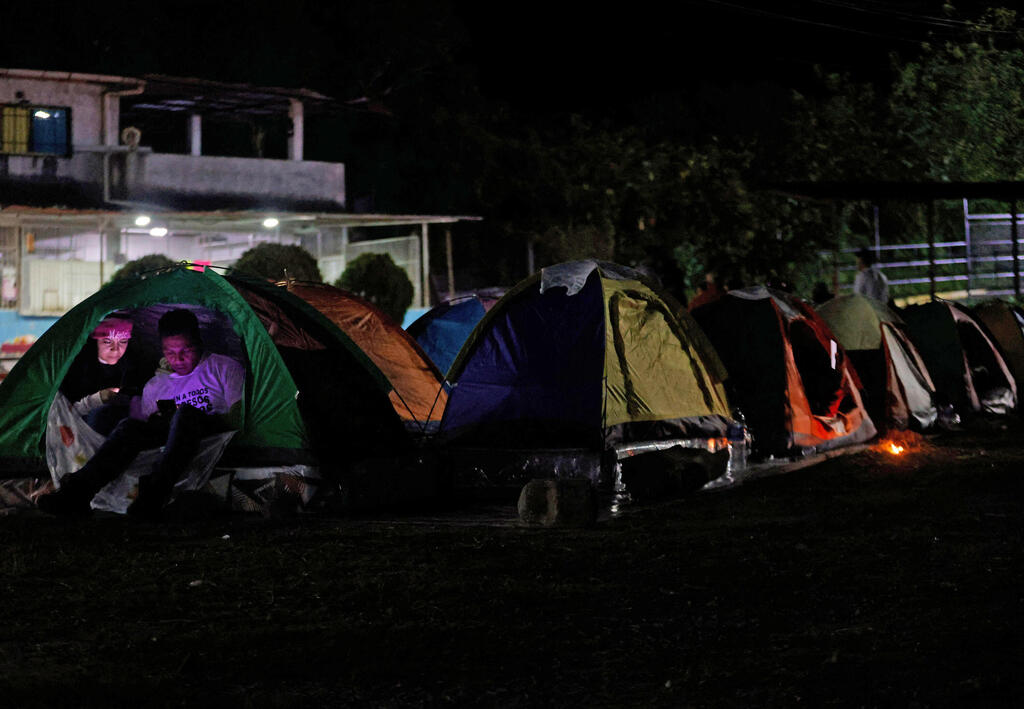
El Rodeo I prison
(Photo: Pedro MATTEY / AFP)
Harari shared his cell with prisoners from about 48 countries, including Americans, Yemenis and Pakistanis.
Venezuelan authorities recently sentenced Harari to 25 years in prison on charges of running a sabotage school, based on photos on his phone showing relatives in IDF reserve uniforms. Officials had alleged he was an agent of Mossad and the IDF.
Throughout his incarceration, Harari told fellow prisoners he was confident he would eventually be freed. “I knew my daughters were taking care of me,” he said.
His family saw an opening for his release after the U.S. captured Maduro, leveraging a rare diplomatic opening that led to the release of several foreign detainees, including Harari. “From the start, we worked quietly because we feared he could be harmed,” Shitrit said. “We had no contact with him; all communication came through other released prisoners or representatives of foreign governments active in Venezuela.”
Shitrit described Harari as “a 72‑year‑old man who takes medication — not the classic mercenary one might imagine. In prison, officials made bizarre accusations against every inmate, claiming each was a foreign agent. It was a paranoid regime.”
Asked if he regretted traveling to Venezuela, Harari said: “There are good people in Venezuela, and I regret that I went there. I hope that when there is a change of government the country will thrive.”
Israeli officials said no payment was made for Harari’s release.
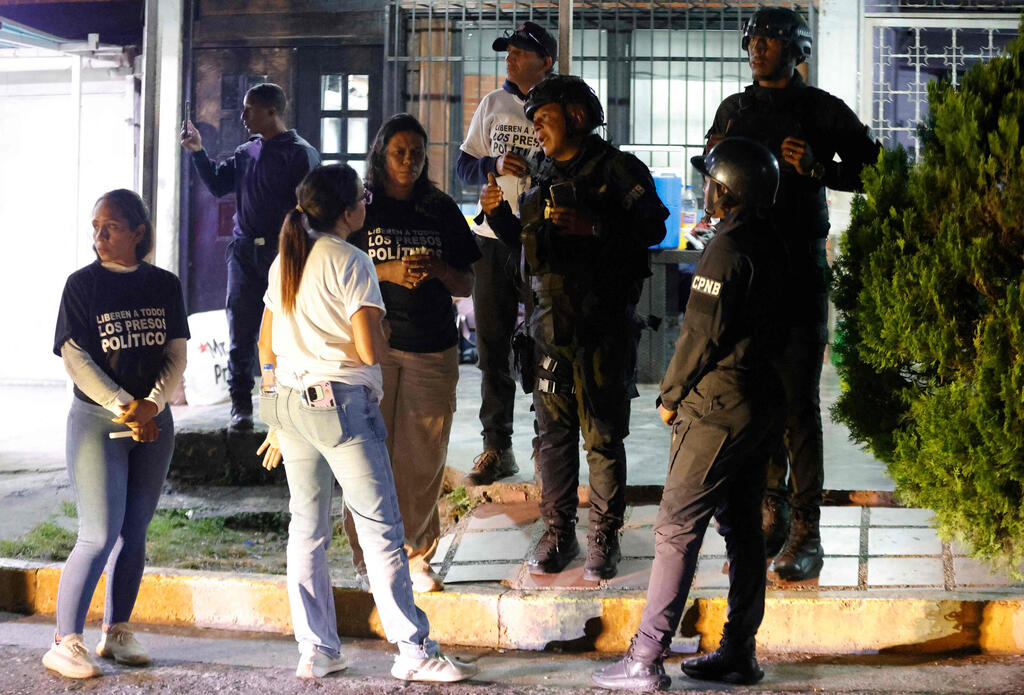
El Rodeo I prison
(Photo: Pedro MATTEY / AFP)
The Foreign Ministry said Tuesday that throughout Harari’s imprisonment, its department for Israelis abroad provided ongoing care and maintained continuous contact with his family.
Since Venezuela and Israel do not have diplomatic relations, the ministry — including through Israel’s embassy in Colombia — worked with foreign embassies and diplomatic representatives in several countries friendly to Israel to enable prison visits, maintain contact with Harari and support him during his incarceration. Through those diplomatic channels, photos of his grandson were also sent to him to keep up a human connection and offer moral support.
“Harari’s case was raised in policy discussions, and various diplomatic channels were activated with several countries to advance his release,” the Foreign Ministry said. “Prisoner and Missing Persons Coordinator Gal Hirsch, from the Prime Minister’s Office, also worked through international channels to move the matter forward.
"Last night, Harari’s family was notified of his release, and there was great excitement. He was flown on a direct flight to Rome, where he received assistance and support from the Israeli embassy, and he landed in Israel a short time ago. The Foreign Ministry wishes to thank the countries that assisted, including our friends the United States, Germany, Italy and Austria.”
Meanwhile, Prime Minister Benjamin Netanyahu spoke on Tuesday with Harari in a call that also included his daughters Yael and Yaara. “They expressed appreciation to the State of Israel, to the prime minister, to the Jewish community in Caracas and to all of Israel’s emissaries for the tireless effort to free their father from prison and bring him home,” the Prime Minister’s Office said. “The prime minister congratulated the Harari family and wished them and Yaakov good health, a speedy recovery and a return to normal life after the nightmare they endured.”
It was also said that “the prime minister expressed appreciation for the work of the Foreign Ministry, Mossad and Prisoner and Missing Persons Coordinator Gal Hirsch, and thanked the U.S. government, the government of Germany, the government of Austria and the government of Italy for their assistance to Israel in the process of returning Yaakov home.”
Harari was released as part of the release of political prisoners in Venezuela, amid Maduro's capture by the United States. News of his release was first reported by the NGO Foro Penal, which verifies lists of released detainees, and was later confirmed by activist and former diplomat in Argentina, Elisa Trotta.
Harari’s release came as the Venezuelan government sought to appease U.S. President Donald Trump, announcing the freedom of 116 prisoners. According to Caracas, it was a “gesture of goodwill.” Maduro, it should be recalled, is accused by the U.S., along with his wife Cilia Flores — also captured in the American operation — of using Venezuela’s government apparatus to amass huge wealth from trafficking thousands of tons of cocaine.
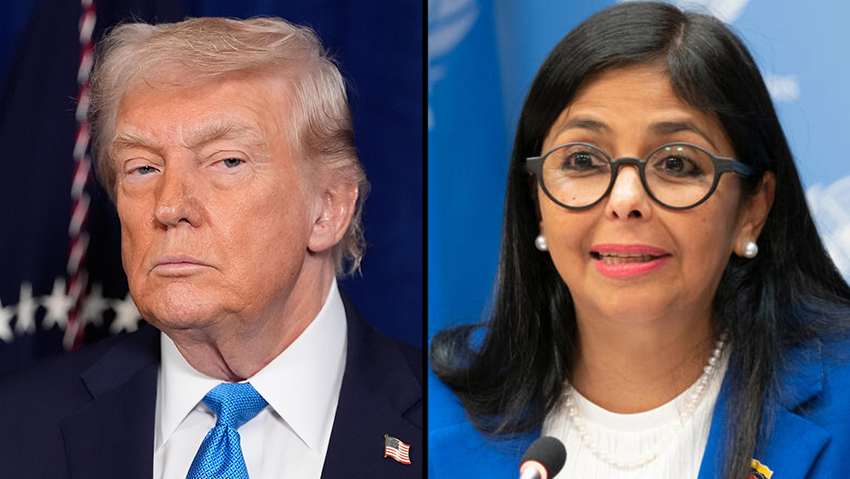
Donald Trump, Delcy Rodriguez
(Photo: AP Photo/Alex Brandon, Lev Radin/Shutterstock)
Trump has said the release of prisoners in Venezuela was carried out at the request of the United States and praised the government of interim President Delcy Rodriguez. “They are great, they gave us everything we wanted,” he said of Rodriguez and her ministers.
In January 2025, Interior Minister Diosdado Cabello announced that 125 mercenaries had been arrested in Venezuela, including an Israeli citizen. At the time, reports said Harari was detained after crossing the border from Colombia. The report of his arrest was given to Israel by the Venezuelan partner with whom Harari had crossed the border. At that time, Israeli officials said the reason for his arrest and his location were unknown, as attempts to contact Harari had failed and his whereabouts were unclear. The case remained under the radar, with no further reports about the Israeli until now.