

Talks in Sharm el-Sheikh, Egypt on U.S. President Donald Trump’s plan to end the war in Gaza resumed Tuesday, exactly two years after the October 7 massacre.
While Israeli officials said the discussions would be limited to only a few days, it remains unclear what timeframe was set for the current round of negotiations, held under the threat that fighting could resume if the talks fail. Estimates suggest discussions may continue for several more days.
Trump: 'Every country in the world' supported the Gaza ceasefire plan
(Video: Reuters)


According to one of the key clauses in Trump’s proposal, Hamas must release all 48 hostages—both the living and the dead—within 72 hours, while the IDF would simultaneously withdraw to the so-called “yellow line.” Hamas officials, however, now say they will not agree to release all captives before a full Israeli withdrawal.
Reports indicate that the list of Palestinian prisoners Hamas is demanding to free includes several it considers “aces”—Marwan Barghouti, Ahmad Saadat, Hassan Salameh, Abbas al-Sayed and others.
Trump expressed strong optimism Tuesday evening, saying there was “a possibility that we could have peace in the Middle East” and that an additional team would join the negotiations. Speaking at the White House alongside Canadian Prime Minister Mark Carney, Trump said they would also discuss Gaza. Later, he added, “Once the Gaza deal happens, we will do everything we can to make sure everyone adheres to the deal.”
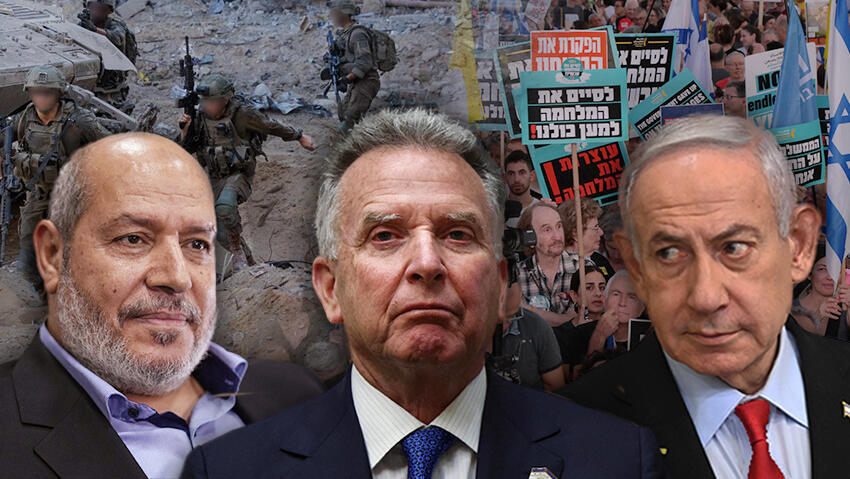
Meanwhile, an Israeli political source said after a day of consultations that U.S. envoy Steve Witkoff is expected to arrive in Sharm el-Sheikh on Wednesday along with Trump’s son-in-law Jared Kushner. Strategic Affairs Minister Ron Dermer is also due to attend. The source said there is “cautious optimism.” Negotiations are progressing, he said, “but we must be very careful, since Hamas can raise obstacles or backtrack at any moment.”
He added, “The direction is positive. Even though the formal meetings ended, side discussions continue—and gaps remain. Progress has been made on issues handled by the current delegations, but Hamas can still reverse course at any stage.”
According to Egyptian channel Al Ghad TV, the second day of talks ended after about five hours. Sources said Hamas is insisting on a complete cessation of hostilities before releasing the hostages. “Debate over the disputed points was postponed until tomorrow,” the report said.
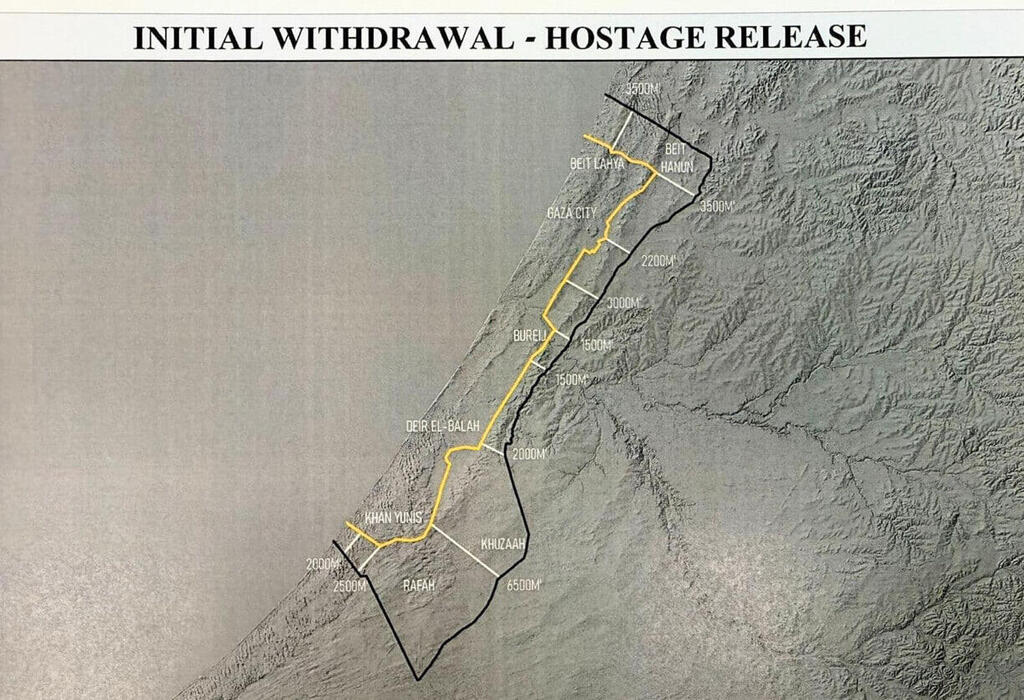
Sources told Qatar’s Al Araby channel that delegations from Qatar and Turkey would arrive in Sharm el-Sheikh within hours to join the talks. Hamas, they said, is demanding that Israel present a clear timetable for full withdrawal from the Gaza Strip and provide guarantees regarding the agreement’s implementation once the first stage concludes. The sources added that the second day of negotiations focused on reviewing maps of Israel’s withdrawal plan for the first phase.
Sky News Arabia reported that Turkish intelligence chief Ibrahim Kalin would travel to Egypt to “join the mediation efforts.” Saudi daily Asharq Al-Awsat, citing an Egyptian source, said “a preliminary agreement may be reached by Thursday or Friday, with Trump expected to announce it.” If obstacles arise, a final decision could be delayed until Sunday, the source said.

(Photo: Omar AL-QATTAA/AFP, AP/Carlos Osorio, Reuters)
The source explained that “the main obstacle now is the ongoing military operation,” and that Hamas is discussing the logistics needed to meet its obligations to release the hostages—whether by removing barriers, enabling Israeli withdrawal, halting flights or receiving captives from other factions. In later stages, particularly regarding Hamas’ weapons, “there will be greater American pressure to reach understandings or compromises,” the source said.
A senior Hamas official told Al Jazeera that the second day of talks focused on withdrawal maps and the timeline for releasing hostages. He said Hamas demanded that each stage of hostage release correspond with stages of full Israeli withdrawal, adding that the final release “must occur simultaneously with the last withdrawal of Israeli forces.” The Hamas delegation, he said, emphasized the need for international guarantees for a permanent ceasefire and full withdrawal.
Sources told Egyptian broadcaster Al Qahera News that “Egypt began discussions over the list of Palestinian prisoners to be released from Israeli jails as part of a swap deal,” noting the same four prisoners serving life sentences that Hamas insists on freeing.
According to the report, Hamas confirmed its willingness to hand over all “prisoners and detainees”—alive or deceased—and demanded clarification of the mechanisms required to implement Trump’s plan, along with guarantees that Israel would not resume attacks on Gaza. Delegations from Qatar, Turkey and the United States are continuing to arrive in Sharm el-Sheikh to participate in the talks. Egypt, meanwhile, is intensifying efforts to mediate between the sides and finalize the framework for carrying out Trump’s plan.
(Photo: IDF, Yair Sagi, Yuval Hen, REUTERS/Evelyn Hockstein, Khalil Hamra/AP)
Egyptian media, which hosts this round of negotiations, sought to project optimism, reporting Tuesday morning that Trump’s senior advisers Steve Witkoff and Jared Kushner were already in Egypt and expected to join the discussions soon. An Egyptian source familiar with the details told the Associated Press that the sides had already agreed on most elements of the plan’s first stage, including the release of all hostages and the establishment of a cease-fire.
In contrast, Qatari officials sought to temper expectations, saying many details remained unresolved. Foreign Ministry spokesperson Majed al-Ansari said Tuesday that “yesterday’s negotiations in Sharm el-Sheikh lasted four hours to discuss obstacles to achieving a ceasefire agreement in Gaza.” The talks are ongoing, he said, but “it is too early to speak in terms of optimism or pessimism.” Doha, he stressed, remains committed to advancing Trump’s plan.
“Trump’s Gaza plan consists of 20 points but includes many details,” al-Ansari said. “Many of these details still require agreement. We are committed to ending the war in Gaza, ending the Israeli occupation and facilitating humanitarian aid. The United States is committed to achieving a ceasefire.” He added that the goal is to implement a plan that is not partial or temporary. The gaps, he clarified, are not over the 20 points themselves but over how to implement them. “We are working with the American side to find a practical plan that can be carried out quickly,” he said.
A Hamas source familiar with the closed-door discussions in Egypt said the group has asked for clarification of the Israeli withdrawal timetable from Gaza and guarantees that the war will indeed end.
Hamas 'aces'
Israel currently holds 117 Palestinian prisoners aged 60 and older, including 13 serving life sentences. Among the terrorists considered Hamas’ “aces” is senior Palestinian figure Marwan Barghouti, who has been imprisoned for more than 23 years and ranks 60th on the list of Israel’s longest-held prisoners. Barghouti led the armed wing of Fatah, the Tanzim, and directed attacks in which five Israelis were killed.
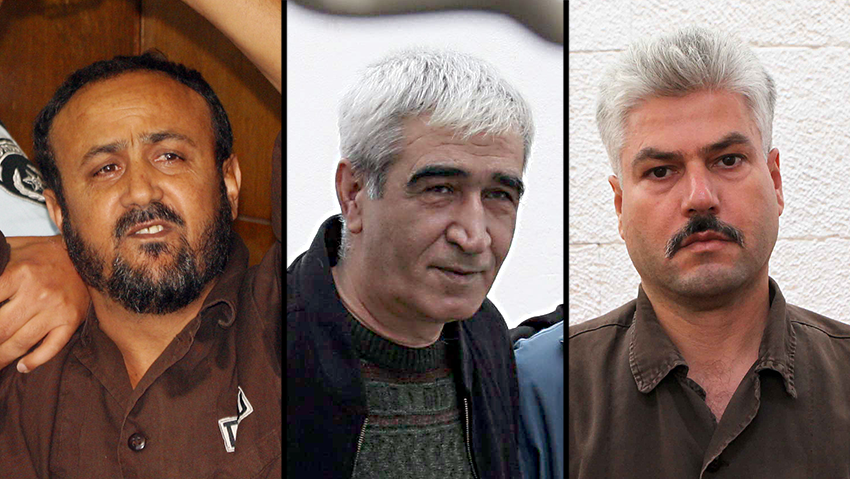
Marwan Barghouti, Ahmad Saadat, Abbas al-Sayed
(Photo: Noam Moshkovits, Atta Awisat, Yariv Katz)
Another so-called “ace” is Ahmad Saadat, secretary-general of the Marxist-Leninist Popular Front for the Liberation of Palestine (PFLP), who planned the 2001 assassination of Tourism Minister Rehavam Ze’evi. He is viewed as an influential and popular figure in Palestinian society. Israel refused to release him in the Gilad Shalit prisoner exchange. Following Hamas’ victory in the 2006 elections, Saadat was captured and imprisoned in Israel. In December 2008, he was sentenced to 30 years in prison.
Other high-profile prisoners include Abbas al-Sayed, the main planner of the 2002 Passover bombing at the Park Hotel in Netanya that killed dozens of Israelis. He was sentenced to 35 consecutive life terms and served as Hamas’ leader in Tulkarm in the West Bank at the start of the Second Intifada. Another is Hassan Salameh, a Hamas military commander who trained in Lebanon under Hezbollah and Iran’s Revolutionary Guard. Following the assassination of Hamas bombmaker Yahya Ayyash in 1996, Salameh orchestrated a series of revenge attacks that killed dozens of Israelis. He was captured in Hebron in May 1996, convicted of murdering 46 Israelis, and sentenced to 46 life terms.
Trump optimistic: ‘I truly believe it will happen’
Optimism is not confined to Egypt but extends to Washington as well. While Israeli and Hamas negotiating teams met with mediators in Sharm el-Sheikh, Trump reiterated his confidence that a deal could be reached to free all hostages in Gaza and end the war.
Speaking to reporters in the Oval Office, Trump said that he believed a breakthrough was within reach, saying there was strong momentum for an agreement. He noted that Israelis were eager to see the hostages freed and the war concluded, and suggested that even Hamas appeared open to a deal.
(Video: Reuters)
The president added that Washington had received encouraging signals from Iran about ending the war. He said broad regional support was forming behind the effort, calling it unprecedented and saying it extended “beyond Gaza” toward a wider Middle East peace. Trump praised Turkish President Recep Tayyip Erdoğan for his role, describing him as a determined leader respected by Hamas, Qatar, the United Arab Emirates and Saudi Arabia.
Israel has allocated only a few days for the negotiations that began Monday, and if no breakthrough occurs, fighting is expected to resume. Prime Minister Benjamin Netanyahu has instructed the Israeli delegation not to allow Hamas to deviate from Trump’s plan or its attached withdrawal map, nor to reopen issues Israel has already agreed upon.
The talks, still in early technical coordination stages, are expected to intensify once additional U.S. envoys join. Strategic Affairs Minister Dermer, who heads the Israeli negotiation team, is due to arrive in Egypt within the next day. If no agreement is reached, U.S. mediators may present a final compromise proposal.
Officials in Israel describe the mood as cautiously optimistic, noting what they call “extraordinary determination” from the Americans and mediators—but uncertainty remains about Hamas’ intentions, which will become clearer in the coming days. Hamas could raise new demands regarding prisoner lists, IDF withdrawal lines and the timetable for releasing hostages.
Unlike previous rounds, mediators this time are reportedly committed to applying pressure on Hamas not to sabotage the opportunity, including an ultimatum that if the group refuses Trump’s plan, it risks expulsion from Qatar and Turkey, both of which Trump mentioned in his remarks Monday night.