


The indictment filed against Bezalel Zini, who allegedly smuggled cigarettes into the Gaza Strip, has sparked calls for his brother, David Zini, to resign as head of the Shin Bet. However, sources connected to the committee that approved his appointment say he is not required to step down, as he has no connection to or responsibility for his brother’s actions.
The warning Zini received from the Grunis Committee for Senior Appointments — stating that he would be required to leave his post if a close family member were involved in extremist acts — does not relate to his brother at all. Instead, it concerns one of Zini’s sons, who appears in Shin Bet databases as a potential offender due to his activity as a “hilltop youth” in the West Bank, a term used for young Jewish extremists involved in illegal or radical activity.
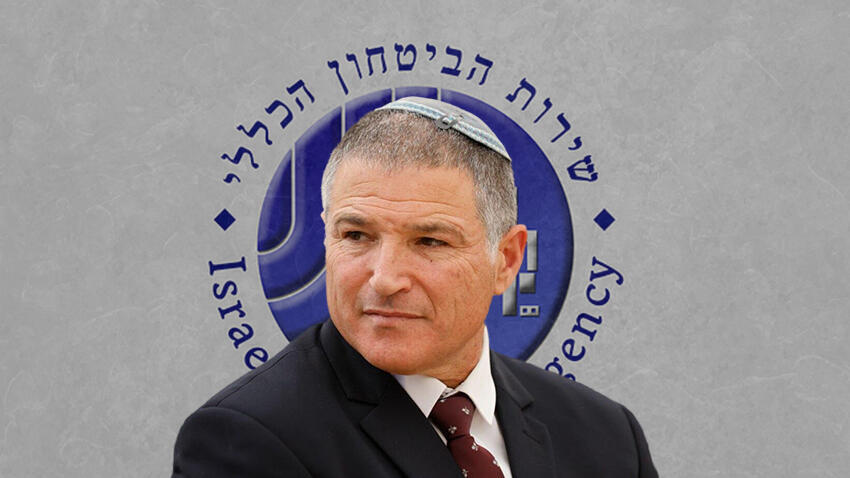
Shin Bet chief David Zini
(Photo: Olivier Fitoussi)
In its opinion, the Grunis Committee warned that the Shin Bet chief would have to resign if a close relative were involved in “extreme acts.” But the relevant clause, Section 14, was not written with Bezalel Zini in mind. Rather, it included clear hints regarding a conflict-of-interest arrangement tied to Zini himself prior to the approval of his appointment. The committee wrote: “A concrete matter arose before the committee involving suspicion regarding the son of Maj. Gen. Zini and another individual known to him. We heard the details and did not find that this involved an issue of lack of integrity on the part of Maj. Gen. Zini.
“It should be noted that for anyone appointed head of the service, if during their term information arises concerning family members, they must at the very least refrain from handling the matter due to a conflict of interest, and others in the service will deal with it. If the degree of closeness is very significant, and the information concerns extreme acts, it would be appropriate for the appointee to resign, and if they do not, it would be right to terminate their term. This is due to a high-level conflict of interest, including harm to public trust. Similar rules would apply even if the conflict of interest is not related to family members but to other matters.”
The report, and the clause in question, were written before the investigation into Bezalel Zini began, making it impossible for committee members to have been referring to that case. The issue instead relates to Zini’s son, who is known to the Shin Bet as a “checked individual,” meaning someone with a criminal background documented in the agency’s databases as a repeat offender. Even so, the inclusion of the clause in the appointment approval report is considered unprecedented, and some argue that former Supreme Court President Asher Grunis, who headed the committee, deliberately inserted it as a “time bomb.”
Bezalel Zini during the indictment hearing
(Video: Hertzel Yosef)


Grunis and the other committee members have declined to comment since the indictment against the Shin Bet chief’s brother was filed. The committee’s role is to advise on senior appointments and submit recommendations to the government, and it does not typically revisit appointments after the fact. Still, some expected Grunis himself to address the developments and clarify whether Section 14 applies in this case. He has not responded to such requests.
Despite claims that Zini is not required to resign, the clause places the matter in the hands of Attorney General Gali Baharav-Miara, who has the authority to raise a red flag and demand his dismissal. However, the likelihood of such a move is seen as minimal. The case does not meet the definition of “extreme acts” under the clause, there is no connection to the Shin Bet chief himself, and Section 14 clearly referred to his son, not his brother.
Even so, those who argue that Zini should not be punished or judged for his brother’s actions are correct — but so are those who say the Shin Bet chief should publicly address the allegations against his brother and the severity of the acts. The indictment, which also reflects the Shin Bet’s position, states: “The defendant, Bezalel Zini, by his actions as described, foresaw as a near certainty that they could assist the enemy, Hamas, in its war against Israel.”