

A senior U.S. administration official gave an extensive briefing Friday evening on the emerging agreement between the United States and Iran, saying Washington and Tehran had reached understandings on the destruction and removal of Iran’s enriched material.
According to the official, the United States would receive the material under the deal, which he said would lead to the “dismantling of Iran’s nuclear program.”
Trump talks about Iran deal
(Video: X)


The official said the negotiations were now “at the finish line” and that Washington expected the agreement to be signed in the coming days. Earlier Friday, Pakistani Prime Minister Shehbaz Sharif, whose country has been mediating between the sides, said a final text of an agreement between the United States and Iran had been reached.
On Israel, the U.S. official expressed confidence that Jerusalem would “cooperate” with the agreement.
“When Israel sees the full terms of the deal, they will feel comfortable with it,” he said. He added that the text of the agreement was one that “Iran and the United States like.”
The official said the deal includes a monitoring regime over Iranian activity. If Tehran complies with the demands, he said, it would receive economic rewards and benefit from the agreement. He acknowledged that if Iran meets expectations, there would be “significant sanctions relief.”
At the same time, he repeated the U.S. position heard repeatedly over the past day, saying “the Iranians are not getting anything for the mere signing of the agreement.”
The official said that after the agreement is signed, the sides are expected to hold 60 days of technical negotiations. A signing ceremony in Europe is currently under consideration, though no final decision has been made. Reports earlier Friday mentioned Geneva, Switzerland, as a possible location.
The U.S. official also referred to Iran’s new supreme leader, Mojtaba Khamenei, saying he “feels comfortable with where we are in the negotiations.” He said the United States and Iran had gone through a confidence-building process that brought the sides closer to signing the agreement. According to the official, Washington believes there will be “minimal opposition” to the agreement inside Iran.
Gallery
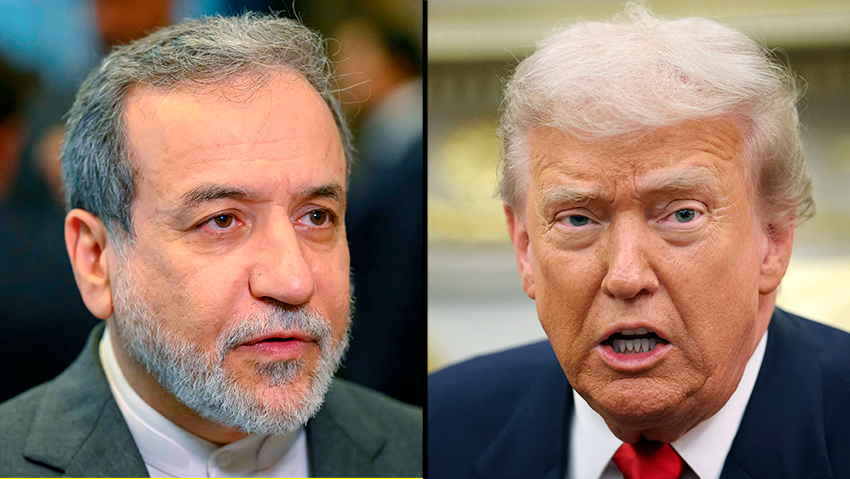
On the same side? Trump and Araghchi
(Photo: Win McNamee/Getty Images, AP Photo/Mehmet Guzel)
The official did not address Iran’s ballistic missile program, an omission likely to heighten concern in Israel, where officials have warned that any agreement leaving missiles and Tehran’s regional proxies outside the framework would fall far short of Israel’s strategic goals.
‘Trump used Araghchi’
Meanwhile, a notable development unfolded inside Iran, where the Fars news agency, which is close to the Revolutionary Guards, launched an unusual attack on Foreign Minister Abbas Araghchi after he said earlier Friday that an agreement between Washington and Tehran was drawing closer. Trump later reposted Araghchi’s message on his Truth Social platform.
“In a situation in which Trump, in a harsh and accusatory tone, called the content published by several media outlets ‘fake’ and claimed that Iran had apologized privately, Araghchi’s position is not free of ambiguity,” Fars wrote.
The agency said Araghchi had not directly denied Trump’s claim that the published content was fake, and that by asking the media to avoid speculation, he had effectively created an atmosphere that could be seen as indirect confirmation of some of the U.S. messages.
“Trump immediately retweeted Araghchi’s tweet and used it as confirmation of his own position,” Fars wrote.
According to Fars, Araghchi’s “ambiguous approach,” which it said had already been seen during his recent negotiations, raises the question of whether his position represents “a kind of retreat or coordination with Trump’s narrative.”
“In a situation in which Trump claimed Iran had apologized privately, the silence or ambiguity of Iranian officials can be interpreted as implicit confirmation of that claim,” the agency wrote. “What is expected from a senior foreign policy official is a clear clarification of the baseless accusations and claims of American officials, not a position that effectively provides media material to justify the other side’s claims.”
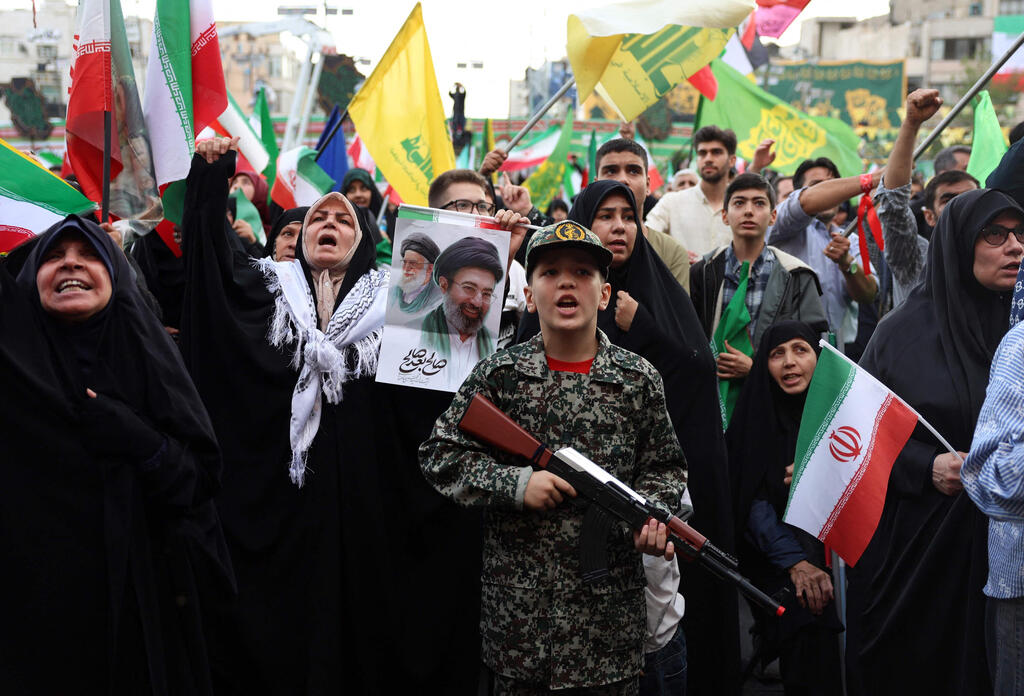
Pro-regime demonstrations in Iran
(Photo: AFP)
Fars said Araghchi’s response could not be considered a firm reply to Trump or an independent diplomatic statement.
“It is more similar to a move that, whether unintentionally or intentionally, became support for Trump’s narrative,” the agency wrote. “In the current sensitive situation, Iranian public opinion needs clarity and resistance to hostile claims, not ambiguity that ultimately benefits the other side.”
Iranian Foreign Ministry spokesperson Esmaeil Baghaei also held a briefing Friday, saying it was natural in any diplomatic process for each side to try to present its own narrative.
“We announced our positions to the public transparently and clarified the course of the negotiations, mediated by Pakistan, and the nature of the issues that constitute red lines for us,” he said. “The statement that we are very close to an understanding is not new. The problem we have faced during this period lies in the contradictory statements of the other side.”
Baghaei said the text of the agreement was in the final stages of internal review and drafting.
“In the meantime, a meeting of relevant institutions and bodies is taking place,” he said. “It is clear to everyone which side is acting in good faith and which side is not. We cannot comment on the time and place of the signing of the agreement. We must first wait until the final decision is made internally.”
He added that Iran had entered the diplomatic process “in good faith” in order to reach an understanding.
“In the negotiations, we are focused on achieving results and following the other side’s positions,” Baghaei said. “We are taking into account our previous experience in negotiations with the American side.”