


Minutes after U.S. President Donald Trump announced a ceasefire with Lebanon on his social media platform, Prime Minister Benjamin Netanyahu told cabinet ministers that “when Israel’s greatest ally acts alongside us in close coordination, Israel cooperates.” A day earlier, however, he had said he instructed the military to deepen the buffer zone in the area.
“Our forces continue to strike Hezbollah. We are about to defeat Bint Jbeil,” Netanyahu said. He later referenced contacts with Iran but omitted parallel talks with Lebanon. “Our American friends keep us constantly updated on contacts with Iran — our goals are identical.”
Repairing and crossing bridges in southern Lebanon


Gallery

Declarations and reality diverge; Prime Minister Benjamin Netanyahu, Defense Minister Israel Katz
(Photo: Haim Zach/GPO, Maayan Toaf/GPO)
Cabinet ministers, like the broader Israeli public, learned of the ceasefire from Trump’s post, sparking anger and criticism given a series of combative statements by Netanyahu and Defense Minister Israel Katz that appeared at odds with developments.
Katz, for his part, had also vowed to fight Hezbollah to the end. On March 2, after Hezbollah joined Iran in launching attacks on Israel, he said: “Hezbollah will pay a heavy price. Naim Qassem, the group’s secretary-general who decided on the fire under Iranian pressure, is now a marked target for elimination. Whoever follows Khamenei will soon find himself with him in the depths of hell, along with the rest of the eliminated members of the axis of evil. The prime minister and I have instructed the IDF to act forcefully against Hezbollah.”
A day later, Katz posted that he and Netanyahu had authorized the military to seize additional high ground in Lebanon to prevent fire on Israeli border communities. “The terror organization is paying and will pay a heavy price,” he said, adding that the move was intended to block direct fire on Israeli towns and protect northern communities. “We promised security for the Galilee, and that is what we will deliver.”
On March 29, during a visit to northern Israel, Netanyahu said thousands of Hezbollah operatives had been killed and that the “enormous threat of 150,000 rockets” had been destroyed, while acknowledging more work remained. “Hezbollah still has residual capability to launch rockets at us,” he said. “What I discussed today with the commanders here are ways to remove that threat as well. I cannot share those discussions, but we are determined to fundamentally change the situation in the north.”
On April 3, after the military clarified that dismantling Hezbollah was not an objective of the current campaign but a longer-term goal, Katz said Israel’s policy remained unchanged. “The top objective is to disarm Hezbollah by military and diplomatic means, regardless of the Iran issue,” he said. He added that the military was completing its ground maneuver up to the anti-tank line to protect border communities. “Homes in Lebanese villages near the border, which serve as Hezbollah outposts in every sense, will be destroyed in accordance with the Rafah and Khan Younis model in Gaza, to remove the threat to Israeli communities.”
Nearly a week later, Netanyahu again stressed continued fighting in Lebanon, detailing targeted killings and strikes in Beirut. “We continue to strike Hezbollah with force, precision and determination,” he said, citing the killing of Ali Yusuf Harshi, a close aide to Qassem. “Our message is clear: Whoever acts against Israeli civilians will be struck. We will continue to hit Hezbollah wherever necessary until we restore full security to northern residents.” Katz added: “We promised to bring security to the north, and that is exactly what we will do.”
Katz also pledged to destroy bridges over the Litani River to prevent displaced residents of southern Lebanon from easily returning. But overnight, shortly after the ceasefire was announced, repairs began, and residents were already seen crossing south in vehicles. By morning, traffic jams were reported across parts of Lebanon, all heading south.
Four days before the announcement, on April 12, Netanyahu told northern residents: “There is no ceasefire in Lebanon. We will not stop until we restore your security.” After repeated requests from the Lebanese government to open talks, he said he had instructed the cabinet to begin direct negotiations with Lebanon to achieve two goals: disarming Hezbollah and reaching a “historic, sustainable peace agreement.”
On April 15 — just one day before the ceasefire announcement — Netanyahu pointed to Bint Jbeil as a key objective. “The fighting is focused on Bint Jbeil. It was Hezbollah’s capital in southern Lebanon,” he said, referencing a speech by former leader Hassan Nasrallah. “We are about to defeat Bint Jbeil. We are about to eliminate this major stronghold.”
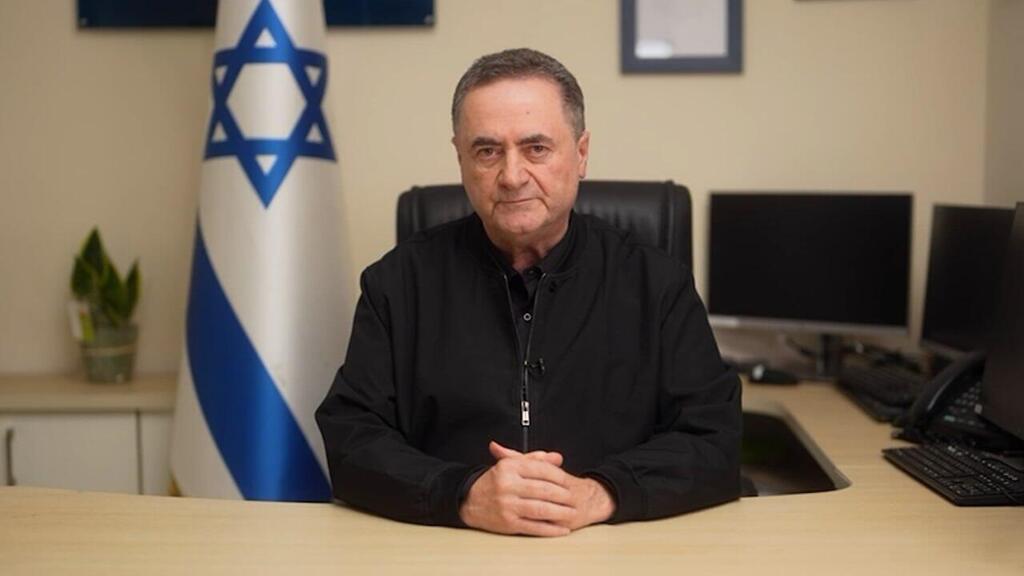
Southern Lebanon did not become Khan Younis or Rafah; Defense Minister Israel Katz
(Photo: Elad Malka, Defense Ministry)
After Trump’s announcement, Netanyahu said there was “an opportunity to achieve a historic peace agreement with Lebanon.” Israeli officials described the development as a return to the November 2024 ceasefire that both sides had violated.
At the time, Netanyahu had also spoken of killing thousands of operatives and destroying underground infrastructure near the border. “It sounded like science fiction, but it is not,” he said then.
In practice, the Israeli military has found weapons stockpiles in villages in southern Lebanon, including areas where ground operations had already taken place since September 2024. The ceasefire was declared before the task was completed. While southern Lebanon has suffered heavy damage, it has not become “Khan Younis” or “Rafah” — a goal that, if pursued at all, would take considerable time.
Alongside the rhetoric and talk of a “historic opportunity,” a key question remains: Hezbollah’s disarmament. It is unclear whether the Lebanese government has the capacity to enforce any such arrangement. Beirut has previously committed to disarming militias under U.N. Security Council Resolutions 1559 and 1701 and has claimed to have demilitarized the south, despite the quantities of weapons the Israeli military says it has found there.
It is also unclear whether the ceasefire will last beyond 10 days or under what conditions fighting might resume. Past experience suggests Hezbollah could use the pause to regroup for further conflict.