

Yisrael Beytenu chairman Avigdor Liberman on Thursday ruled out supporting a minority government after Israel's October 27 election, rejecting a proposal by fellow opposition leader Gadi Eisenkot to form a government even if the bloc seeking to replace Prime Minister Benjamin Netanyahu fails to secure a parliamentary majority.
Speaking at a conference hosted by the Israel Democracy Institute and in a statement posted on social media, Liberman said: "We will not support any minority government, not even a temporary minority government. We need a Zionist majority government, period."
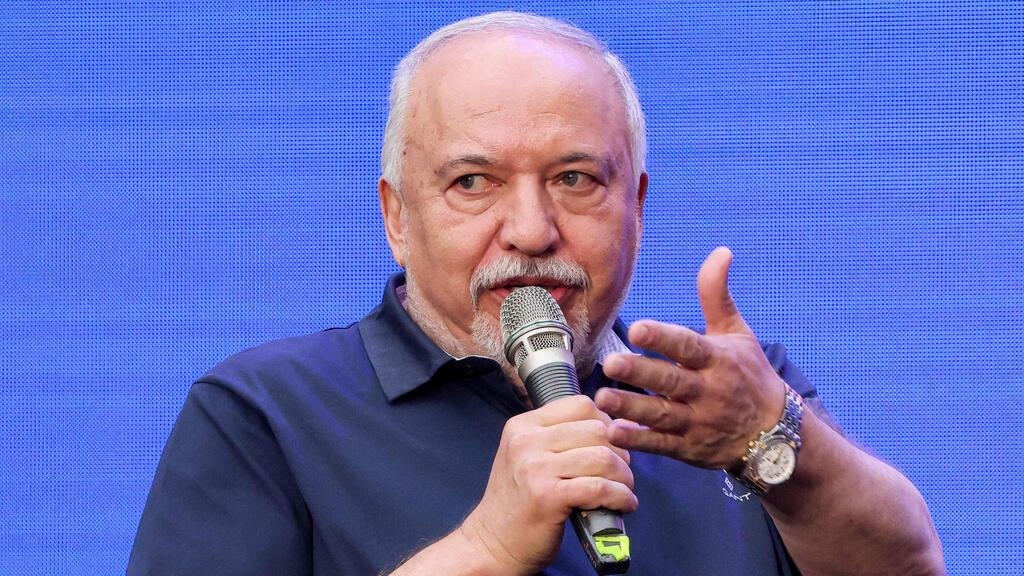
His remarks came a day after Eisenkot, chairman of the Yashar! party, said he would seek to establish a government even if the anti-Netanyahu bloc secured only 58 or 59 seats in the 120-member Knesset, with the aim of subsequently expanding it through support from additional mainstream Zionist lawmakers.
Liberman, whose party is among those Eisenkot would need to support such a government, ruled out joining a coalition with Arab or ultra-Orthodox parties. "Our position is clear and unequivocal: We will establish a coalition made up exclusively of Zionist parties. Without Ra'am, without the Joint List, without Shas and without United Torah Judaism," he said. He added that Likud could become a coalition partner if Netanyahu were no longer its leader, but insisted his party would never serve alongside the prime minister.
Despite the disagreement, Liberman expressed confidence that the opposition could secure a majority in the election, suggesting that some Likud lawmakers might be willing to join a coalition without Netanyahu. He said he knew lawmakers within the ruling party who understood the political situation and could provide the additional seats needed.
Eisenkot, who also attended the conference, avoided directly addressing Liberman's rejection of his proposal. Instead, he called for leadership that would bridge divisions within Israeli society. "My greatest challenge is preventing a situation in which one bloc defeats the other," he said. "This is a political struggle at the end of which every Israeli citizen should feel they have not been defeated." He also criticized Shas chairman Aryeh Deri over military conscription exemptions for ultra-Orthodox men.
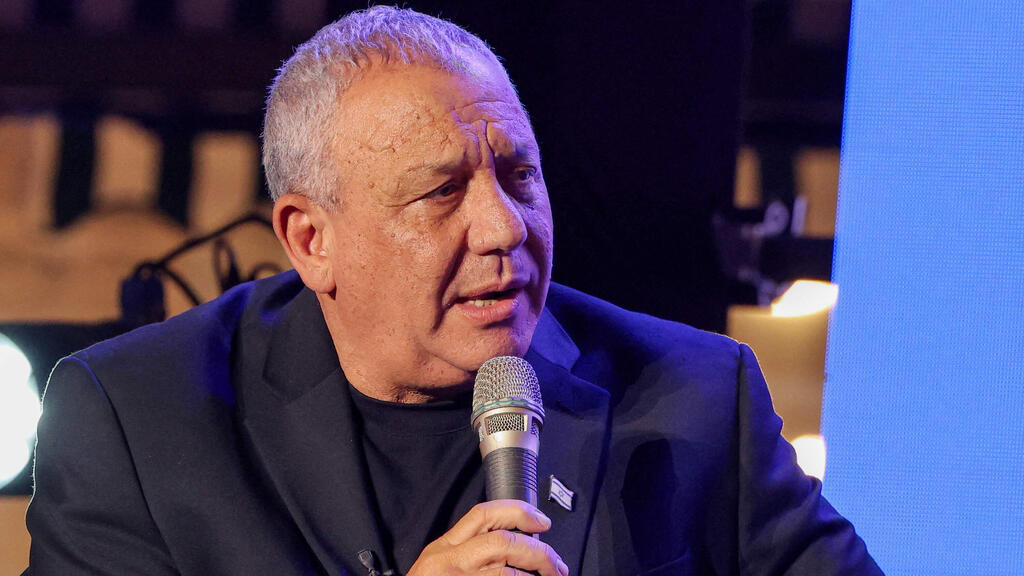
Gadi Eisenkot
(Photo: Jack GUEZ / AFP)
Likud responded by accusing Liberman of hypocrisy, pointing to his participation in the previous coalition government alongside Mansour Abbas' Ra'am party. The party claimed Liberman had transferred 53 billion shekels to Islamic organizations that supported Hamas while serving as finance minister, an allegation presented without supporting evidence in its statement. "He talks right and acts left," Likud said, arguing that Eisenkot and Liberman could not form a government without Democrats chairman Yair Golan and the Arab parties.
Blue and White chairman Benny Gantz also weighed in, urging Eisenkot to pursue a broad Zionist unity government rather than a minority coalition. "Either Liberman is lying and will move to establish a minority government with the Arab parties under his leadership, or we're heading for another election," Gantz wrote on X. He pledged to support Eisenkot in efforts to form a national unity government.
Golan, meanwhile, rejected any possibility of joining a government with Netanyahu or Likud. "The only coalition that should be formed after October 27 is a coalition of the change bloc," he said, accusing Likud lawmakers of enabling the government's judicial overhaul, ultra-Orthodox military service exemptions and opposition to a state commission of inquiry into the October 7 Hamas attack. "We will not sit with Netanyahu, not with Likud and not with any party from the coalition of destruction," he declared.
The exchange exposed competing visions within the anti-Netanyahu camp less than two weeks before the election, with opposition leaders divided over whether a minority government, a broad unity coalition or an alliance excluding Likud entirely offers a viable path to power.