

The United Arab Emirates' attorney general confirmed Friday that the Omani co-pilot who attempted to seize control of a Flydubai passenger jet intended to crash the aircraft into Ben Gurion Airport, revealing that his Islamist radicalization had begun years earlier while he was studying in Australia.
UAE Attorney General Dr. Hamad Saif Al Shamsi said the suspect, Hamam al-Hammami, had planned a suicide attack targeting the passenger terminal at Israel's main international airport. The co-pilot confessed to acting alone, but the attorney general emphasized that the investigation into his connections and possible accomplices was continuing.
Gallery
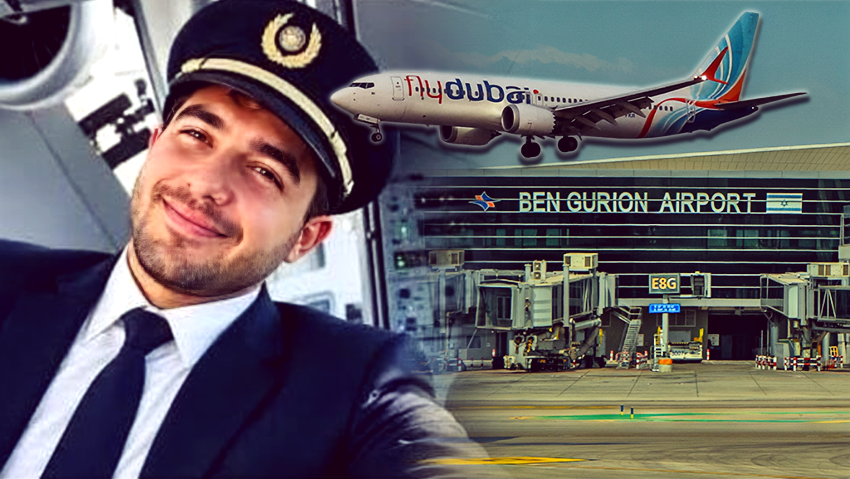
Flydubai co-pilot planned suicide attack on Ben Gurion terminal after two scouting flights, UAE says
(Photo: Davidi Vardi/shutterstock, REUTERS/Ammar Awad)
According to the official statement, al-Hammami "intended to seize control of the aircraft and use it to carry out a suicide attack against the passenger terminal at Ben Gurion Airport, with the aim of causing the greatest possible number of casualties."
Investigators found that the first signs of his radicalization and inclination toward terrorism emerged in 2017, when he was studying in Australia. During that period, the suspect was influenced by takfiri ideology, an extremist interpretation of Islam, through radical literature and online content glorifying terrorist organizations and suicide attacks.
The statement added that the co-pilot "drew inspiration from the September 11 attacks in the United States, and the idea of carrying out a similar operation using an aircraft became firmly established in his mind. According to his confession, this was connected to his decision to pursue a career in aviation."
Radicalization in Melbourne and preparations for the attack
According to the UAE statement, al-Hammami confessed that while studying in Melbourne, Australia, he regularly attended a mosque affiliated with the Royal Melbourne Institute of Technology (RMIT). During his visits, he became acquainted with individuals associated with a center called My Centre.
He claimed the center was managed by a Lebanese man known as Abu Hamza and allegedly received support from an organization linked to the Muslim Brotherhood. These claims were made by the suspect and have not been independently established.
Al-Hammami also told investigators that he had prepared himself psychologically and physically to carry out the plot by increasing his exposure to material encouraging terrorism and undergoing boxing training with a private instructor.
The investigation found that the suspect had used two previous flights to Tel Aviv to familiarize himself with the flight route and Ben Gurion Airport as part of his preparations for the alleged terrorist plot. He decided to carry out the attack during his third flight to Israel, on September 30.
Investigators also examined how the suspect had been recruited by Flydubai. According to the statement, he met the airline's professional and security requirements, including holding a valid pilot's license, providing a certificate of good conduct and completing the required background checks.
However, none of those procedures revealed indications of his extremist beliefs or his intention to carry out a terrorist attack.
Cockpit struggle and emergency landing in Saudi Arabia
The Emirati statement also detailed the events aboard the flight. According to investigators, the suspect surprised the aircraft's captain inside the cockpit and attacked him with an emergency axe. The captain, Smit Machchhar, resisted the assault and attempted to summon help.
A pilot assigned to operate the aircraft's return flight was also on board and happened to be near the cockpit when the attack took place.
"He noticed the cockpit door repeatedly opening and closing in an unusual manner, which aroused his suspicions," the statement said.
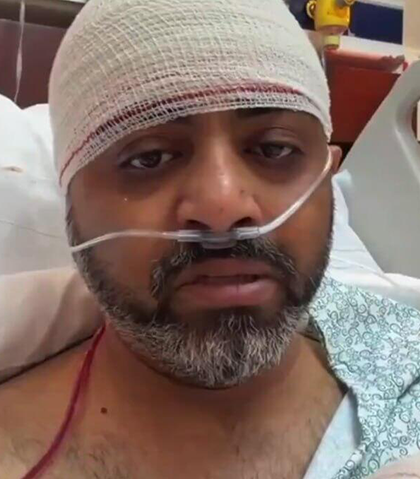
Smit Machchhar
The pilot approached the cockpit and attempted to enter using the access code. After gaining entry, he saw the suspect attacking the captain and immediately intervened.
The Emirati account gave limited attention to the role of Israeli passengers in stopping the attack, stating that the pilot intervened with the assistance of a crew member and several passengers.
Together, they rescued the injured captain and subdued the suspect.
Meanwhile, the captain assigned to the return flight and his co-pilot regained control of the aircraft, diverted it from its original route and landed safely at Tabuk Airport in Saudi Arabia.
Suspect confesses to acting alone, investigation continues
According to the UAE authorities, al-Hammami provided a detailed confession in the presence of his lawyer, after all legally required safeguards and guarantees had been ensured.
The suspect described his motives and the various stages of planning and carrying out the attempted attack.
He admitted to acting alone, without the involvement of others, although investigators are continuing to examine evidence to verify that claim.
The UAE Public Prosecution also collected testimony from the aircraft's captain, the pilot assigned to the return flight, his co-pilot and members of the cabin crew.
The attorney general emphasized that the investigation remains ongoing, particularly regarding the suspect's connections and the possibility that others may have been involved in planning or facilitating the attempted attack.