

Nearly one year and ten months after the October 7 massacre, the Israel Defense Forces have begun addressing the sensitive issue of awarding military commendations for the day of the attack—a subject that has previously stirred public controversy.
IDF Chief of Staff Lt. Gen. Eyal Zamir recently ordered the establishment of a special committee to draft recommendations for citations to be awarded to soldiers and commanders for their bravery in repelling Hamas’ deadly invasion of the western Negev. The committee is expected to submit its conclusions within a few months.
The rescue of a family by IDF troops in Kibbutz Be'eri on October 7


This will be a special citations committee, distinct from the IDF’s usual citation review bodies, which typically operate under the Military Human Resources Directorate. The panel will include senior officers from various branches and commands, including reservists, in order to diversify its composition and thoroughly evaluate each citation recommendation. These recommendations will be collected from battalion, brigade and division commanders, as well as officers in rear-echelon units whose troops were caught in or rushed into battle on that black Saturday. The IDF emphasized that discussions are still preliminary and a final decision has yet to be made.
The committee will assess every nomination individually and, before doing so, it will establish unique criteria for awarding commendations due to the sheer scale of combat and exchanges of fire in the Gaza border region during Hamas’ initial assault. The panel will also draw on extensive documentation gathered by IDF investigation teams over the past year.

The last time a General Staff-level citations committee operated in a similar fashion—following Operation Protective Edge nearly a decade ago—it ended in controversy. The IDF was forced to add additional awards after the initial distribution, under intense pressure from soldiers in the field and bereaved families.
This time, the military anticipates further complications: What will constitute the threshold of heroism for a citation in the unprecedented circumstances of October 7, with thousands of nominations expected? How can the army avoid devaluing the award by distributing it too broadly? Other complex questions include: how to handle civilians who spontaneously joined the fighting before being formally drafted, and how to deal with potentially conflicting accounts from the hundreds of battle sites across the Gaza periphery and along the border that day.
At this stage, the committee will focus only on citations related to the events of October 7, not on the many battles that took place during the ground offensive in Gaza that began three weeks later. Even the smaller-scale fighting still taking place in the Strip is officially considered part of the same war, nearly two years after it began.
The Israel Defense Forces had until now deliberately avoided addressing the highly sensitive issue due to the failures of that day, but the military has decided to move forward with considering the citations.
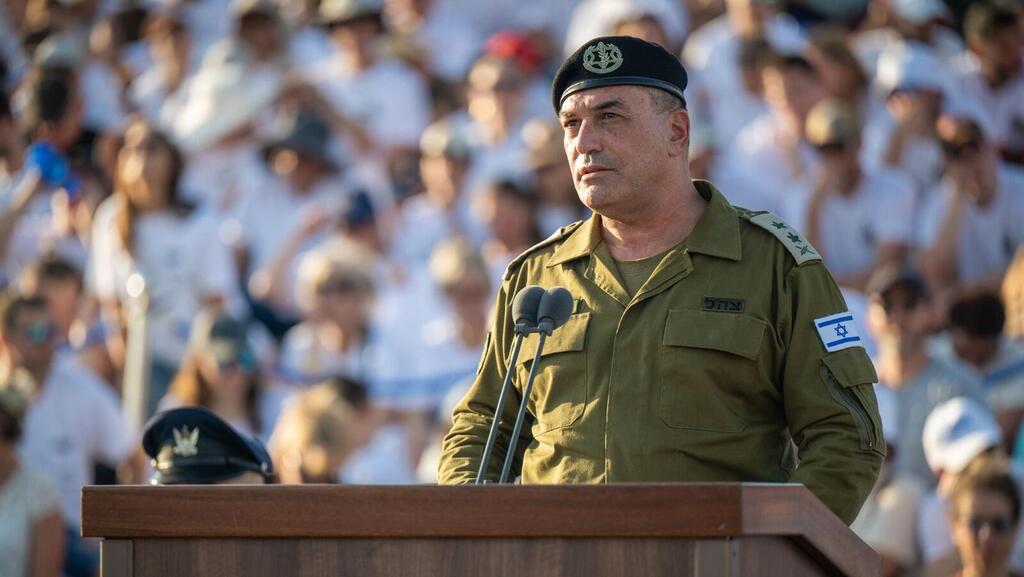
IDF Chief of Staff Eyal Zamir
(Photo: IDF Spokesperson's Unit)
The IDF may soon launch staff work to design and award campaign ribbons for the hundreds of thousands of soldiers who took part in the war. The colors and design will be developed by the Military Human Resources Directorate. A decision on the IDF's official name for the war is also expected soon. The political echelon is expected to push for naming it after the ground operation that began in late October in Gaza—"Operation Iron Swords"—rather than the more commonly used term, "The October 7 War."
Out of concern of public backlash, the military's decorations and citations committee will not publish its conclusions until after the findings are submitted by a separate panel, headed by former Southern Command chief Maj. Gen. (res.) Sami Turgeman. That committee is reviewing internal battle debriefs and how their lessons are being implemented across the IDF. It is also expected to recommend disciplinary action, including the dismissal of officers who demonstrated serious negligence or bear greater responsibility for the failures.
Get the Ynetnews app on your smartphone: Google Play: https://bit.ly/4eJ37pE | Apple App Store: https://bit.ly/3ZL7iNv
The army has thus far avoided dismissing officers for the failures of October 7. The few who have left did so months later and voluntarily. Some of the heads of internal inquiry teams reportedly ignored orders not to make personal recommendations, arguing that the failures among certain Southern Command officers were egregious. They expressed shock and frustration that no dismissals have occurred to date, even as some of those same officers continued to command troops and make critical decisions throughout months of war.
However, the panel of generals led by Turgeman has yet to meet its timeline and has not submitted its findings—even interim ones—nearly four months after being appointed by Chief of Staff Eyal Zamir. The IDF now says that the conclusions will be presented to the General Staff soon, possibly within weeks. They are expected to address the quality of the debriefs as well, most of which have already been completed.