

China and the United States have agreed on $30 billion in reciprocal tariff reductions and the opening of a dialogue on artificial intelligence as part of an eight-point agreement reached following Chinese President Xi Jinping’s visit to Washington. The announcement was issued by China’s Foreign Ministry shortly after Xi landed in Beijing at the end of a three-day visit to the United States.
According to the Chinese Foreign Ministry, Xi Jinping and Donald Trump agreed to build “a constructive relationship of strategic stability” between China and the United States, based on mutual respect, fairness and reciprocity. The provision, the first of eight, is intended to establish a broad framework for relations between the world’s two largest economies following months of trade tensions and technological competition.
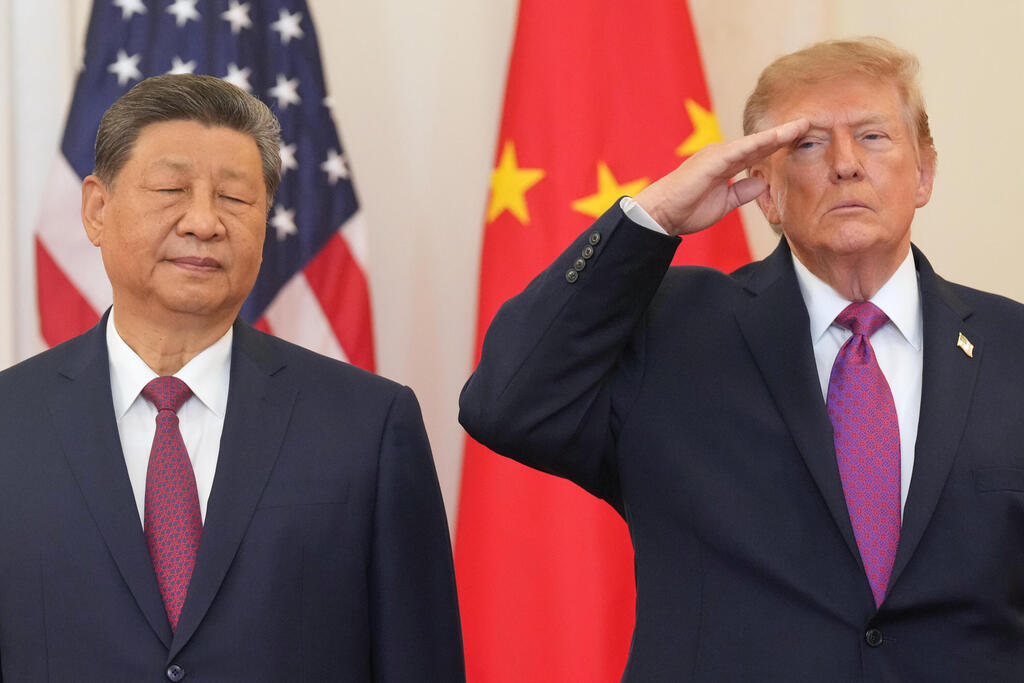
US President Donald Trump meets Chinese President Xi Jinping in Washington
(Photo: AP Photo/Jacquelyn Martin)
At the heart of the agreement is the $30 billion reciprocal tariff reduction arrangement, covering products defined as “non-sensitive” by both sides. U.S. tariff reductions will apply to agricultural products, seafood and medical equipment, while Chinese relief will apply to products including toys and small electrical appliances. The sides also approved the establishment and advancement of a joint trade council and an extension of the outcomes reached in previous trade talks in Kuala Lumpur.
The agreement follows directly from a decision made earlier this week to extend by another two months the trade “truce” between the two powers, which had been due to expire on Nov. 10, as U.S. Treasury Secretary Scott Bessent said Wednesday
Will the agreement ease tensions between the two powers?
The current agreement builds on understandings reached at the Busan summit in South Korea in October last year, where the sides announced a basic agreement on trade, which continued to take shape in further talks held in Beijing in May. As part of the new deal, according to the White House, China committed to purchasing at least 10 million tons of U.S. coal in each of 2027 and 2028, while the two sides established joint working groups to address agricultural market access and stabilization of the global oil supply.
One of the most notable provisions of the current agreement concerns the establishment of a dedicated dialogue channel — also dubbed the “super intelligence” channel — through which the two sides will exchange views on the risks and benefits of artificial intelligence technology. The first round of discussions under the dialogue is scheduled for November, while a separate communication channel will be established to handle AI-related incidents. The move marks one of the first mutual acknowledgments by Washington and Beijing of the need for international coordination surrounding the sensitive technology.
On broader foreign policy, the leaders agreed that Iran must uphold its commitment not to develop nuclear weapons — with the White House using stronger language, stating that Iran “can never” possess a nuclear weapon — and that transit fees should not be imposed on international waterways. Another provision addresses cooperation between Chinese and U.S. law enforcement authorities in combating drug trafficking, which the sides said has already produced tangible results, including dozens of arrests.
The three-day visit produced no major public breakthroughs, but the agreements announced at its conclusion — chiefly the tariff arrangement and AI dialogue — represent another attempt by the world’s two largest economies to contain tensions and keep trade channels open amid a dispute that has expanded in recent months to include export controls, rare-earth minerals, technology and the shipping industry.