

Volunteers from the emergency medical organization United Hatzalah reunited with a woman who was critically wounded in a March 1 missile strike in Beit Shemesh, in an emotional meeting highlighting the work of first responders during the attack.
The gathering brought together Pnina Cohen, who was seriously injured in the strike, and several volunteers who were among the first to treat her at the scene. The meeting took place as part of United Hatzalah’s Rescuer Survivor initiative, a program that connects emergency responders with people whose lives they helped save.
Gallery
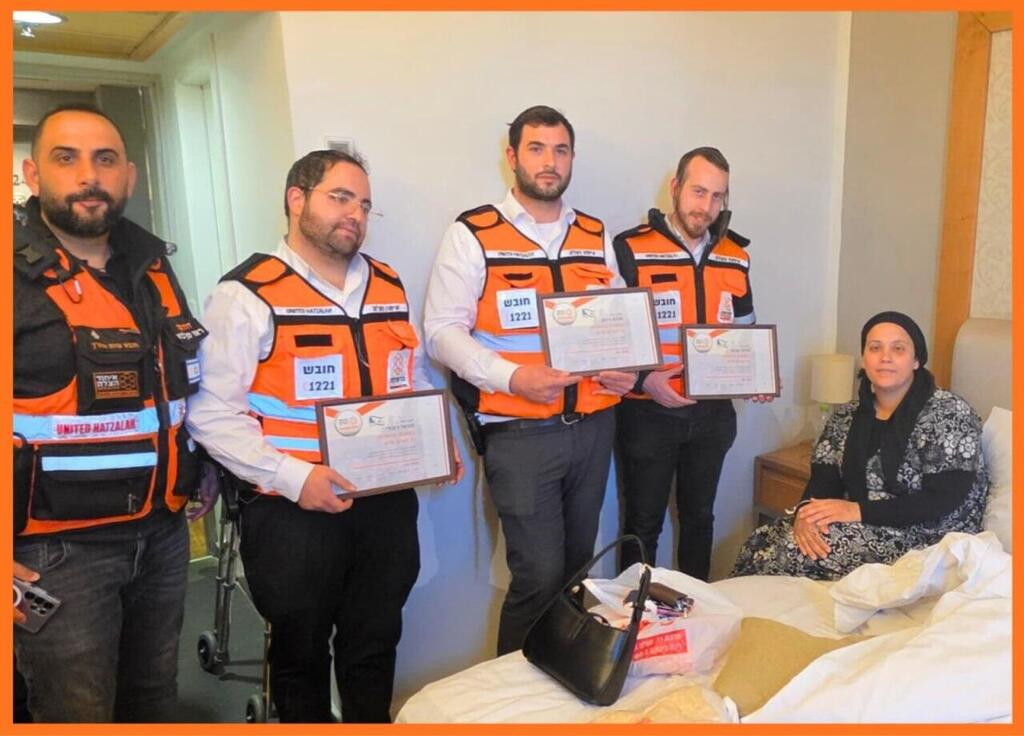
Volunteers Michael Kibudi, Moishy Shechter and Menachem Wizman, members of United Hatzalah’s specialized rescue unit, meet Pnina Cohen, who they cared for after the attack
(Photo: United Hatzalah)
According to the organization, volunteers Michael Kibudi, Moishy Shechter and Menachem Wizman, members of United Hatzalah’s specialized rescue unit, were among the first to arrive after the missile struck the area.
The responders described arriving at a chaotic scene and immediately providing emergency care. Cohen had suffered severe injuries, and the volunteers applied a tourniquet to stop heavy bleeding before evacuating her using a tactical stretcher. She was then transferred to a hospital for further treatment.
Dudu Amar, head of United Hatzalah’s Levya branch, who also attended the meeting, said volunteers remained at the scene for hours following the strike as they continued searching the area and assisting additional victims.
The reunion ended on an emotional note as Cohen thanked the volunteers who treated her.
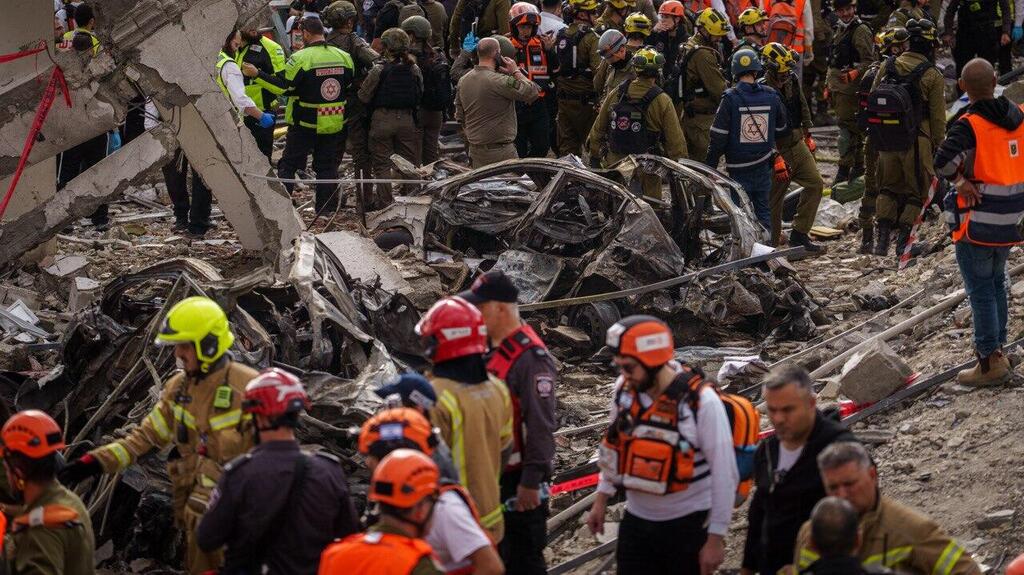
Site of the March 1 missile strike in Beit Shemesh
(Photo: Shilo Shalom)
The responders also expressed condolences to Cohen’s family over the loss of her husband, Yosef Cohen, who was killed in the attack.
Several others also lost their lives in the strike, including United Hatzalah medic Ronit Elimelech and her mother Sara, as well as three siblings from the Biton family.
United Hatzalah said the Rescuer Survivor initiative aims to highlight the connections that can form between emergency responders and the people they help during life-threatening events, particularly during large-scale emergencies such as missile attacks.