

Amid shifting dynamics at the World Economic Forum in Davos, where the Palestinian Authority found itself sidelined internationally, Palestinian Authority President Mahmoud Abbas met Thursday with Russian President Vladimir Putin in a high-profile summit at the Kremlin in Moscow.
A senior Palestinian official told ynet the visit aimed “first and foremost to put the Palestinian Authority back on the diplomatic map,” citing a lack of American and Arab involvement in current peace efforts. The official described Russia as an influential international partner and a potential indirect channel for diplomatic and economic pressure.
Prior to the meeting, Abbas was received in a formal welcoming ceremony. Russian media noted that he was the first foreign leader to visit Moscow in 2026, underscoring the symbolic significance of the encounter.
Gallery
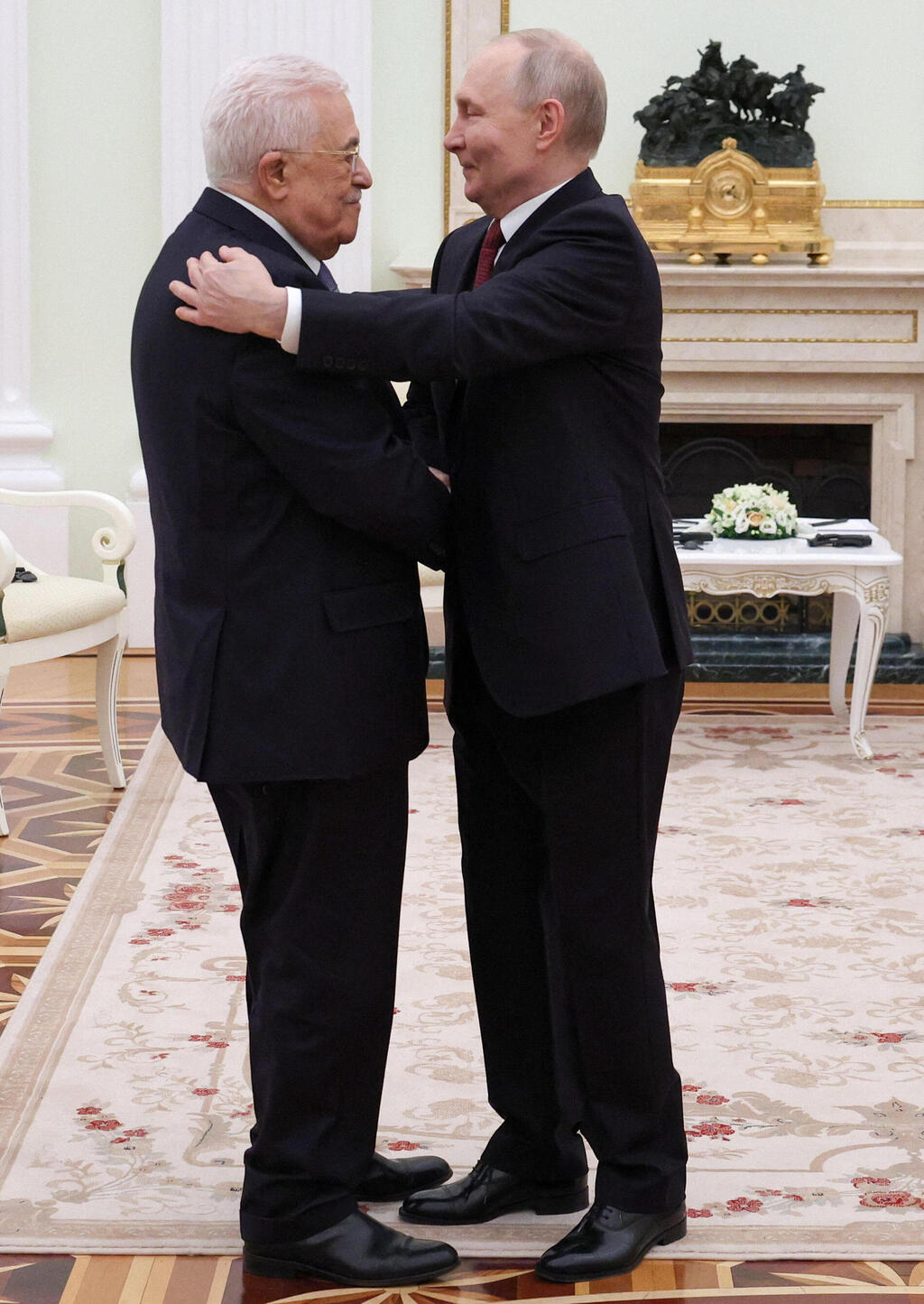
Russian President Vladimir Putin embraces PA President Mahmoud Abbas before their meeting at the Kremlin
(Photo: Ramil Sitdikov/Pool/Reuters)
During talks, Abbas thanked Putin for Russia’s “supportive positions toward the Palestinian people and their rights” in international institutions, and emphasized the long-standing historical ties between Palestine and Russia. According to a statement from the PA, the two leaders discussed recent developments in the Palestinian territories, with a focus on the situation in Gaza.
Abbas reiterated his support for the full implementation of former U.S. President Donald Trump's plan, including an Israeli withdrawal from Gaza and a structured rebuilding process — with the Palestinian Authority playing an “exclusive and central role” in managing Gaza and unifying it with the West Bank. He warned that the creation of separate administrative or security bodies in Gaza would only deepen internal Palestinian division.
He also demanded an immediate halt to settlement construction, an end to settler violence in the West Bank and East Jerusalem, and the release of Palestinian funds currently withheld by Israel — calling these steps essential for preserving the two-state solution and preventing the collapse of PA institutions.
Politically, Abbas reaffirmed his commitment to a Palestinian state along the 1967 borders with East Jerusalem as its capital, emphasizing the need for “one state, one government, one law.”
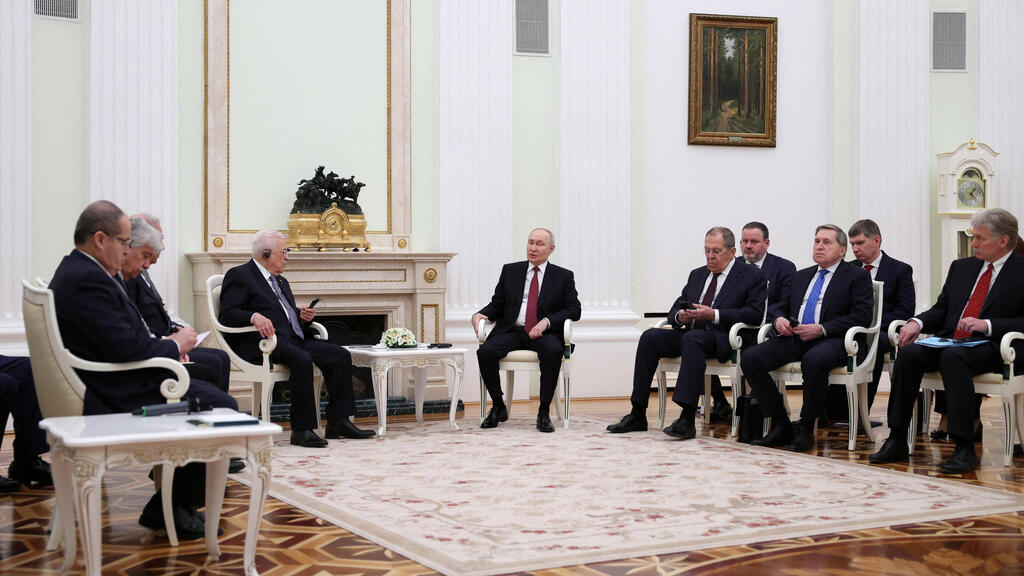
PA President Mahmoud Abbas is the first world leader to visit the Kremlin in 2026
(Photo: Ramil Sitdikov/Pool/Reuters)
Following the summit, a broader meeting was held between delegations from both sides, where they agreed to strengthen bilateral economic, trade, cultural and humanitarian ties. Plans also were made to reconvene the joint Russian-Palestinian intergovernmental committee as soon as possible.
While in Moscow, Abbas also met with Arab ambassadors stationed in Russia to brief them on developments in Gaza and the West Bank. He reiterated that Gaza is an inseparable part of the future Palestinian state, and stressed the PA must play a central governance role to prevent the political and institutional fragmentation of the Palestinian people.
Russia used Abbas’ visit to convey a domestic message: that the West has failed to isolate Moscow following its invasion of Ukraine. Putin reportedly reaffirmed to Abbas Russia’s willingness to transfer $1 billion to the "Board of Peace" for Palestinian reconstruction, from assets currently frozen in the U.S. If Washington unfreezes those funds, it would set a precedent and encourage Moscow to push for the release of other blocked assets in the U.S. and Western Europe.