

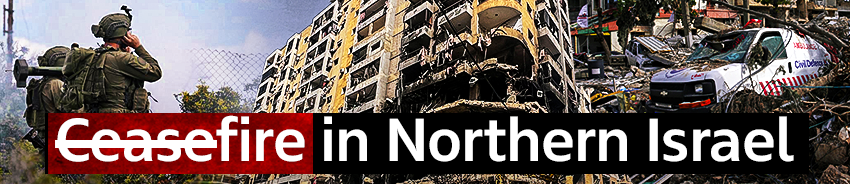
The political leadership speaks of “freedom of action” and rules agreed upon with the U.S., but in southern Lebanon — where Sgt. Idan Fooks was killed today in a deadly explosive drone attack — the picture is different. Prime Minister Benjamin Netanyahu said Sunday at the start of the Cabinet meeting that “Hezbollah’s violations are unraveling the ceasefire. We are acting according to rules we agreed on with the U.S. and also with Lebanon, and that means freedom of action to thwart immediate threats and emerging threats.” But statements are one thing, and operational reality is another.
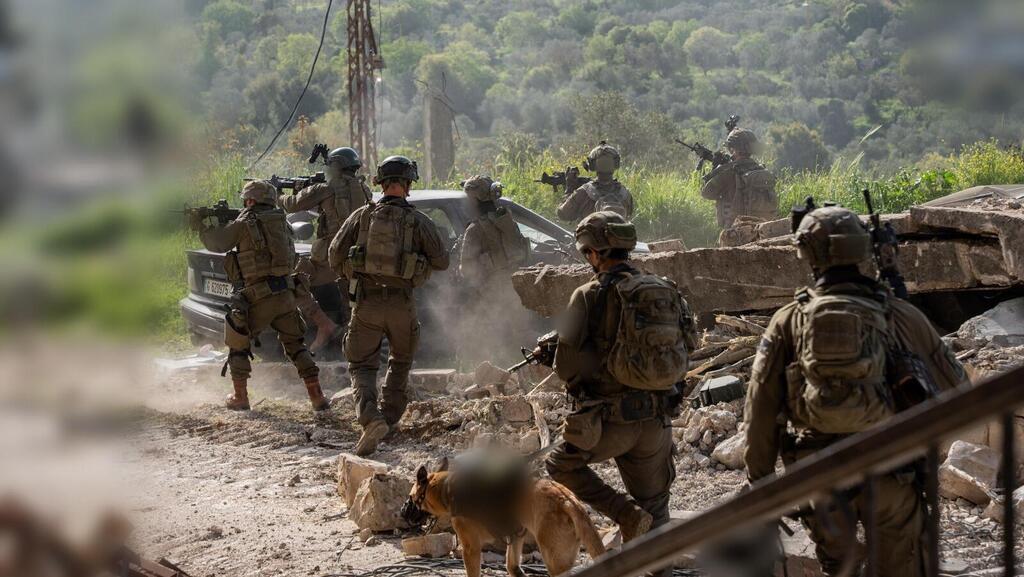
Along the seam lines of southern Lebanon, soldiers and commanders are encountering a far more complex reality: They are operating under constraints, in a rolling situation in which a ceasefire is declared in Washington while fighting continues in Bint Jbeil. The IDF’s mission is clear: clearing the area up to the “yellow line,” a task that by all estimates will take several weeks. Hezbollah, for its part, is trying at all costs to damage negotiations between Israel and Lebanon and delay the clearing of the security zone and villages in southern Lebanon — painstaking, complex work that will take time.

Sgt. Idan Fooks
(Photo: IDF Spokesperson's Unit)
Soldiers currently operating in the field describe a disconnect. On the one hand, there is a drive to engage and a clear understanding of the threat. On the other hand, there are restrictions dictated from above. A security official currently operating in southern Lebanon described the feeling: “On October 7, too, we came to the north, waited a very long time and wanted to go in already. Of course there is frustration and a desire to move forward. It is clear to me that people want to act. But we cannot lose sight of who is supposed to serve whom — the army must serve the decisions of the political leadership. We need to achieve results on the ground so the political leadership can decide what to do with them.”
The IDF’s activity is focused only on southern Lebanon, while Israel has refrained for more than two weeks from strikes in Beirut — even as sirens have returned on the Israeli home front. Residents of the north again feel the winds of war, while Hezbollah is using every moment of “quiet” to rebuild its capabilities. “The working assumption is that they are certainly exploiting the time,” the security official said. “They are sending operatives south to evacuate wounded fighters and prepare themselves again for combat. It is clear they are not arranging peace flags during this time.”
IDF strike in the village of Tebnine in southern Lebanon, today


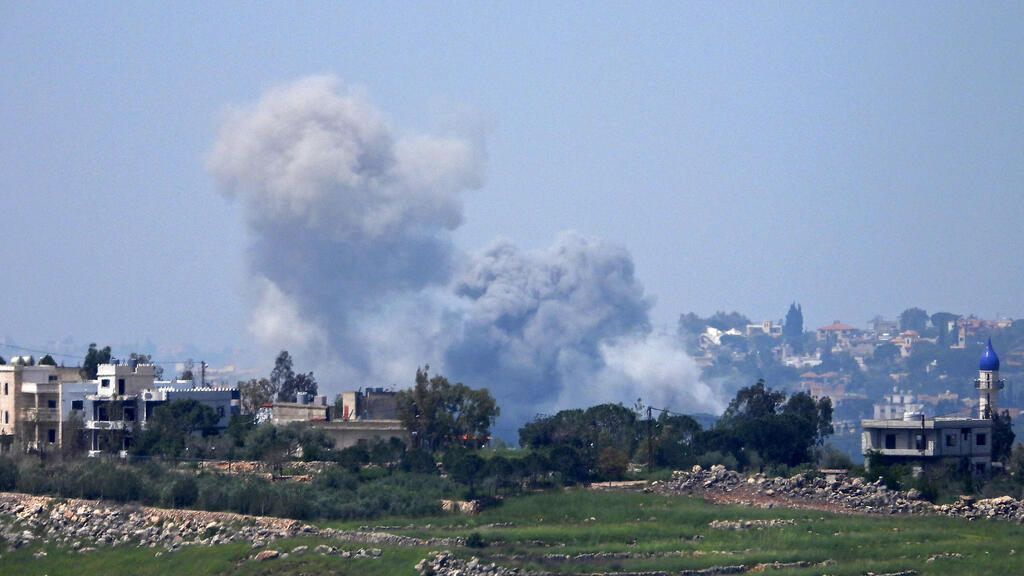
IDF strikes in southern Lebanon, today
(Photo: AFP)
Hezbollah operatives are using the civilian population as human shields, making the clearing operation complex and dangerous. Still, the IDF has recorded gains and is advancing in its work: Thousands of terrorist infrastructure sites have been destroyed, weapons caches have been uncovered and 46 terrorists have been killed in the past two weeks alone.
Alongside the ground fighting, soldiers are dealing with a tactical challenge to which the IDF has not yet found a full answer: explosive drones. The drones are launched from long range, from areas where the IDF is not present. They carry fiber-optic cables that prevent electronic disruption and make them very difficult to detect and intercept. They may not carry huge explosives, but they have become a significant and threatening nuisance.
The IDF has struck explosive drone workshops where terrorists were attaching explosive material to drones, along with additional equipment and, of course, a camera. Electronic warfare forces are operating in the field to try to deal with the threat, and Hezbollah is also launching drones at them. “Anything that threatens us will be destroyed,” the security official said.
For now, the soldiers understand they are inside a prolonged war, even if it is framed as a “ceasefire.” They continue to operate inside villages, uncover anti-tank launchers to prevent direct fire at residents of northern Israel and advance meter by meter, awaiting the next directive from the political leadership.
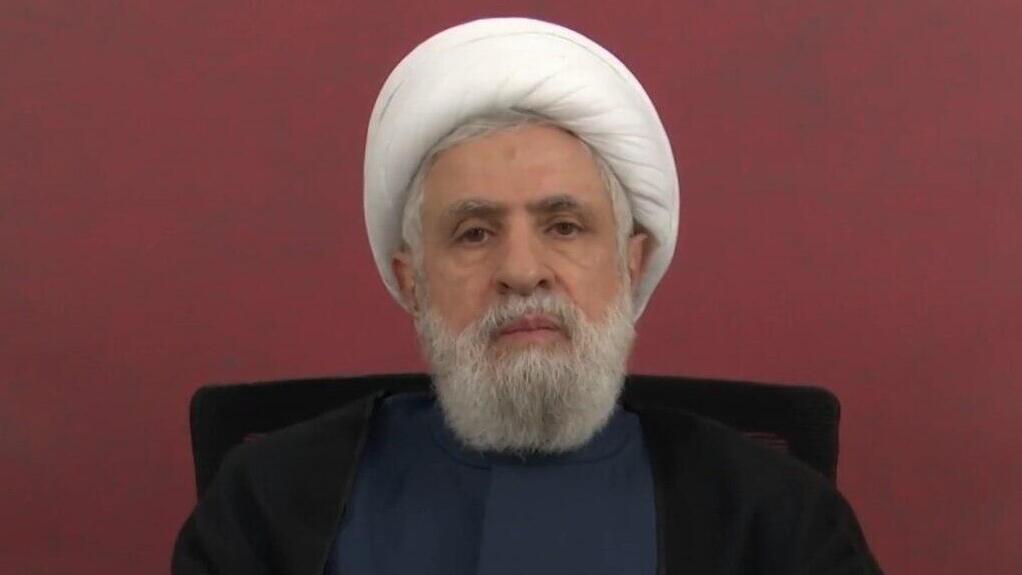
Naim Qassem; Hezbollah threatens: 'We will not wait for failed diplomacy'
In a statement released Sunday evening, Hezbollah stressed that it would continue attacking IDF forces, calling it a “legitimate response” to Israel’s violations. “The enemy’s ongoing ceasefire violations, its attacks and the continued occupation of Lebanese territory will be met with a response and resistance that is present and ready to defend its land and its people,” the terrorist organization said. “We will not wait or rely on failed diplomacy that has proven ineffective, nor on an authority that has failed to defend its homeland. The people of this land are the true guarantee for confronting this aggression and defeating the occupation.”
Later Sunday, the IDF said the air force had struck Hezbollah launch squads and weapons depots. “Among the infrastructure struck were launch squads that were advancing firing plans against IDF forces and the State of Israel, a loaded launcher ready for firing, a weapons depot and military buildings. In addition, terrorists identified operating from inside a military building were struck, as was another terrorist spotted on a motorcycle.”
Around 2 p.m., sirens sounded in several communities in the western Galilee, and the IDF later said three drones that crossed from Lebanon had been intercepted. The IDF’s Arabic-language spokesman, Avichay Adraee, issued an evacuation warning for the villages of Mayfadoun, Shoukin, Yohmor, Arnoun, Zawtar al-Gharbiyeh and Tebnine. According to his statement, because of Hezbollah’s violation of the ceasefire agreement, the IDF was forced to act and residents must move at least 1 kilometer, or about 0.6 miles, away from their area. “Anyone near Hezbollah operatives, facilities or weapons is endangering his life,” the statement said.