

The twilight period between the end of the war in Gaza and the possibility of its renewal — or of a major operation against a strengthening Hezbollah in the north — finds regular IDF soldiers in a less familiar position: training in live-fire zones, conducting field exercises and returning to techniques they did not fully employ during the long war.
Regular brigades such as the Paratroopers, Golani and the 401st Armored Brigade are using a brief lull between operational planning for renewed fighting and deployments in the West Bank or Gaza to carry out short training sessions lasting one to two weeks. The aim is to refresh combat methods not fully used in the prolonged war, rebuild unit cohesion after fighting in ad hoc battle teams and reset units after lapses in discipline and a drop in tension following the war’s end.
Footage of Golani reconnaissance soldiers training for combat against Hezbollah
(Video: IDF Spokesperson)


Gallery
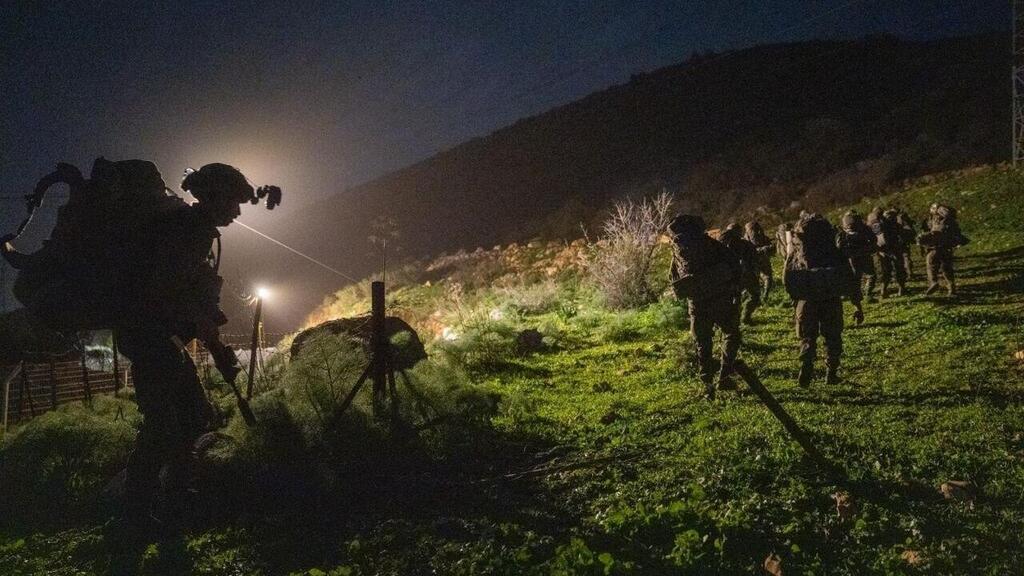
Footage of Golani reconnaissance soldiers training for combat against Hezbollah
(Photo: IDF Spokesperson)
As Iran pressures Hezbollah to join the fighting — should such a campaign erupt — the Golani reconnaissance unit is completing an intensive live-fire exercise in Training Area 100 in the Galilee, the brigade’s home terrain. One of the central drills, the unit’s first of its kind since Oct. 7, focuses on a maneuver that did not take place during the war: an operational advance, mostly on foot, covering more than 20 kilometers over three days in rugged, mountainous terrain simulating Lebanon’s topography.
The IDF did not conduct a full-scale ground maneuver during the war, not in the small and densely packed Gaza Strip, where brigade combat teams operated over short distances of a few kilometers, and certainly not in southern Lebanon. There, in the fall of 2024, Israel limited its ground action to an average depth of three to four kilometers to remove the threat of infiltration by Hezbollah’s Radwan forces, without entering major Shiite towns in the Litani River area such as Nabatieh.
“Half the capabilities we have today didn’t exist three years ago,” said Capt. R., 25, who despite his young age has already served in two company commander roles and now commands a platoon in the reconnaissance unit.
“Suddenly going back to training after more than two years, even for me it felt strange,” he said. “Half the things I have here weren’t available in similar drills three years ago when I was a team commander — various types of drones, for dropping munitions, locating the enemy in buildings or hiding places and carrying equipment.”
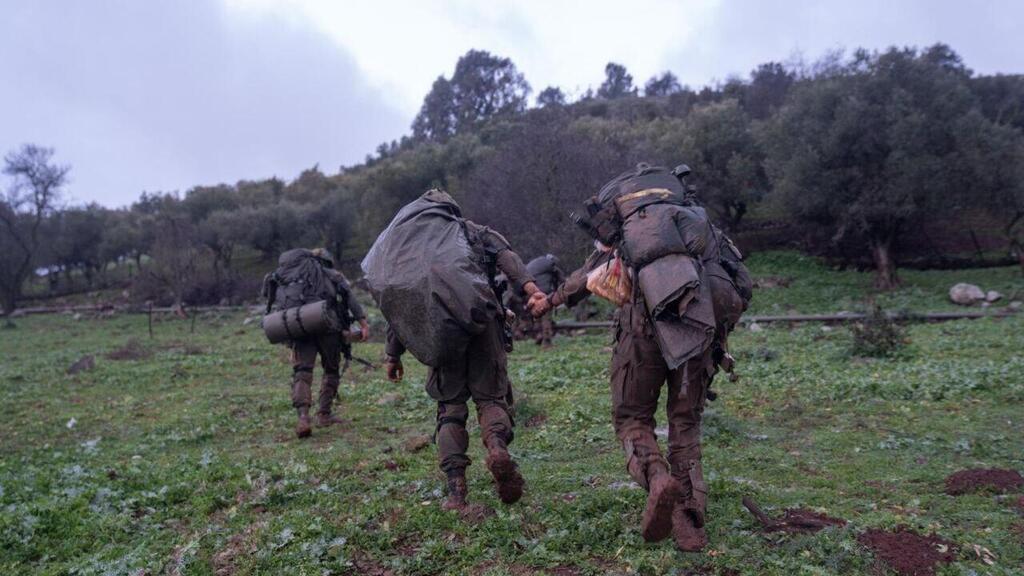
(Photo: IDF Spokesperson)
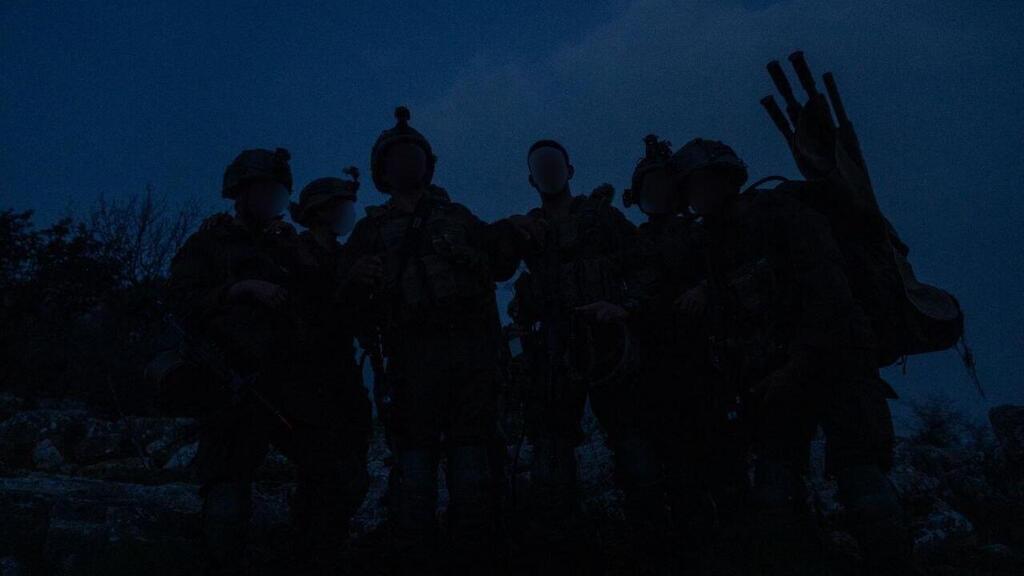
(Photo: IDF Spokesperson)
Most of the Golani reconnaissance teams, he noted, did not take part in Operation Northern Arrows because of the unit’s lengthy training track — about 14 months until qualification as a combat soldier. “That’s why it’s important to focus the training on offensive operations, emphasizing small team capabilities of 10 to 15 soldiers in dense terrain, rural built-up areas in Lebanon, orchards and boulder fields,” he said. “To recall things we didn’t have in Gaza, where we relied heavily on our armored personnel carriers, such as carrying loads that can reach about 40% of a soldier’s body weight.”
The training began with a brigade assembly, continued with psychological processing sessions with mental health professionals and is expected to include regular leave. As for what comes next, even in Golani they do not know where they will be deployed next month, given Israel’s deliberations over whether to resume fighting against Hamas, creating significant uncertainty for the brigades.
“Things have changed, and if there’s something that isn’t needed in combat, we won’t have a soldier carry it just for the sake of training,” Capt. R. said. “The war taught us a lot, including how to be more efficient on the battlefield.”
He added that one of the key lessons from the war, including in Gaza, was to launch a strong assault on a target with massive air and artillery fire before infantry enters. “In that situation, many militants fled or were eliminated, so in training we applied the lesson not to rush forward too quickly, but to act smartly,” he said.
The officer also addressed disciplinary issues that arose during the war, including in the Golani Brigade, which led to dangerous safety incidents. “We are focusing a lot on the small details, returning to morning roll calls, dedicating significant time to safety debriefings and reviewing incidents on a weekly basis,” he said.