

The flydubai flight that could have ended in catastrophe ultimately landed safely in Saudi Arabia. But as more details emerge about Omani co-pilot Hamam al-Hammami, accused of attacking the captain and trying to seize control of the Israel-bound jet, questions are mounting over the security failures that allowed him to be assigned to the flight in the first place.
The United Arab Emirates, which is leading the investigation, has formally described Wednesday’s incident as an attempted “terrorist act.” Authorities say al-Hammami attacked the captain with a crash ax kept in the cockpit and tried to take control as the aircraft plunged sharply. Passengers and others aboard subdued him, and the plane, carrying more than 170 passengers and crew, diverted to Tabuk, Saudi Arabia. Investigators are still examining his motives and whether anyone else was involved.
Gallery
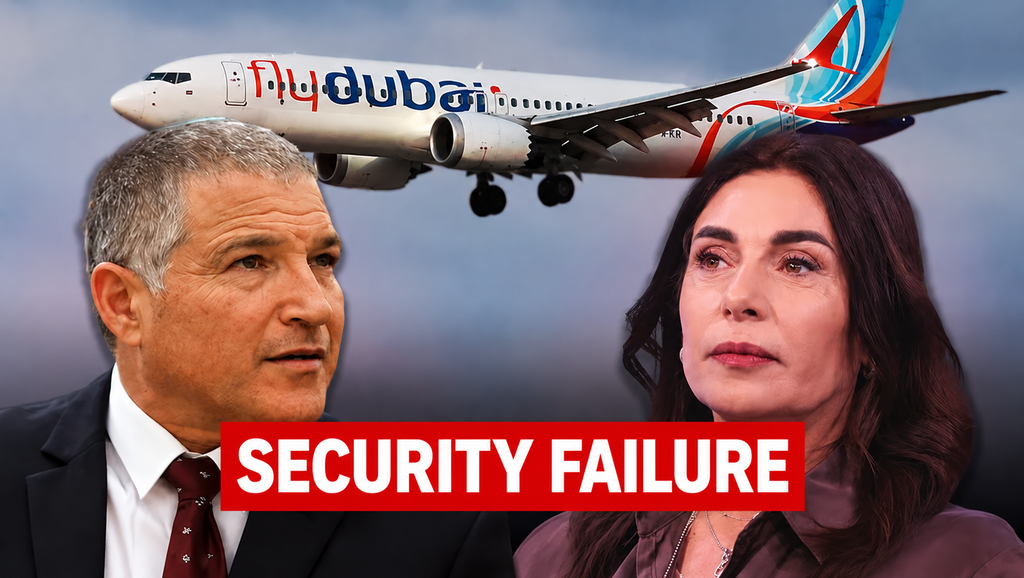
Shin Bet chief David Zini, Transportation Minister Miri Regev
(Photo: REUTERS/Ammar Awad, Yariv Katz, Olivuer Fitoussi)
These are the central questions surrounding the apparent security breakdown:
How was an Omani pilot allowed to fly to Israel?
Prime Minister Benjamin Netanyahu acknowledged in an interview with Fox News this week that there had been a security “loophole” that the alleged attacker was able to exploit: A citizen of Oman, a country that does not have formal diplomatic relations with Israel, had been cleared to pilot a flight there.
Early in the Israeli review, the Transportation Ministry considered whether the co-pilot might hold a second citizenship, which could have explained how an Omani national was assigned to an Israel-bound flight. That possibility was subsequently ruled out, according to reports, which say al-Hammami holds no additional citizenship.
Airlines flying to Israel are required to submit information on passengers and crew in advance under a 2023 Israeli law establishing a national passenger data analysis system. The system receives identifying and travel information, including nationality and travel document details.
The crew list was apparently submitted and cleared. But information that has emerged since the attack suggests the potential breakdown went far beyond his nationality.
How did Israel not know he had been grounded over extremism concerns?
Al-Hammami had already been barred from flying by Oman Air in 2024 after being identified as a security risk over concerns that he had adopted extremist views, according to officials familiar with the investigation. Officials told ABC News that extremist material was found in his possession while he was training as a co-pilot, after which he was removed from flying duties.
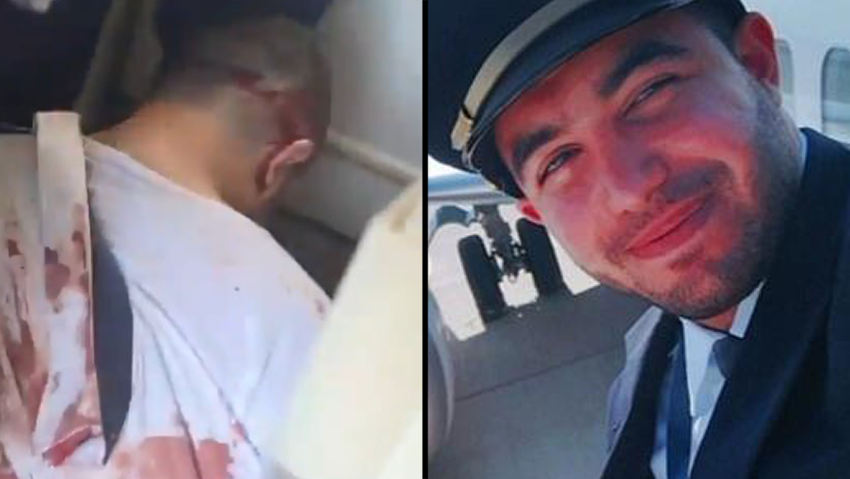
Hamam al-Hammami
Saudi broadcaster Al Arabiya reported that al-Hammami had become radicalized during time spent in Syria, saying he spent much of his time outside Oman, particularly in Syria. A source quoted in the report said Omani authorities became aware of his extremist views and that his mother is Syrian.
The Wall Street Journal reported that it remains unclear whether information about those concerns was subsequently passed to flydubai before the airline hired him earlier this year.
Royal Air Maroc, meanwhile, said al-Hammami underwent three months of training with the Moroccan airline but was not hired. That means two airlines — Oman Air and Royal Air Maroc — had declined to employ him as a pilot before he joined flydubai, without Israeli authorities apparently being aware of that history.
How did flydubai hire him despite his background?
A Gulf diplomat told The Associated Press that al-Hammami underwent standard security screening before he was hired, but the checks appear to have focused on whether he had a criminal record rather than digging more deeply into his background and potential signs of radicalization.
A person familiar with the investigation separately told AP that al-Hammami had been barred from flying in Oman because of concerns about extremist views.
According to the Gulf diplomat, intelligence agencies from four countries in the region are examining the co-pilot’s motives with assistance from the United States and other Western countries.
The investigation remains incomplete and has so far found no connection between al-Hammami and a terrorist organization, raising the possibility that he acted alone. An Israeli investigative team is already in the UAE, where al-Hammami was transferred after initially being detained in Saudi Arabia.
Why didn’t the Shin Bet demand a halt to flights from the UAE?
Shin Bet chief David Zini had warned for months that he considered security arrangements on flights from the United Arab Emirates inadequate. In the weeks before the attack, the domestic security agency had also been at odds with Israeli airlines after barring them from flying to the UAE over security concerns.
Flight captain Smit Machchhar lies wounded while al-Hammami is strewn on the floor beside him after being subdued by passengers
(Video: from social media)


Zini’s warnings primarily concerned Israeli airlines, whose overseas security arrangements fall under the Shin Bet’s purview. Flydubai is a foreign carrier and therefore is not directly supervised by the agency in the same way.
For years, the Shin Bet has provided professional security guidance for Israeli airlines operating overseas, while foreign carriers entering Israel are subject to a different system of licensing, oversight and security.
Still, Zini’s warnings have taken on new significance after the flydubai attack. According to officials familiar with the issue, the Shin Bet’s concern centered on security standards for flights departing the UAE for Israel, where security arrangements for foreign airlines may be less extensive.
The assessment is that stricter security measures could likely have prevented an incident like the one aboard the flydubai flight. Despite the warnings, however, Zini did not demand a suspension of all flights from the UAE.
Why is there no blacklist of pilots flagged for radicalization?
At this stage, the various Israeli authorities involved appear to be disputing where responsibility lies.
The Shin Bet says its direct responsibility extends to Israeli airlines. But the attack raises a broader question: Who is responsible for identifying a potential threat posed by a foreign pilot flying hundreds of Israelis into the country?
It also points to a potential gap in information-sharing among airlines and governments.
In 2023, as part of legislation connected to Israel’s entry into the U.S. Visa Waiver Program, the Knesset passed a law requiring airlines to provide advance passenger and crew information for flights entering, leaving or passing through Israel.
The National Center for Passenger Data Analysis was established within the Israel Tax Authority, with privacy safeguards. But the law explicitly permits the information to be used to identify, prevent and investigate terrorism and for aviation security. Among the agencies authorized to access information are the Shin Bet, Mossad, Israel Police and Transportation Ministry.
Much of the attention surrounding such systems naturally focuses on passengers. The flydubai case raises the question of whether pilots and other crew members are being scrutinized sufficiently as well.
The incident is likely to prompt a broader review of security for foreign airlines flying to Israel and the security establishment’s responsibility for protecting Israeli passengers traveling on them. Israel has previously imposed restrictions on foreign airlines when it considered security arrangements in their home countries inadequate.
And if al-Hammami had indeed been barred from flying in Oman over extremism concerns, another question remains: Why was no international warning issued, and why is there no system for flagging pilots removed from flying duties because of suspected radicalization?
Why wasn’t the pilot’s background — or at least his nationality — flagged?
Airlines are required to provide Israel with passenger and crew data in advance through the National Center for Passenger Data Analysis, which operates under the Tax Authority. Information supplied about crew members includes identifying details, citizenship and travel document information.

The flydubai plane after landing in Saudi Arabia, its tail damaged during the steep descent
The center does not operate solely for the Tax Authority. Under the 2023 law, information can be made available to various government bodies according to their statutory authority, including the Transportation Ministry, Shin Bet, Mossad and police.
The Transportation Ministry has stressed that it is not responsible for conducting intelligence background checks on foreign pilots and does not possess the intelligence capabilities of Israel’s security agencies.
Its formal responsibilities, however, make the picture more complicated. The ministry’s Security Division is responsible for aviation security, including security assessment of foreign flights entering or passing through Israel. It also operates an aviation security operations center that coordinates security matters involving aircraft arriving in the country.
There is an important distinction between conducting an intelligence background investigation of an individual — a task that falls to security and intelligence agencies — and conducting a security assessment of a foreign flight.
The Transportation Ministry is not necessarily expected to use intelligence tools to investigate every foreign pilot itself. But it does bear formal responsibility for security assessments of foreign flights.
The question, therefore, is who was supposed to take information already available in Israeli systems — in this case, the co-pilot’s identity and Omani citizenship — and determine whether he met the relevant conditions for flying to Israel.
Who will investigate the failure?
If it emerges that information about al-Hammami was available to Israeli authorities but none of the responsible agencies identified the problem in time, investigators will have to determine exactly where the chain broke down: with the airline, in the transfer of information, during screening or in coordination among government bodies.
In that case, examining flydubai’s conduct alone would not be enough. Israeli procedures and directives, as well as how different agencies use the information they receive, would also need scrutiny.

The passengers who subdued the hijacker: Dr. Shota Musaev, Assaf Rajuan, Yaniv Hayun, Tzvika Manes
(Photo: Yariv Katz)
That question is particularly significant because the Transportation Ministry itself is among the bodies examining the incident. If its Security Division is responsible for security assessments of foreign flights, any review would also have to examine the division’s own conduct and its coordination with security agencies and the passenger data system.
The Shin Bet and other security agencies would similarly have to examine their roles and their coordination with the Transportation Ministry.
That raises the possibility of an external, overarching review capable of examining all the agencies involved rather than leaving each body to investigate itself.
Why wasn’t more done after the state comptroller’s report?
Questions about how responsibility for aviation security is divided among Israeli agencies predate the flydubai attack.
In May 2024, then-state comptroller Matanyahu Englman published findings from a systemic audit of international civil aviation security to and from Israel. Conducted between April 2022 and June 2023, the audit examined international aviation departing Ben Gurion Airport, security for Israeli aviation overseas and security arrangements for foreign and private civilian aircraft entering Israeli airspace.

Ben Gurion Airport
The review involved the Shin Bet, Transportation Ministry, Israel Airports Authority and National Security Council, among other bodies. Much of the chapter remained classified for national security reasons.
In the publicly released portion, the comptroller recommended that the National Security Council conduct a comprehensive review with the Transportation Ministry, Finance Ministry, Civil Aviation Authority, Shin Bet and police covering “the entire spectrum” of Israeli civil aviation security, including foreign aviation entering the country.
The comptroller also noted that some government and security Cabinet decisions governing aviation security dated back to the 1970s and recommended examining whether they remained relevant. He called for clearer arrangements governing responsibility and resources to ensure comprehensive oversight and urged the prime minister, transportation minister and finance minister to formulate an overall aviation security policy.
The public portion of the report did not specifically address flights from the UAE, nor did it identify the failure now under scrutiny. But its recommendation to clarify responsibility among the various agencies has gained renewed significance following the attack and the dispute over who should have identified the security gap.
Meanwhile, lawmakers Efrat Rayten, Ram Ben Barak, Chili Tropper and Oded Forer have asked Foreign Affairs and Defense Committee Chairman Boaz Bismuth to convene an urgent hearing with the Shin Bet chief over reports that security concerns involving UAE flights had been raised before the attack.
In their request, the lawmakers said the actions of passengers and crew prevented a major disaster and called for an examination of Israel’s aviation security system and the decisions made before the incident.