

U.S. President Donald Trump has not abandoned the military option against Iran, and given his unpredictable approach, could still return to explicit threats against Tehran. For now, however, he appears to be pursuing a different strategy: intensifying economic pressure in hopes that Iran’s deteriorating economy will eventually force the regime to compromise.
Trump has said he is “lowering the profile” of the confrontation and conducting only limited negotiations with Tehran, while repeatedly highlighting the damage inflicted on Iran after two wars and a U.S. naval blockade that has severely restricted its oil exports.
Gallery
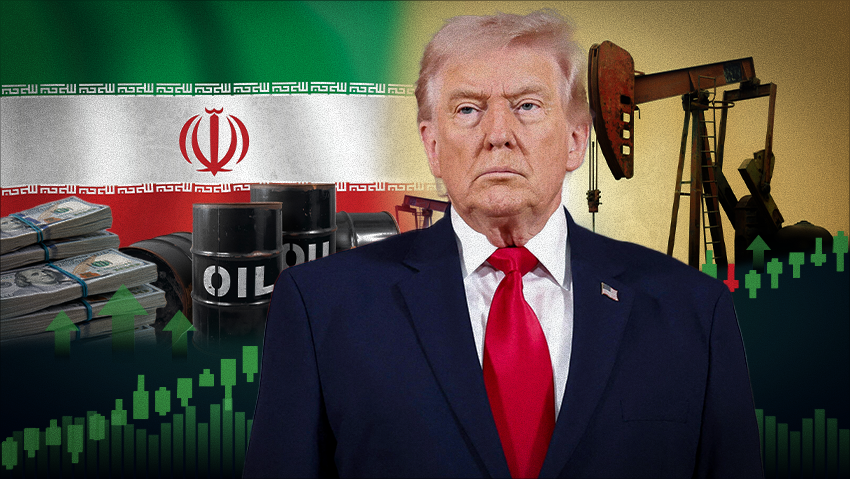
‘I’m their banker’: Trump bets Iran’s collapsing economy can deliver victory without new strikes
(Photo: Shutterstock, REUTERS/Kevin Lamarque)
In an interview Tuesday with conservative television network Real America’s Voice, Trump outlined what he described as two “very powerful strategies” for dealing with Iran.
One, he said, would be to “hit them really, really hard,” an option he has so far avoided amid concern over possible Iranian retaliation against Gulf oil infrastructure and shortages of some U.S. munitions and interceptors.
The second is to defeat Iran economically by maintaining the blockade and sanctions.
Trump described that approach as simply allowing the pressure to continue while watching conditions inside Iran deteriorate.
“They have 300% inflation, their currency is worth almost nothing. They’re not paying their soldiers, their soldiers are leaving,” he said. “So you just keep it going, because it’s not sustainable.”
“Economically, they’re in chaos,” Trump added.
He also referred to Iranian assets frozen abroad, which Tehran has demanded be released as part of negotiations.
‘I’m their banker’


“They can’t borrow money. We control their money,” Trump said. “What they have, and they had a lot, we have total control of it. I’m their banker. I’m their banker!”
The central question is whether Iran’s leadership, which emerged from the latest war more radicalized and believes its ability to block the Strait of Hormuz gives it major strategic leverage, will eventually soften its position under economic pressure.
If it does not, and Trump ultimately decides to resume major military operations, some analysts believe such a move would be more likely after the November 3 U.S. midterm elections. Renewed fighting before then could further complicate Republican efforts to retain control of Congress.
Iran’s economy becomes ‘the main battlefield’
Iranian officials are not hiding the severity of the economic crisis, while hardship among ordinary citizens continues to deepen.
So far, however, there are few visible signs of renewed mass protest. Memories remain fresh of the brutal suppression of the enormous demonstrations that erupted in January over the economic crisis and soaring inflation.
Tens of thousands of protesters were killed in that crackdown by the Islamic Revolutionary Guard Corps and its Basij militia, which emerged from the war with even greater influence and are now widely viewed as the real centers of power in Tehran.
Iranian President Masoud Pezeshkian, considered relatively moderate but politically weak, has repeatedly warned that the economic crisis could trigger “social instability,” effectively a renewed wave of protests.
Last month, amid a pause in mutual attacks between Iran and the United States, he declared that the economy had become the country’s “main battlefield.”
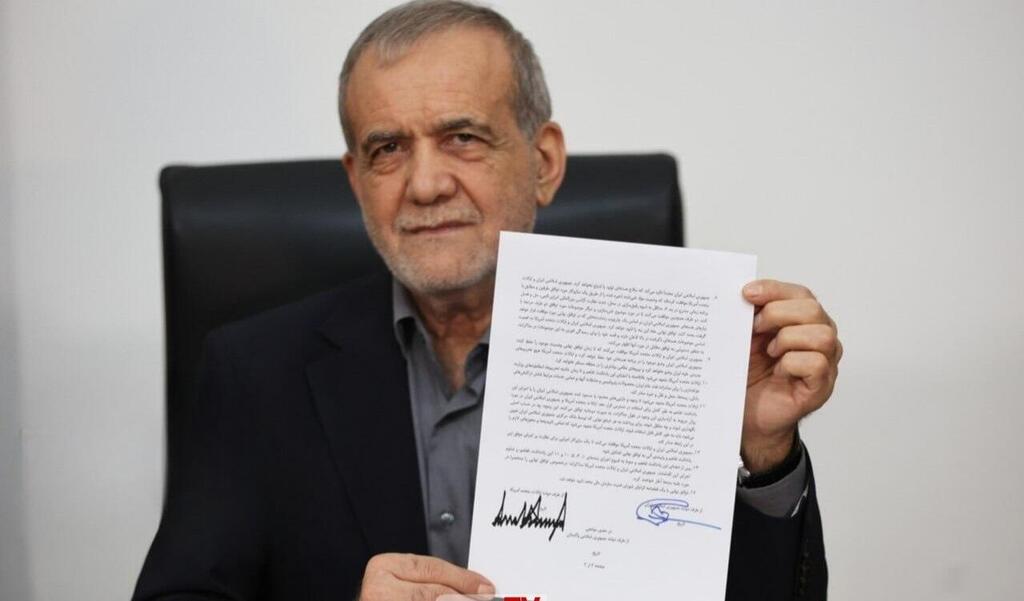
Iranian President Masoud Pezeshkian. Iran’s economy becomes ‘the main battlefield’
Pezeshkian said he recently raised the issue during a meeting with Supreme Leader Mojtaba Khamenei that lasted seven to eight hours.
“We discussed all the country’s issues, and naturally the main concerns were people’s living conditions, the state of the economy, employment, housing and the problems currently caused by the sanctions,” he told Iranian media Monday.
Rial at historic low, ‘misery index’ at record high
Iran’s economy has been in crisis for years, due in part to the sanctions Trump restored during his first term after withdrawing from the 2015 nuclear agreement in 2018.
But sanctions are only part of the story.
Economic mismanagement, corruption and the diversion of enormous resources toward the Revolutionary Guards and armed groups across the Middle East have also contributed to the country’s decline.
Conditions worsened sharply following last year’s war in June and deteriorated further during the current conflict, which began in late February and has now continued for six months without a clear end.
Over the past year, the decline appears to have accelerated across virtually every economic indicator.
According to the International Monetary Fund, Iran’s economy is expected to contract by 5.6% this year, its steepest decline since 1988.
Iranian authorities say annual inflation has reached 88.6%, while food prices have risen 130% in a single year.
The rial fell to a record low early this month of 1.9 million to the dollar. It has since recovered slightly to around 1.88 million per dollar, but remains roughly 20% weaker than at the start of the war.
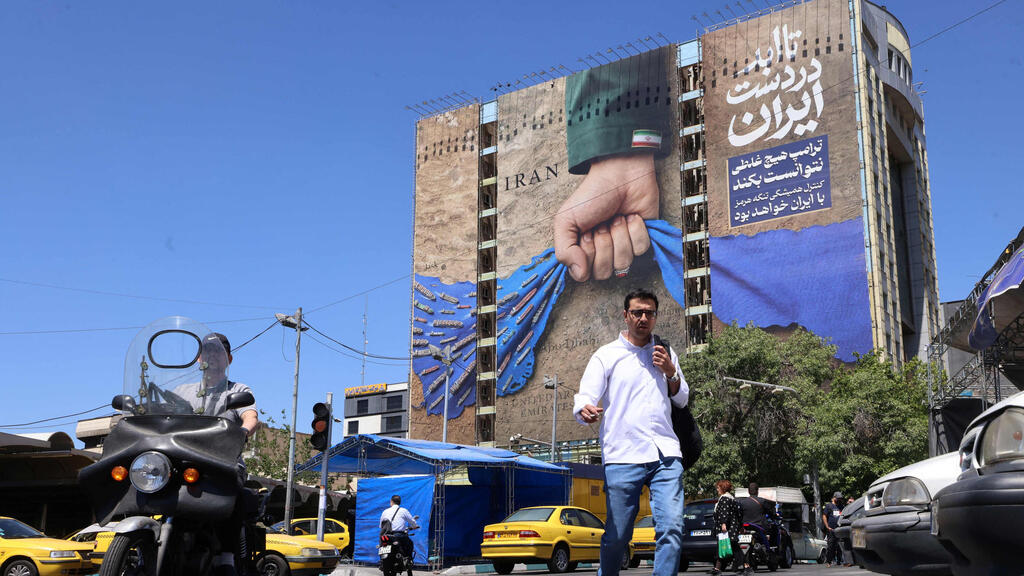
A giant billboard on a street in Tehran depicts the 'hand of Iran' gripping the Strait of Hormuz
(Photo: ATTA KENARE / AFP)
Iran’s official statistics agency has also reported that the country’s “misery index,” which combines inflation and unemployment, hit a record 91.1 in the spring, more than double last year’s level.
Unemployment reportedly rose to around 7% in the first quarter of 2026.
Iranian statistics officials say the country lost 630,000 industrial jobs during that quarter. Deputy Labor Minister Gholam-Hossein Mohammadi has said the war has caused roughly 1 million job losses overall in a country of about 92 million people.
A major source of the economic damage has been Iran’s loss of oil-export capacity.
Exports were first disrupted during 40 days of fighting with Israel and the United States, and later by the American naval blockade.
The blockade began April 13, was suspended June 18 following a memorandum of understanding and resumed July 14 after that agreement collapsed.
Oil revenue accounted for around 11% of Iran’s GDP before the war.
The Foundation for Defense of Democracies estimates the blockade is costing Iran’s economy around $435 million per day.
In a recent analysis, the Washington-based institute said Iran’s economy had already begun “unraveling” late last year and argued that the blockade was accelerating the process.
“The U.S. naval blockade has proven to be the most precise economic pressure tool deployed so far,” it said.
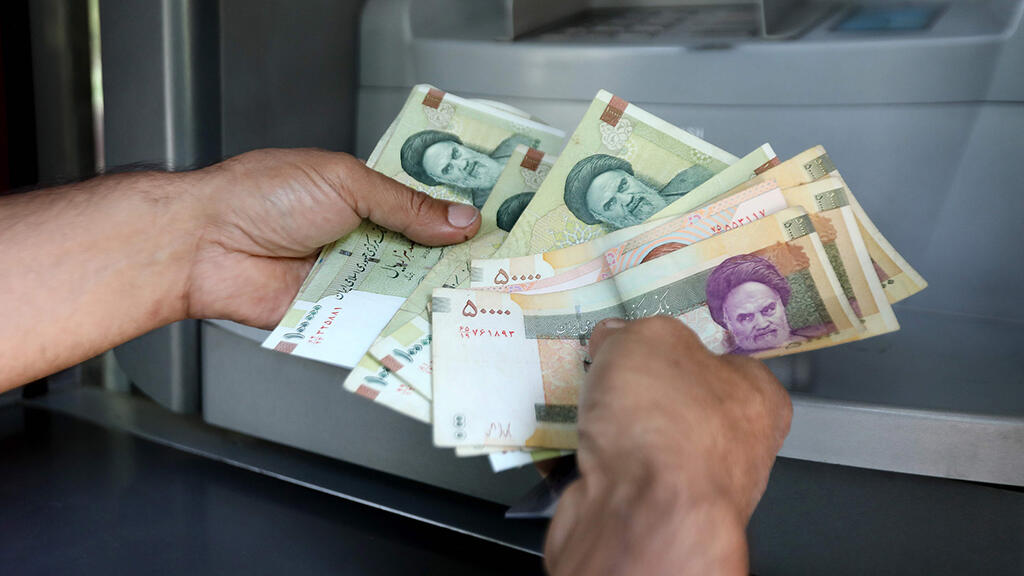
The Iranian rial, down 20% since the start of the war
(Photo: AFP)
Iranians struggle to survive: ‘We’ve been forgotten’
Those figures translate into severe hardship for millions of Iranians, something the regime fears could eventually ignite another uprising.
Even ILNA, a semi-official news agency associated with a state-linked labor organization, has recently carried increasingly stark accounts of the crisis.
The government has warned that worsening conditions may force it to reduce fuel subsidies, a move that has triggered protests in the past.
Albert Baghezian, an economics professor in Tehran, told ILNA that the Iranian economy resembles “a patient suffering from severe bleeding.”
“Delivering a gasoline shock would be equivalent to a fatal blow to people’s livelihoods,” he said.
ILNA has reported that increasing numbers of Iranians are turning to credit applications that allow purchases to be paid off over longer periods.
A 29-year-old Tehran resident said he uses dozens of such apps “because you simply can’t afford to pay for everything at once.”
Other workers told the agency that around 40% of their salaries go toward rent and another 40% toward credit repayments.
Students are increasingly relying on the same services amid what ILNA described as an unpredictable employment outlook and unstable incomes.
But those credit systems also impose penalties and fees when payments are missed.
“The fines just keep piling up,” a man named Hossein said. “The fear that you won’t have money and will fall behind on payments really tortures you.”
Many Iranian workers are employed under temporary contracts or move repeatedly in and out of employment, further reducing their chances of keeping up with debt repayments.
Workers interviewed by ILNA said only a minority have health insurance, meaning even a relatively routine medical problem can wipe out their income.
Iran is also facing a rapidly worsening housing crisis.
Government figures show construction costs have doubled over the past year, feeding directly into higher rents.
Some local authorities have attempted to cap rent increases, including a 27% ceiling in Tehran Province, but such restrictions are often poorly enforced.
“Rental prices continue to rise, construction costs have surged, purchasing power has weakened and residential property transactions remain at a low point,” the Iranian news agency ISNA reported.
Labor organizations increasingly accuse the government of abandoning workers during the war.
“Iranian workers, and construction workers in particular, have been forgotten and left helpless at the mercy of fate,” said Hassan Azati, head of a construction workers’ union in Baneh.
“All their efforts are focused on one thing only: staying alive.”
Azati estimated that half of the construction workforce in Baneh lacks health insurance.
Some workers are so desperate, he said, that they have turned to work as kolbars, laborers who carry smuggled goods across Iran’s borders, sometimes through minefields left from the Iran-Iraq War.
Tehran refuses to yield: ‘Accept our conditions’
Despite the economic pressure, it remains far from certain that Iran’s hard-line leadership will compromise.
Tehran now views control over the Strait of Hormuz, through which about one-fifth of global oil consumption passed before the war, as a strategic asset comparable in importance to its nuclear program.
Last week, optimism briefly grew that an agreement to reopen the waterway could soon be reached.
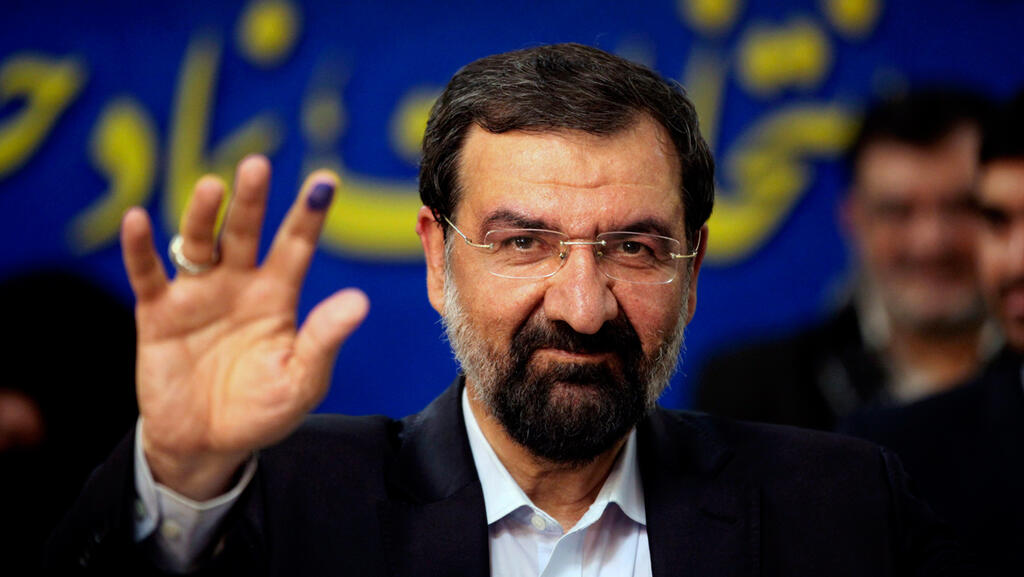
Iran’s Supreme National Security Council secretary Mohsen Rezaei, insisting on Tehran’s surrender terms
(Photo: AP)
Iran then declared that an arrangement with neighboring Oman would not be enough and presented Washington with a series of sweeping conditions.
Mohsen Rezaei, Iran’s newly appointed secretary of the Supreme National Security Council, reiterated those demands Tuesday.
“The United States is the cause of instability in the Persian Gulf, the Strait of Hormuz and the Gulf of Oman,” he said. “America endangered the entire region by imposing an illegal war on Iran.”
“The Strait of Hormuz will not reopen unless the United States changes its behavior and accepts Iran’s conditions.”
Rezaei said Washington must end the war, release frozen Iranian funds and end fighting across the region, including in Lebanon and Gaza, along with fulfilling additional demands conveyed through intermediaries.
“If an agreement is reached between Iran and Oman concerning passage through the Strait of Hormuz, that agreement will be separate from the issue of closing the strait,” he said.
What is unfolding now resembles a waiting game, with both Trump and Iran hoping the other side will give way first.
Richard Nephew, a Columbia University scholar who helped formulate Iran sanctions policy during the Obama administration, told the Associated Press that sanctions generally require significant time before producing political results.
He also argued that Trump has failed to define clear strategic objectives for the conflict.
“Trump has repeatedly weakened his own hand by using force insufficiently, articulating the objective unclearly and hesitating in negotiations,” Nephew said.
Trump continues to insist that preventing Iran from acquiring a nuclear weapon remains his central goal.
But reports suggest he may ultimately accept a settlement without significant new restrictions on Iran’s nuclear program if Tehran agrees to reopen the Strait of Hormuz, allowing fuel prices to fall before the November midterms.
A U.S. official told The Wall Street Journal this week that reopening Hormuz is now the administration’s main policy focus.
Economic warfare requires patience
If Trump continues relying on economic warfare, an approach the White House previously called “Operation Economic Fury,” analysts say the pressure could eventually prove powerful.
But they also stress that it will take time.
“The central question is how far the United States is prepared to go to reduce Iran’s oil trade and threaten severe sanctions against third countries, and whether it has the patience to see if economic suffering causes the regime to change its behavior,” said Juan Zarate, a former national security official in the George W. Bush administration.
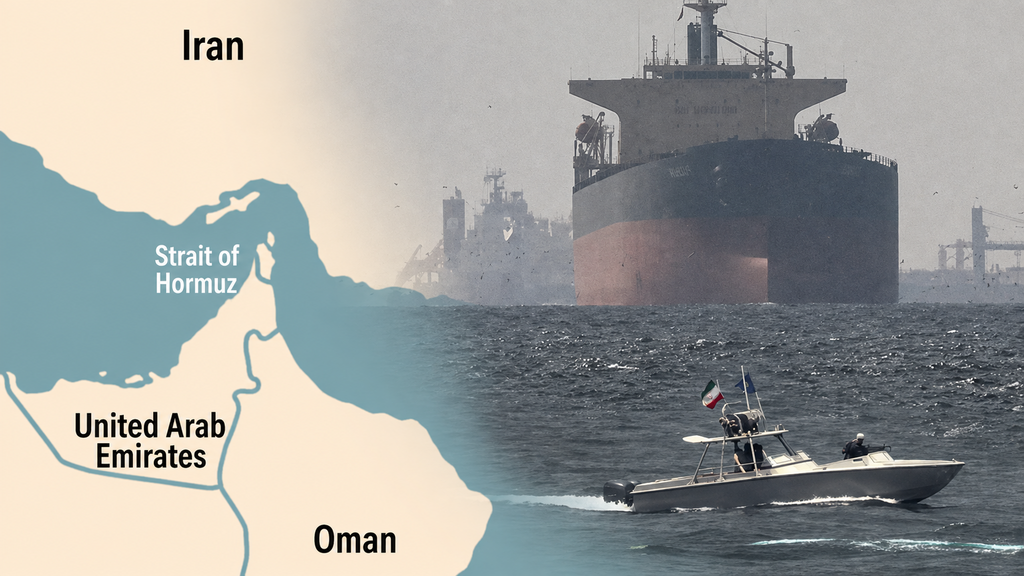
A senior U.S. administration official told the AP that American military action had already significantly reduced Iran’s ability to produce, sell and transport oil and other energy resources.
The official said that beyond the naval blockade and sanctions, Trump still has “additional options” that could be deployed over the coming weeks and months.
But continued economic warfare carries a political cost for Trump as well.
If Iran keeps disrupting tanker traffic through Hormuz, U.S. gasoline prices are likely to remain elevated heading into the November elections, a scenario that is increasingly worrying Republicans.
Recent polling suggests the GOP has lost what had long been one of its strongest advantages over Democrats: public confidence on the economy.
Democrats began leading Republicans on the issue in April, the first time they had done so since 2010.
A recent Fox News poll found 54% of respondents believed Democrats would handle the economy better, compared with 45% who preferred Republicans, Democrats’ strongest advantage on the issue since 2006.
Trump, in effect, appears to be betting that American voters can tolerate economic discomfort longer than Iran’s population can endure its far more severe crisis.
“It’s not just what the military can do,” Defense Secretary Pete Hegseth said Monday during a joint appearance with Treasury Secretary Scott Bessent.
“We also have the strongest economy in the world. And when you have a motivated Treasury secretary who knows how to use many different levers because he knows how to do it, you can put enormous pressure on adversaries.”