


The U.S. military has begun using B-1 Lancer strategic bombers in its ongoing campaign against Iran, marking a significant escalation in Washington's air operations, Axios reported on Thursday.
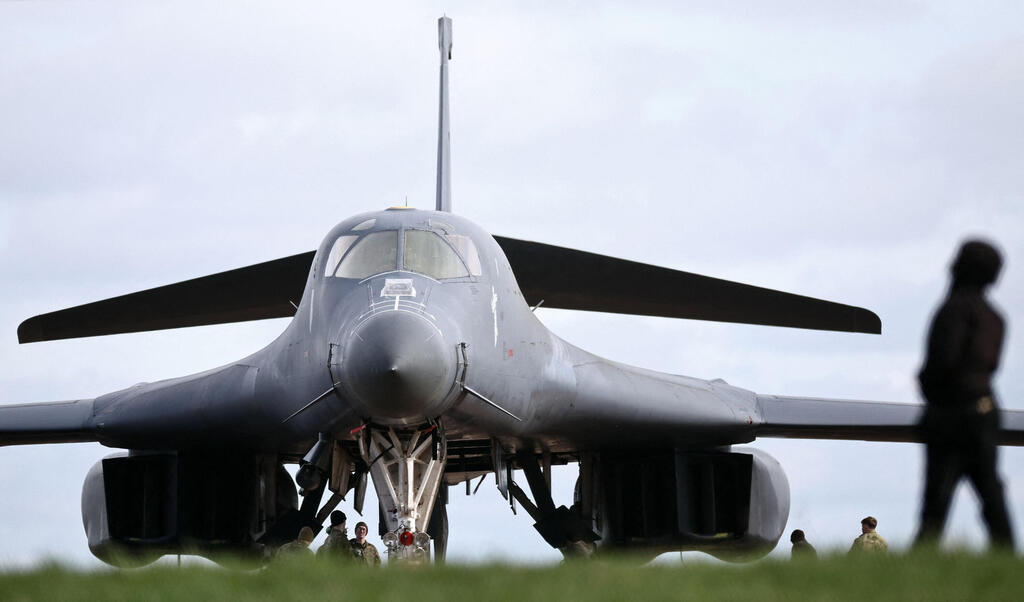
According to the report, at least one B-1 bomber took part in strikes this week after departing from the United Kingdom, where its flight was tracked by open-source plane tracking websites. U.S. Central Command (CENTCOM) did not mention the bomber in its public statement after the operation, and it remains unclear what target it struck or whether the aircraft was chosen because of its unique capabilities.
US launches 12th consecutive night of strikes in Iran
(Video: CENTCOM)


The B-1, a long-range supersonic bomber, can carry one of the largest conventional weapons payloads in the U.S. arsenal, including dozens of cruise missiles or tens of tons of bombs. While it cannot deploy the GBU-57 Massive Ordnance Penetrator bunker-buster bomb carried exclusively by the stealth B-2 Spirit bomber, it can deliver a wide variety of precision-guided munitions against multiple targets in a single mission.
The aircraft is capable of carrying up to 84 precision-guided glide bombs or as many as 36 long-range cruise missiles—more than many guided missile warships—and can remain over a combat zone for more than six hours while providing close air support. It is also equipped with advanced targeting systems designed to distinguish military objectives from friendly forces on the ground.
The B-1 has been used extensively in previous U.S. military campaigns but has not attracted the same public attention as the B-2, which was used in the June 2025 operation known as Operation Midnight Hammer against Iran's nuclear facilities.
Meanwhile, Iran has shown no indication of backing away from its military posture.
Iranian media reported overnight that one of the latest U.S. strikes targeted the Shalamcheh border crossing between Iran and Iraq, about 30 miles (50 kilometers) from Iraq's border with Kuwait. Iranian officials have repeatedly threatened Kuwait since the latest round of fighting began, and some figures in Tehran have warned that Iran could even consider deploying ground forces against the Gulf state.
According to Iranian reports, U.S. missiles struck an Iranian border guard staging area near the crossing, killing two people.
Another reported target was the area around Andimeshk, roughly 50 miles (80 kilometers) from the Iraqi border.
In a video released by U.S. Central Command, an airstrike was shown hitting a moving vehicle inside Iran, though no details were provided about the target. The footage also appeared to show strikes on an airport area, a maritime pier and a vessel that caught fire immediately after being hit.
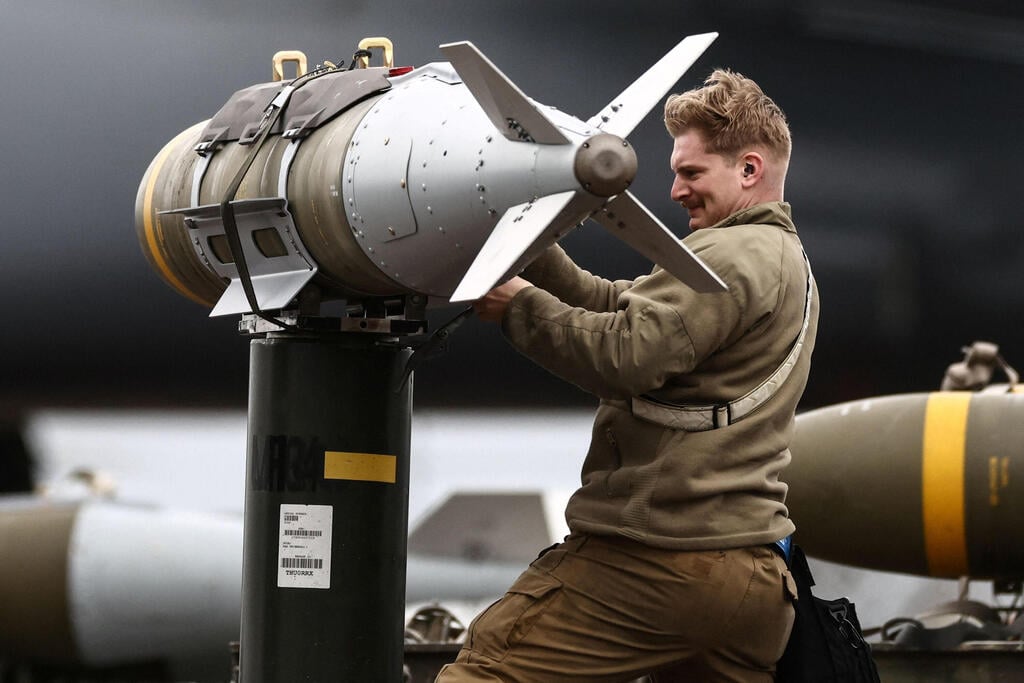
A US Air Force crew member handles a munition at RAF Fairford in Britain for use by a B-1 Lancer bomber
(Photo: AFP/Henry Nicholls)
In a statement, Central Command said it had completed a 12th consecutive night of strikes against Iran.
"U.S. forces struck Iranian military targets including maritime capabilities, missile and drone storage facilities, coastal surveillance sites, and air defense assets," the command said.
The Pentagon has said U.S. forces have struck dozens of Iranian military targets since operations resumed, though it has released few details about individual missions.