

A drone exploded in northern Israel Friday night as the emerging ceasefire agreement between the United States and Iran raised new questions over whether Lebanon would be included in the memorandum of understanding that Washington says could be signed within days.
Iranian Foreign Minister Abbas Araghchi addressed the issue Friday evening, saying that “ending the war in Lebanon means an Israeli withdrawal from the territories it occupied.”
Footage of IDF strikes in southern Lebanon
(Video: IDF)


Israel has rejected that position outright. Defense Minister Israel Katz said Saturday that Israel would not withdraw from security zones in Lebanon, Syria or Gaza. Writing on X, Katz said the IDF would continue defending Israel's borders and citizens from positions in Mount Hermon, the Lebanese mountains, parts of the West Bank and most of Gaza, describing the policy as a key lesson from the October 7 attack.
According to information held by Israel, the U.S.-Iran ceasefire agreement refers to “ending hostilities on all fronts, including Lebanon.” In theory, Israeli officials say, that could be read as a “unification of fronts.” But Israel insists the agreement will not restrict the IDF, and that Jerusalem will oppose any such formula, certainly if it includes a withdrawal from areas seized in southern Lebanon.
A security official said the IDF would continue to “take Hezbollah apart” in southern Lebanon and dismantle the terror group’s infrastructure.
Iranian state-affiliated news agencies published 14 clauses Friday morning that they presented as part of the emerging agreement between Washington and Tehran. The first clause referred to “an immediate and permanent halt to the war on all fronts, including Lebanon.”
U.S. President Donald Trump sharply criticized those reports and called them false. But even after Trump’s attack, Iranian officials and Hezbollah representatives continued to claim that Lebanon is part of the agreement and that Israel must withdraw from the areas it has captured.
From Israel’s perspective, withdrawal from positions it holds in Lebanon is not currently on the table. There is still no agreement between Israel and Lebanon, and officials say it is too early to know how a U.S.-Iran agreement would affect talks between Jerusalem and Beirut.
One possibility is that Hezbollah, emboldened by the deal, could harden its position and refuse to withdraw from southern Lebanon. Another is that Iran, its patron, could prefer that Hezbollah pull back north of the Litani River in order to recover. Hezbollah’s continued presence in southern Lebanon would mean the continuation of the war.
If an agreement is eventually reached between Israel and Lebanon, and the Lebanese army takes control of the relevant areas in order to clear them of terrorist infrastructure, Israel could consider a withdrawal, officials say. But any such move would be gradual and conditional, and in any case is not expected to begin now.
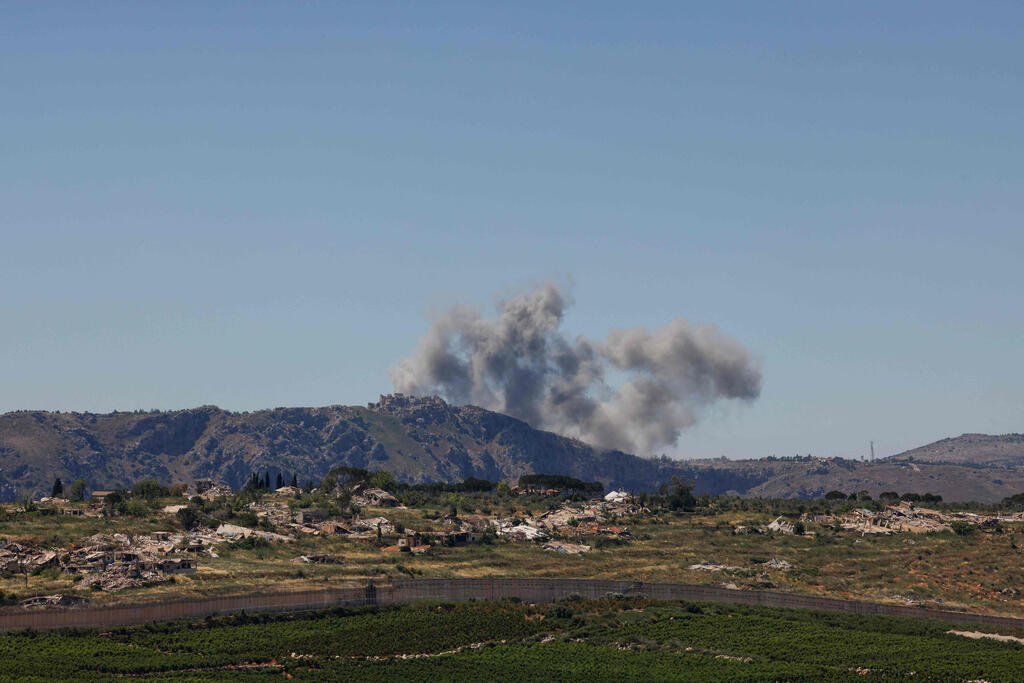
IDF strikes in Lebanon
(Photo: Jalaa MAREY / AFP)
Israeli officials stressed that “if Hezbollah fires at Israel, we will fire at Dahieh, and then we will see what the Iranians do.”
They also said: “If they respond, we will strike. We will not accept equations or a unification of fronts. The IDF has freedom of action in Lebanon to act against emerging threats.”
At the same time, officials in Israel are concerned that the United States may pressure Jerusalem to show restraint in Lebanon in order not to endanger the deal with Iran. That could create disagreements with Washington.
Alerts and targeted killings on the ground
Meanwhile, the situation on the ground remained tense. On Saturday morning, sirens sounded in Metula and Misgav Am over a suspected hostile aircraft infiltration. At the same time, Lebanon's Al Mayadeen network reported Israeli strikes on the southern Lebanese villages of Kfour, Maarakeh and Srifa.
Shortly after 10 p.m. Friday, sirens sounded in Adamit and Arab al-Aramshe over a suspected drone infiltration. The IDF later said a “suspicious aerial target” exploded inside Israeli territory near the Lebanese border.
Several minutes earlier, sirens sounded in Manara and Margaliot. The IDF said a suspicious aerial target was intercepted in an area where Israeli forces are operating in southern Lebanon. Earlier Friday evening, sirens also sounded in Shlomi, Betzet and Rosh Hanikra.
At the same time, the IDF said it had recently killed 10 Hezbollah field commanders in several areas of Lebanon. According to the military, more than 1,300 Hezbollah terrorists have been killed since the “ceasefire” entered effect.
Hezbollah, for its part, is sticking closely to Iran’s messaging. Hussein al-Hajj Hassan, a Lebanese parliament member from Hezbollah, told Qatar’s Al Jazeera network: “Iran has clearly informed us that Lebanon is included in the ceasefire. Iranian officials informed us that Israel will withdraw from Lebanese territory according to the agreement. Under no circumstances will we accept a return to the situation before March 2, 2026. Israel has no right to remain on our land. Israel and the United States are the ones mainly required to adhere to the agreement because they are the ones who backtrack on agreements. Hezbollah cannot commit if the enemy does not.”
First published: 23:29, 06.12.26