

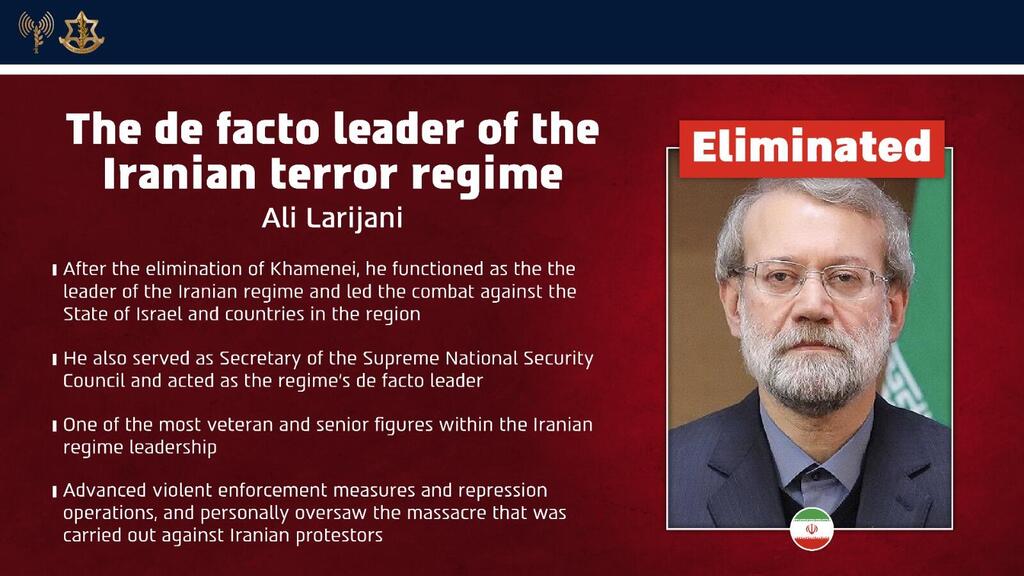
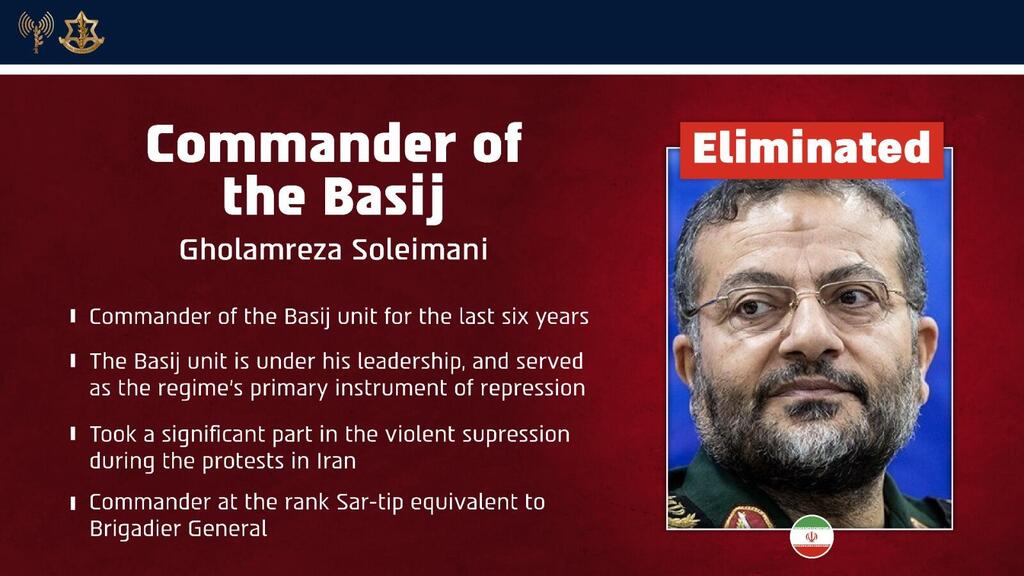
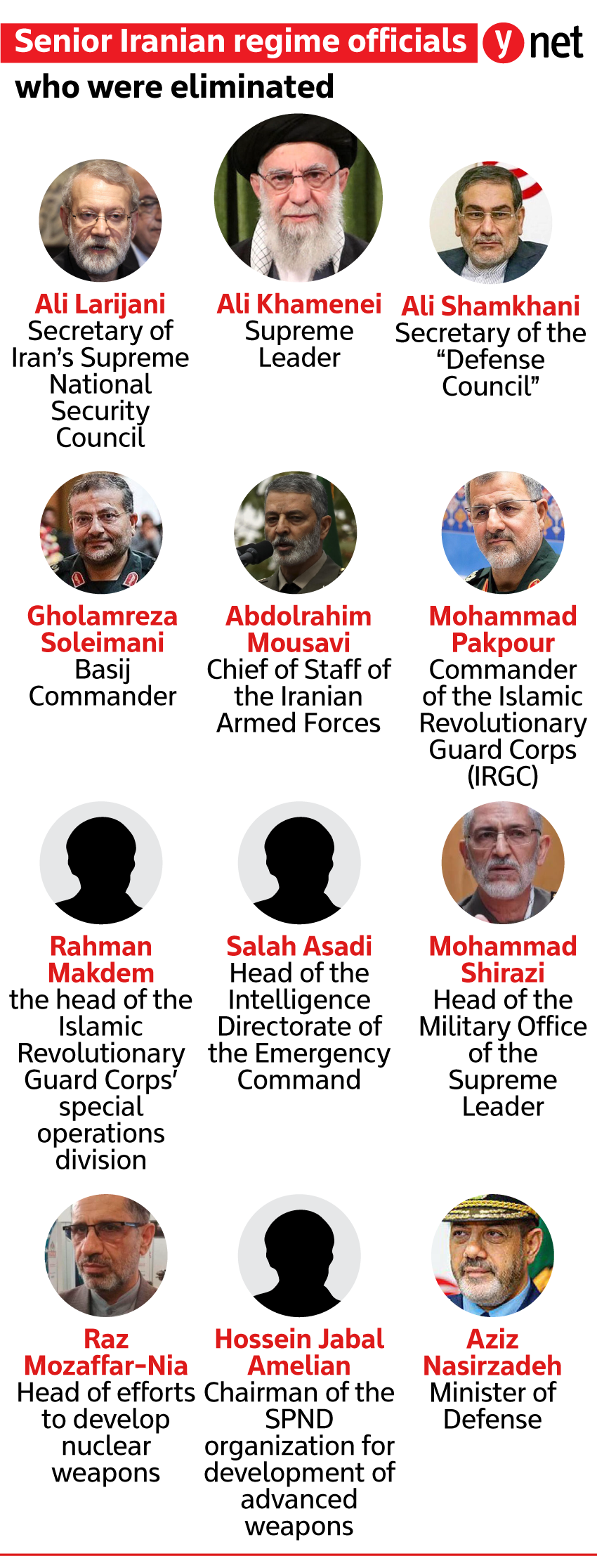
The IDF said Tuesday that it had killed senior Iranian official Ali Larijani in a strike on a Tehran safe house, with Defense Minister Israel Katz confirming his death. The military also said it had eliminated Gholamreza Soleimani, commander of Iran’s Basij force, and his deputy Qasim Qureshi, in a separate strike.
Larijani, secretary of Iran’s Supreme National Security Council, was targeted in overnight strikes. There was no immediate confirmation from Iranian authorities.
Gholamreza Soleimani
(Photo: IDF)
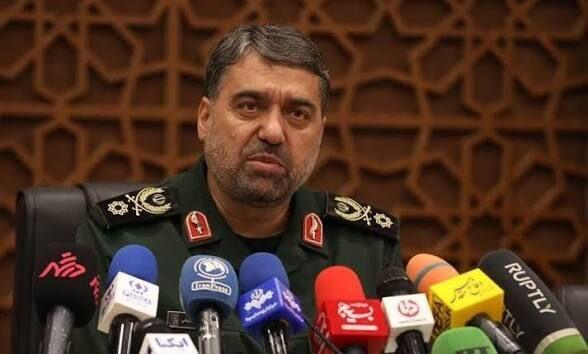
Qasim Qureshi, the Deputy of the Basij Force, also eliminated
According to the IDF, the Israeli Air Force carried out a separate strike on Monday in Tehran based on intelligence, killing Soleimani, who had led the Basij unit for the past six years.
The Basij forces are part of Iran’s internal security apparatus and have played a central role in suppressing protests. During periods of unrest, including in recent waves of demonstrations, forces under Soleimani’s command led repression operations involving arrests and the use of force against civilian demonstrators.
Separately, Israel struck an underground compound in the city of Qom in recent days where senior Palestinian Islamic Jihad figures were believed to be present, including deputy leader Akram al-Ajouri and the head of the terror group’s military wing, Mohammed al-Hindi, according to a source familiar with the details.
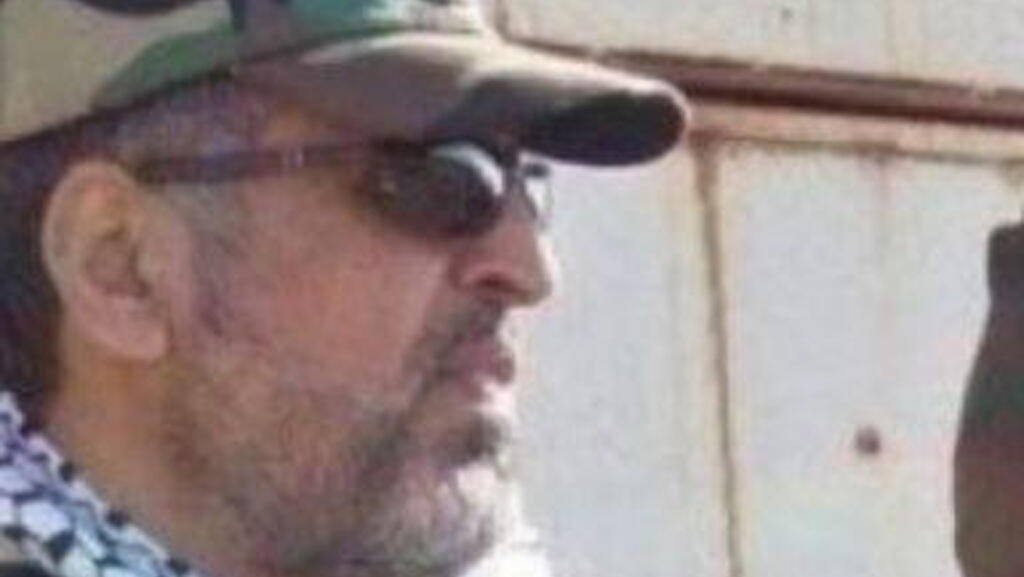
Islamic Jihad's No.2 Akram al-Ajouri
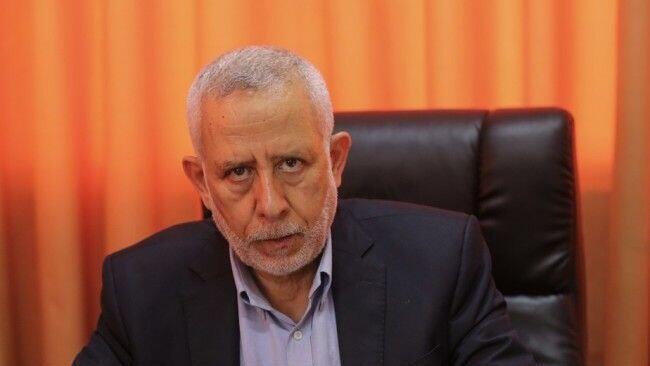
Mohammed al-Hindi
“It looks good,” the source said, though no official confirmation of casualties has been provided.
Islamic Jihad is known to receive funding and direction from Iran.
The developments come as IDF Chief of Staff Lt. Gen. Eyal Zamir said Israeli forces had achieved “significant counterterrorism results” overnight that could affect the broader campaign against Iran and its regional network.
Zamir said senior Palestinian terrorist operatives were killed in safe houses in Tehran, including figures involved in activity linked to Gaza and the West Bank.
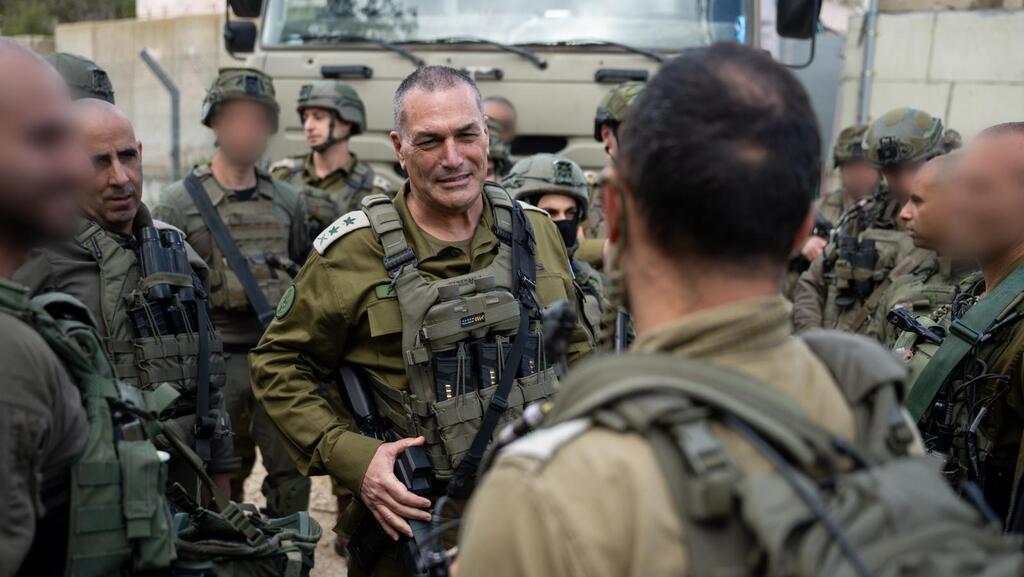
IDF Chief of Staff Lt. Gen. Eyal Zamir
(Photo: IDF)
“The IDF continues to operate with force against a range of targets in Iran,” Zamir said. “Alongside the ongoing damage to military capabilities and industrial production, we are targeting Islamic Revolutionary Guard Corps elements and regime repression mechanisms.”
The military said the elimination of Soleimani adds to that of dozens of senior commanders from Iran’s armed forces targeted during the operation and constitutes a significant blow to the regime’s security command-and-control structures.
He said the latest operations could influence both operational outcomes and the wider course of the war.
Zamir added that the campaign against Hezbollah in Lebanon remains a central front, with forces continuing to expand ground operations to remove threats to northern Israeli communities.
He also pointed to deepening cooperation with U.S. Central Command, saying joint efforts are contributing to operational gains.
Separately, Lebanese media outlets affiliated with Hezbollah reported that an Israeli drone struck a vehicle carrying Lebanese army personnel in the village of Qaquiat al-Jisr in southern Lebanon. The report said four soldiers were inside the vehicle and that another soldier on a motorcycle was also targeted.
Another report claimed that five individuals linked to the Lebanese army, including some who had completed their service, were struck. The claims could not be independently verified.
The strikes are part of Israel’s expanding campaign targeting Iranian leadership, military infrastructure and affiliated groups across multiple fronts as the conflict escalates.
First published: 10:30, 03.17.26