


Iraq’s September 30 deadline for disarming the country’s powerful Iran-backed militias is effectively being pushed back, with Prime Minister Ali al-Zaidi now saying the government plans to complete the process by June 2027 as several major armed factions refuse to surrender their weapons.
The original deadline, set in June, was supposed to coincide with the end of the U.S.-led coalition’s mission in Iraq. Baghdad had argued that the withdrawal would eliminate the militias’ longstanding justification for remaining armed outside state control: the continued presence of American forces.
Gallery
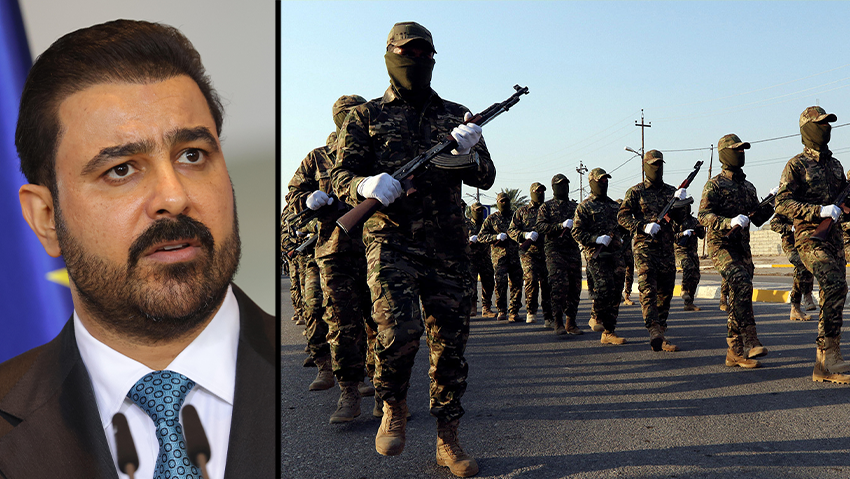
Iraqi Prime Minister Ali al-Zaidi; Popular Mobilization Forces (PMF) fighters in the town of Taza, near Kirkuk, Iraq
(Photo: Michele Tantussi/Getty Images, Reuters)
Instead, as September 30 approaches, the militias remain armed and some of the most powerful factions are openly rejecting the government’s demands. Harakat al-Nujaba and Kataib Hezbollah are among the hard-line groups that have refused to disarm while foreign forces remain in Iraq.
Nujaba spokesman Hussein Ali al-Mousawi made the group’s position clear last month.
“We will not give up our weapons,” he said. “The move to monopolize weapons is directed solely against the weapons of the resistance and is driven by American-Israeli dictates. Economic agreements with Washington have moved Iraq from military occupation to economic occupation.”
The argument amounts to a rejection of Baghdad’s central premise: that the departure of U.S.-led coalition forces will remove the rationale for the militias’ independent arsenals. For Nujaba, American influence remains even after American troops leave.
September deadline gives way to June 2027
Al-Zaidi told The New York Times over the weekend that his government now intends to complete the disarmament process by June 30, 2027.
Under the plan, a detailed timetable is to be presented on September 30. The first stage would include a 90-day period during which the militias refrain from attacks in exchange for guarantees that U.S. forces will not strike them. The factions would then begin handing over their weapons, with the process due to conclude by the end of June.
Even before al-Zaidi announced the new timetable, Iraqi officials had begun backing away from the idea that September 30 would mark the completion of disarmament. Qasim al-Araji, a senior adviser to the prime minister, said last week that there was no fixed deadline for the committee handling the effort to bring weapons under state control.
Some armed factions have said they are willing to place their weapons under state authority or restrict themselves to political activity. But the most powerful groups closest to Tehran have either rejected disarmament or set conditions that Baghdad is unlikely to satisfy quickly.
The militias are also reportedly seeking another extension, until the end of 2027. Regional diplomats and Iraqi security officials have warned that even al-Zaidi’s new timetable could prove extremely difficult to implement, particularly while the war involving Iran has increased the strategic importance of Tehran-aligned armed groups.
Al-Zaidi has nevertheless insisted that he will not retreat.
“Others who spoke about this backed down,” he told The New York Times. “They yielded to pressure or other considerations. For me, this issue, in addition to confronting corruption, is a matter of honor.”
The weapons are only part of the problem
The dispute is not simply over whether the militias hand over missiles, drones and other weapons. A central question is who will actually control those arsenals afterward.
The United States has been pressing Baghdad to establish genuine state control over armed force, rather than merely moving weapons from militia depots into another framework in which the same factions retain effective influence.
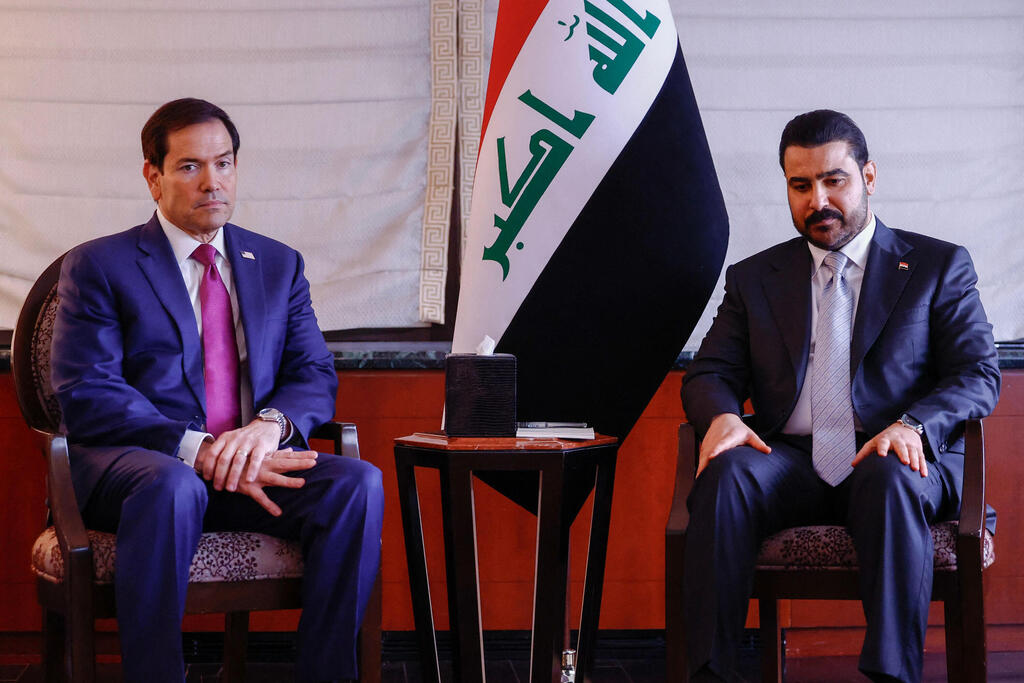
Iraqi Prime Minister Ali al-Zaidi with U.S. Secretary of State Marco Rubio on the sidelines of the UN General Assembly
(Photo: Jeenah Moon / POOL / AFP)
That issue was raised this week when al-Zaidi met U.S. Secretary of State Marco Rubio on the sidelines of the UN General Assembly in New York. Washington has continued pressing the Iraqi government to dismantle militias and bring weapons held by non-state actors under government control.
The challenge is complicated by the militias’ deep position inside Iraq’s political system. Iran-backed factions are not simply armed organizations operating on the margins of the state; they have accumulated political influence, economic networks and representation inside Iraqi institutions. Some are also linked to the Popular Mobilization Forces, which are formally part of Iraq’s security establishment.
According to a report in the Qatari newspaper Al-Araby Al-Jadeed, al-Zaidi reached an agreement with leaders of the Coordination Framework, the coalition of parties that dominates Iraqi politics, and senior Shiite figures before traveling to the United States.
The reported roadmap would allow militia leaders and members to continue participating in politics and grant them immunity from prosecution as part of an agreement to move the disarmament process into 2027.
Militias set their own conditions
The armed groups, meanwhile, are attaching a series of demands to any agreement to surrender their weapons.
They reportedly include the complete withdrawal of U.S. forces from Iraq “by land, sea and air,” stronger Iraqi air defenses, the withdrawal of Turkish troops from northern Iraq, Iraqi army responsibility for borders in the Kurdistan Region and the removal of Iranian opposition groups from Iraqi territory.
They are also demanding what they describe as an end to American control over Iraqi financial and economic decision-making.
Several of those demands extend far beyond the issue of militia disarmament itself and would require major changes in Iraq’s relations with the United States, Turkey and Iran.
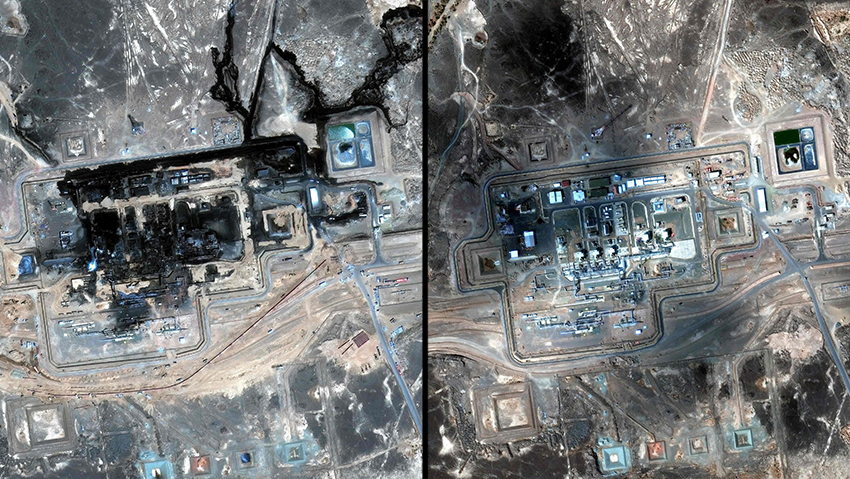
Before and after: damage caused by Iraqi militias in this month’s attack on Saudi Arabia’s strategic oil pipeline
(Photo: AFP PHOTO / Satellite image ©2026 Vantor)
The regional war has added another obstacle. Iraqi officials have said militia groups view the conflict involving Iran as an ongoing threat that strengthens their argument for keeping their weapons.
The militias have also demonstrated that their capabilities can affect neighboring countries.
Saudi Arabia said an attack on its strategic East-West oil pipeline on September 11 was launched from Iraqi territory. Riyadh, which had joined the United States in strikes in Iraq following an earlier militia attack, chose not to retaliate this time and said it would support Baghdad’s efforts at al-Zaidi’s request.
Afterward, a senior Nujaba official said the Iraqi militias had “no intention at present of carrying out military operations.”
A harder approach put on hold
Only last month, regional reports suggested the Iraqi government was preparing for a much more confrontational phase after September 30.
Saudi newspaper Asharq Al-Awsat reported that the plan called for Iraqi army units, counterterrorism forces and elite troops to deploy around operations centers belonging to pro-Iranian militias and on roads leading to them.
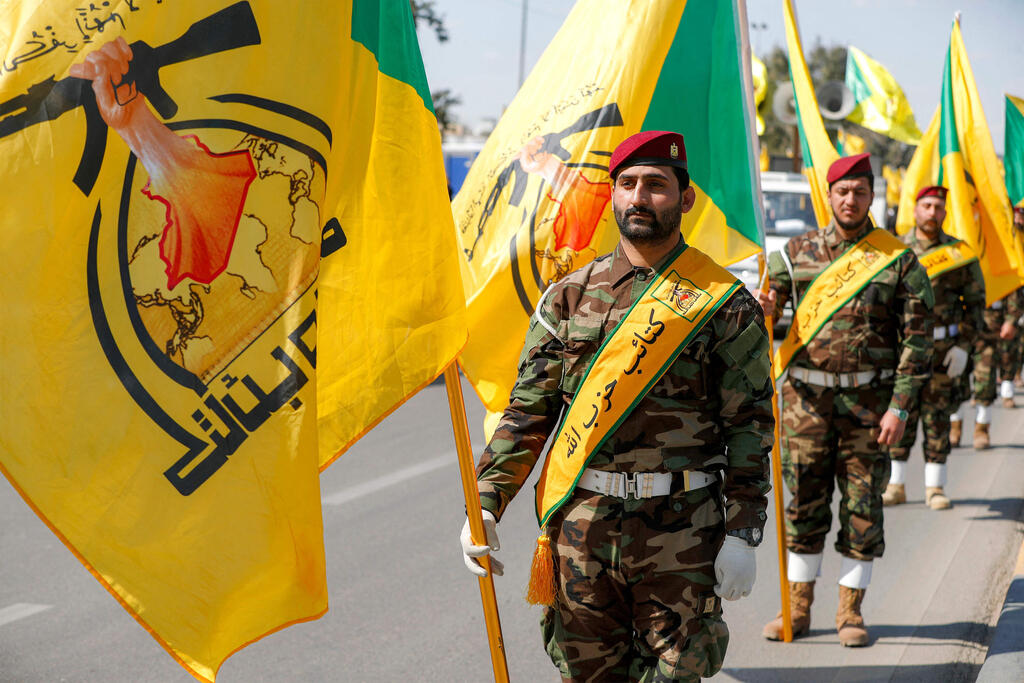
Kataib Hezbollah militia in Iraq
(Photo: AHMAD AL-RUBAYE / AFP)
Government forces were expected to establish checkpoints, monitor weapons movements and confiscate arms, particularly drones and missiles, while gradually tightening restrictions around militia sites.
The shift toward a longer negotiated timetable makes such measures appear far less imminent.
Instead, Baghdad is attempting to secure a gradual agreement with factions whose military capabilities are matched by significant political influence, while avoiding a confrontation that could itself destabilize the country.
The U.S.-led coalition’s withdrawal remains scheduled for September 30.
But the second part of Baghdad’s original plan, using that withdrawal to end the militias’ independent military power, is now set to continue well into 2027.