

Syrian government forces seized the strategic town of Tabqa on Sunday, pressing deeper into territory long controlled by Kurdish-led forces in northeastern Syria and intensifying clashes that threaten to redraw control of the country’s east.
The advance comes amid rising tensions between Damascus and the U.S.-backed Syrian Democratic Forces, or SDF, after weeks of stalled negotiations over the future of Kurdish autonomy and the reintegration of northeastern Syria into the central government.
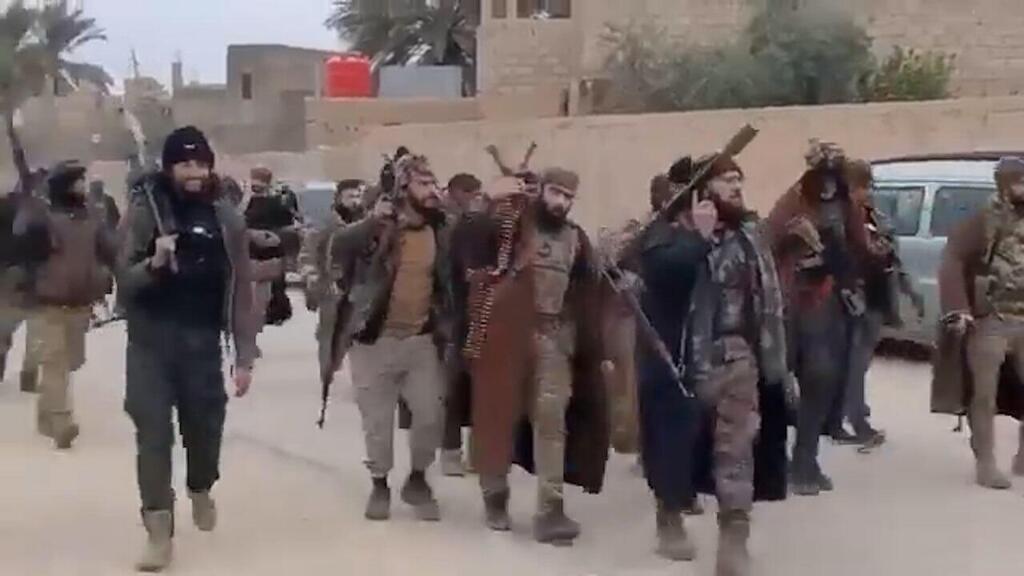
Footage from Syria shows al-Sharaa fighters seizing Deir el-Zour town, Kurdish forces captured


Tabqa, located in Raqqa province south of the Euphrates River, is considered a critical prize. It sits near Syria’s largest dam, which regulates water and electricity supplies across wide areas of the country, and includes a military air base. An Associated Press reporter saw residents emerging from their homes to welcome Syrian troops, some waving national flags.
The push into Tabqa follows deadly clashes earlier this month in Aleppo, where Syrian government forces regained control of several neighborhoods previously held by Kurdish fighters. Those clashes left at least 23 people dead and tens of thousands displaced, prompting calls for restraint from the United States and European leaders.
Gallery
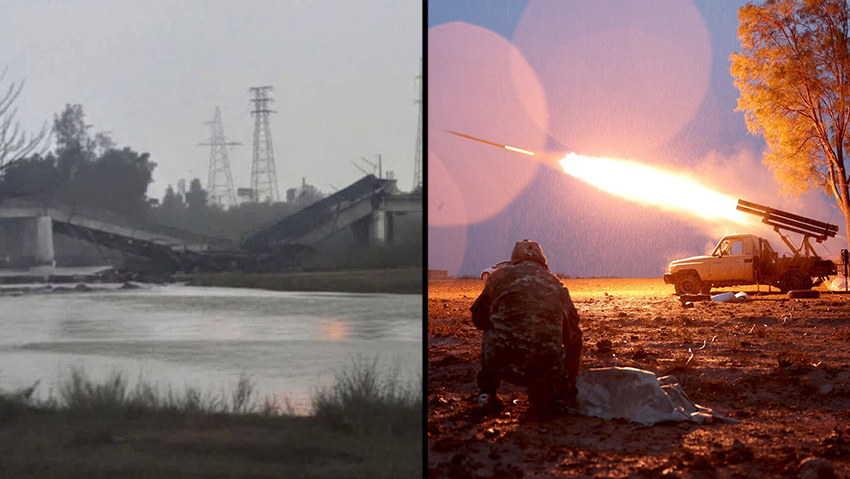
A bridge allegedly blown up by Kurdish forces, Rocket fire at Syrian army forces loyal to al-Sharaa
(Photo: Omar Haj Kadour/ AFP)
President Ahmad al-Sharaa, who came to power in December 2024 after leading an insurgency that toppled longtime ruler Bashar Assad, has struggled to assert full control over the war-battered country. While seeking international legitimacy and the lifting of sanctions, his government has also moved forcefully to reassert authority over areas outside its control.
Oil fields and bridges
As fighting expanded eastward, Syrian government forces also seized major oil and gas facilities in neighboring Deir el-Zour province. Security sources told Reuters that the army took control of the al-Omar oil field, Syria’s largest, as well as the Conoco gas field. Both sites had been under SDF control and are among the most strategically valuable energy assets in the country.
Syrian state media reported that Kurdish forces detonated bridges over the Euphrates River near Tabqa, an apparent attempt to slow the government’s advance toward the city of Raqqa, the former capital of the Islamic State group. The SDF did not confirm blowing up the bridges, but Syrian officials said the move underscored Kurdish resistance to the offensive.
Tabqa itself had been captured from Islamic State militants by the SDF in 2017, with heavy support from U.S.-led coalition airstrikes. At the time, the town was seen as a turning point in the campaign to dismantle the group’s self-declared caliphate.
The Syrian government accused SDF fighters of executing prisoners at a jail in Tabqa before withdrawing. The SDF denied the allegation, saying detainees were transferred out of the facility and accusing government forces of firing into the prison. The SDF released a video showing armed men in civilian clothing inside the prison, seizing weapons left behind. No bodies were visible in the footage.
Broader front opens
The fighting has not been confined to Raqqa province. In Deir el-Zour, further east near the Iraqi border, local authorities urged residents to remain indoors following reports of clashes between government forces and the SDF.
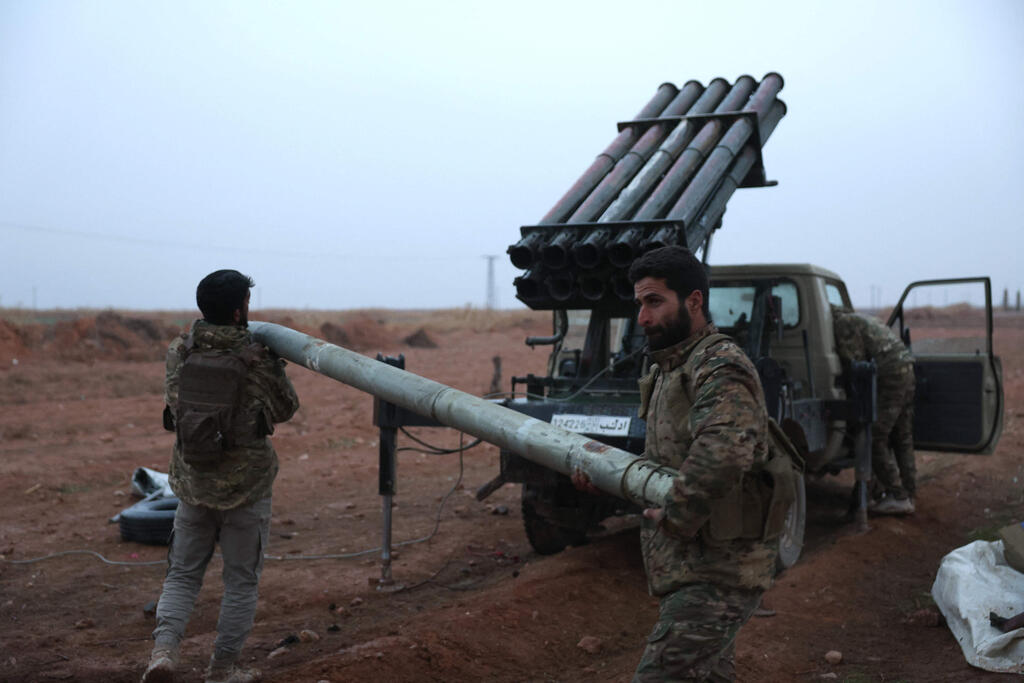
(Photo: Omar Haj Kadour/ AFP)
The province has long been a flashpoint, marked by strained relations between Kurdish-led authorities and Arab tribes. It is also home to key oil and gas installations near U.S. military bases. Unconfirmed reports suggested that armed tribal groups opposed to Kurdish rule had taken control of some energy sites after SDF withdrawals.
The Britain-based Syrian Observatory for Human Rights said government forces have taken control of more than a dozen towns and villages across eastern Deir el-Zour countryside as Kurdish units pulled back.
Last week, Syria’s Defense Ministry declared parts of eastern Aleppo a closed military zone, including sections of the frontline dividing government-held territory from SDF-controlled areas. Since then, government troops appear to have pushed steadily toward Raqqa, one of the most significant cities under Kurdish control.
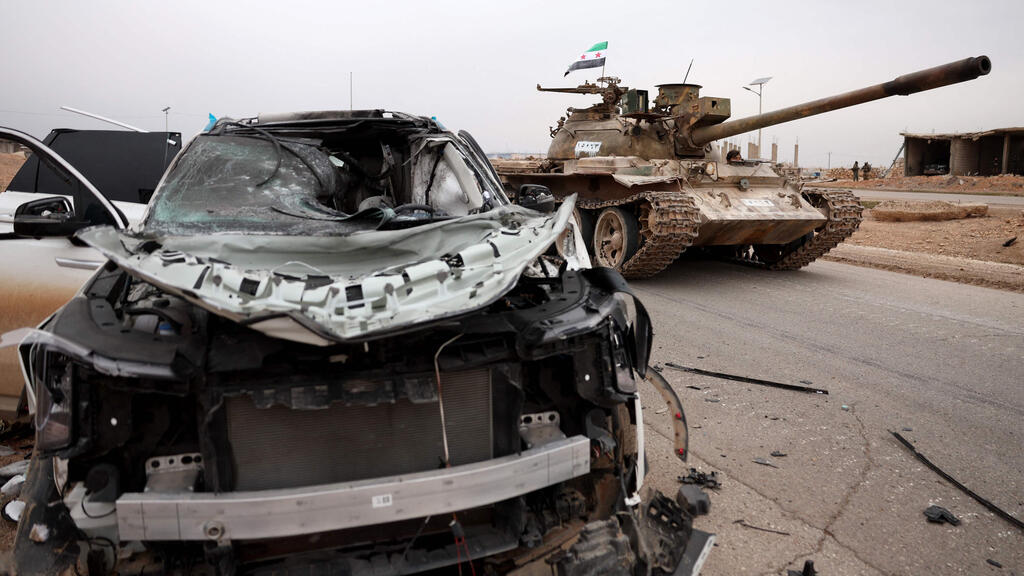
Syrian tanks
(Photo: Omar Haj Kadour/ AFP)
Failed agreement, rising fears
The latest escalation follows the collapse of talks between the SDF and al-Sharaa’s government over implementing a March agreement that envisioned reintegrating Kurdish-led forces and institutions into the Syrian state.
While al-Sharaa has pledged to unify Syria and recognize Kurdish rights, including signing a decree recognizing Kurds as an integral part of the Syrian nation and acknowledging their language, Kurdish leaders say the measures fall short of guaranteeing autonomy or constitutional protections.
SDF commander Mazloum Abdi said Friday that Kurdish forces would withdraw east of the Euphrates as a goodwill gesture after al-Sharaa’s announcement. Kurdish officials now accuse Damascus of violating the agreement by continuing its military advance, including the seizure of Tabqa.
The Kurdish leadership remains deeply wary of al-Sharaa, a former al-Qaida figure who has sought to recast himself as a pragmatic leader. Their fears have been amplified by reports of massacres carried out by forces aligned with the new government against Alawite and Druze minorities since Assad’s fall.
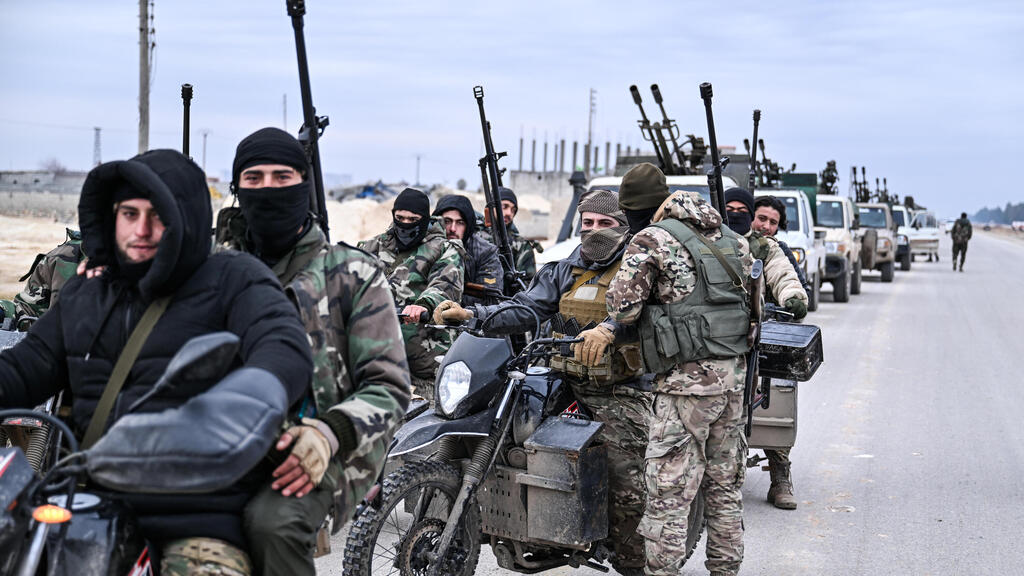
(Photo: Abdulmonam Eassa/Getty Images)
Regional and international pressure
The fighting has raised concerns among Western governments that moved quickly to recognize Syria’s new leadership and ease international sanctions, hoping to stabilize the country after more than a decade of civil war.
France’s President Emmanuel Macron called on al-Sharaa to halt the offensive, warning that Syria’s unity would not be achieved through war against forces that fought alongside the West against Islamic State.
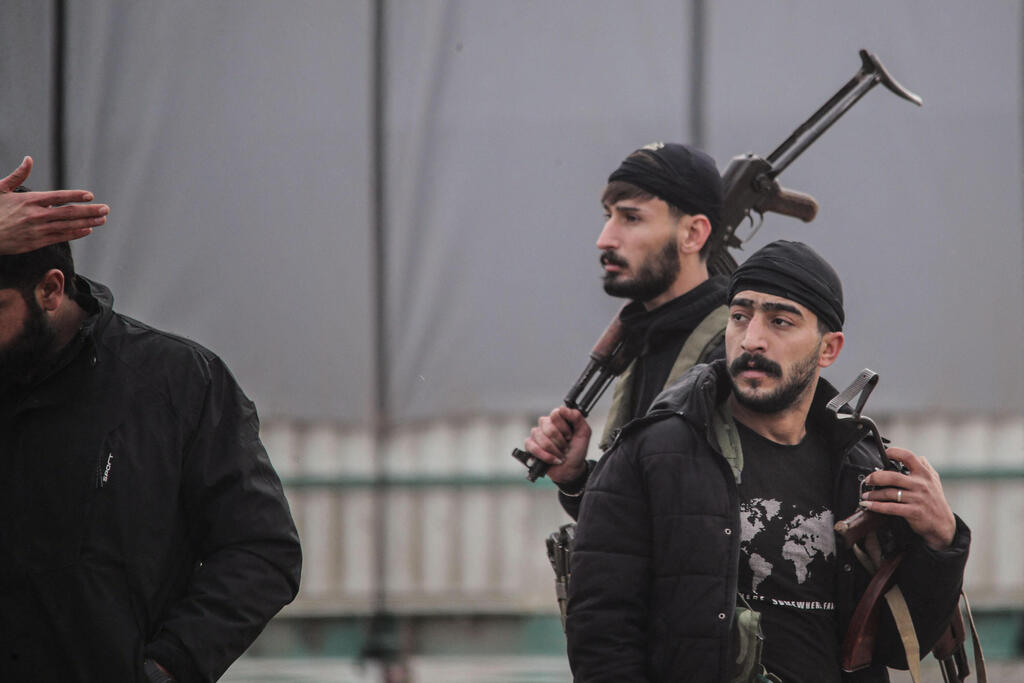
Kurdish fighters in Tabqa, near Raqqa, a city claimed seized by al-Sharaa’s forces
(Photo: Delil Souleiman/ AFP)

Kurdish fighters
(Photo: Delil Souleiman/ AFP)
The U.S. military also urged Syrian government forces to stop offensive operations between Aleppo and Tabqa. A statement from U.S. Central Command said sustained pressure on Islamic State requires cooperation among Syrian partners, coordinated with Washington and coalition forces.
Despite those calls, Syrian troops advanced into Tabqa on Sunday.
The fighting has also drawn in regional dynamics. Damascus has accused the Kurdistan Workers’ Party, or PKK, of assisting the SDF, including backing drone attacks in the Raqqa area that killed two Syrian soldiers. The PKK’s imprisoned leader, Abdullah Ocalan, warned that the clashes risk undermining a fragile peace process with Turkey.
Meanwhile, U.S. envoy to Syria Thomas Barrack met with Iraqi Kurdish leader Masoud Barzani in Erbil as part of diplomatic efforts to de-escalate the crisis. No breakthrough was announced.
As government forces consolidate gains across northeastern Syria, questions remain over how far Damascus will push into Kurdish heartlands, and whether renewed fighting will unravel years of relative stability in the region once considered a cornerstone of the fight against Islamic State.