

As the United States continues to impose a naval blockade on Iran, saying 34 ships have been blocked on their way to or from Iranian ports, Tehran insists the Americans are not truly capable of enforcing it, and reports the passage of another oil tanker.
“The Americans should know they do not have the ability to impose a naval blockade on Iran,” Gholam-Hossein Eje’i, head of Iran’s judiciary, said Saturday. Still, Iranian President Masoud Pezeshkian called on the public to reduce electricity and energy consumption.
“The enemies are destroying our infrastructure and placing us under siege. We need to control consumption,” he said.
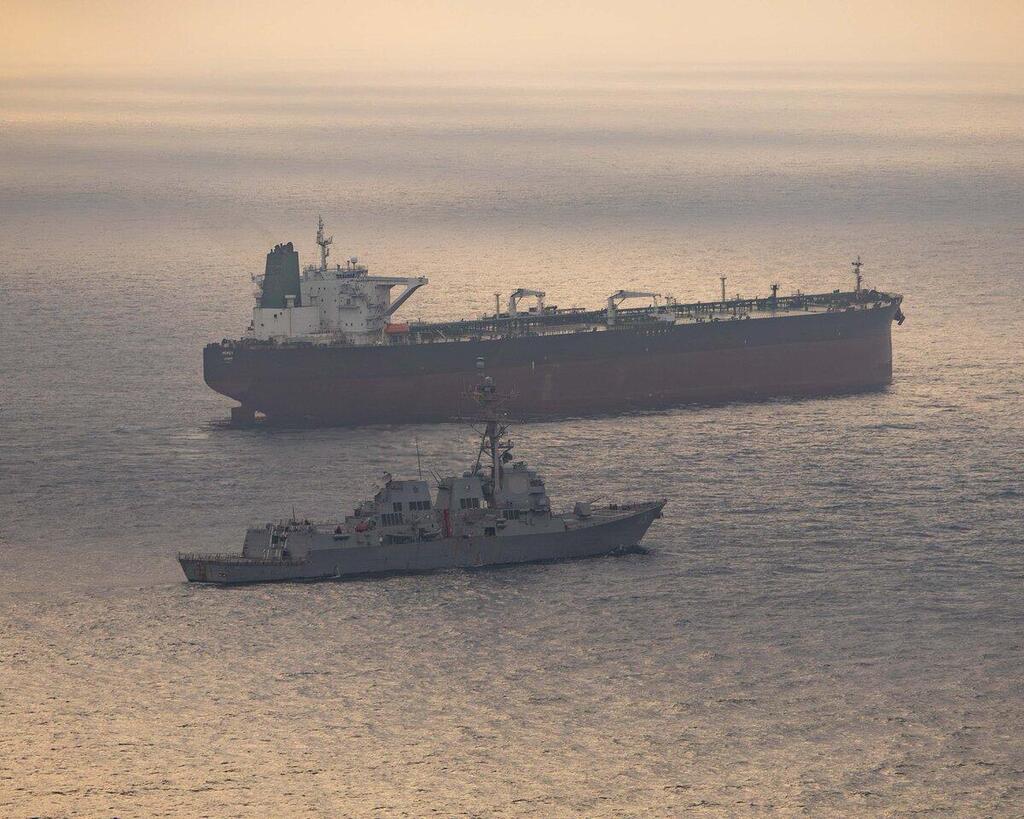
U.S. Central Command released footage Saturday morning showing the USS Rafael Peralta enforcing the blockade alongside a ship flying the Iranian flag that was making its way to a port in the country. However, Iran’s semi-official Fars news agency reported overnight that ship-tracking data showed an oil tanker placed on the U.S. sanctions list had passed through the Gulf of Oman.
Meanwhile, against the backdrop of negotiations in Pakistan, the United States continues to build up forces in the Middle East. For the first time since 2003, three aircraft carriers — the USS Lincoln, USS Ford and USS Bush — are operating simultaneously in the region. Together, they carry more than 200 aircraft and 15,000 air and naval personnel. At least nine destroyers are operating alongside the carriers in their strike groups, which are prepared for renewed fighting if the talks collapse.
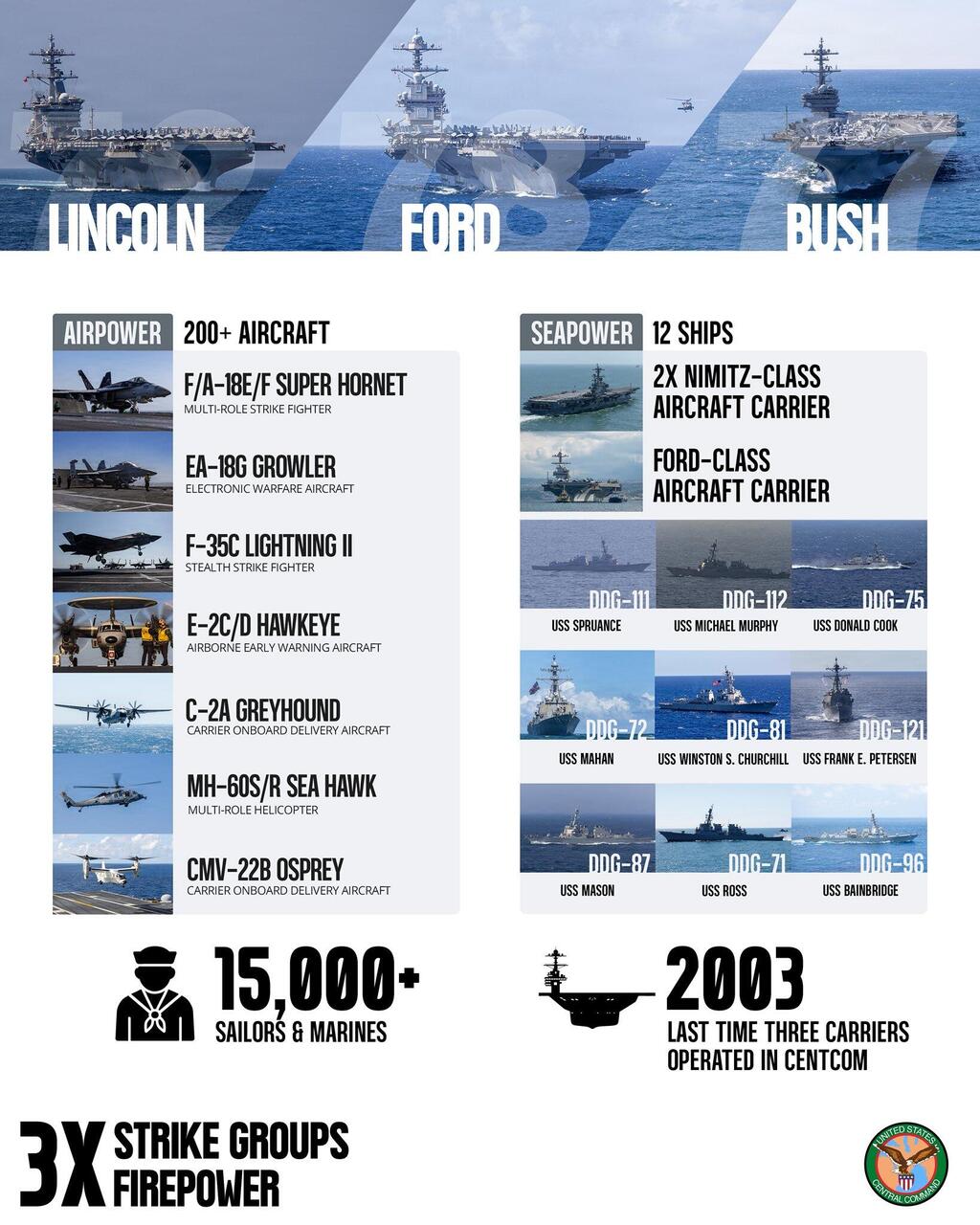
The aircraft carrier strike groups deployed to the Middle East
(Illustration: CENTCOM)
Foreign Minister Abbas Araghchi met in Islamabad with Pakistan’s army chief, Asim Munir, and reportedly delivered Tehran’s response to his proposals. Earlier, Ebrahim Azizi, head of the Iranian parliament’s National Security and Foreign Policy Committee, said Araghchi’s trip to Pakistan was intended only for discussions on bilateral relations.
“He has no mission related to the nuclear talks — which remain one of Iran’s red lines,” Azizi said.
Meanwhile, sources told the Saudi channel Al Arabiya on Saturday that “Pakistan proposed a multinational plan to supervise Iran’s nuclear program.” An Iranian diplomatic source added: “We confirmed to the Pakistani leadership our commitment to the 10 points” of the ceasefire. The source said, “We also confirmed our commitment to ending the threats and the blockade. We will not sit in negotiations in which the United States sets red lines. We are ready for negotiations, but we will not surrender.”
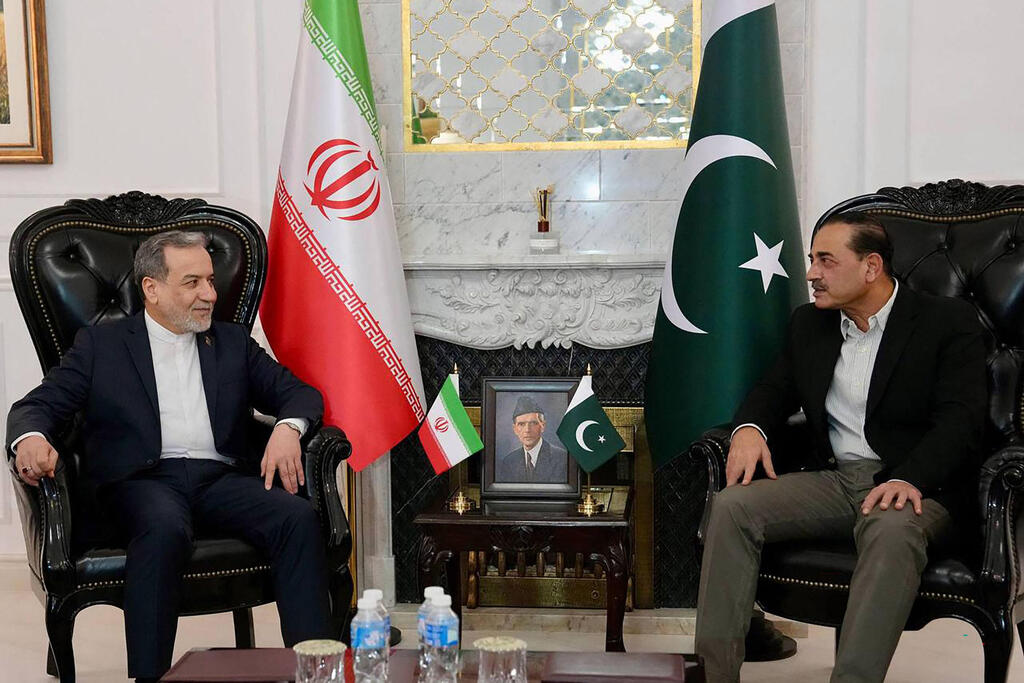
Iranian Foreign Minister Abbas Araghchi meets with Pakistan army chief Asim Munir in Islamabad
(Photo: AFP PHOTO / Iranian Foreign Ministry)
Separately, U.S. Treasury Secretary Scott Bessent said an extension of sanctions relief on Russian oil, as well as a one-time permit to purchase Iranian oil already at sea, were not on the table.
“We have the blockade, and there’s no oil coming out,” he said in an interview with The Associated Press.
Regarding Russian oil, he said: “I wouldn’t imagine that we’d have another extension. I think the Russian oil on the water has been largely sucked up.”
Last month, the United States allowed countries to buy Iranian and Russian oil already aboard tankers at sea in an effort to reduce the economic impact of the war.
At this stage, the talks in Pakistan are expected to remain at a lower level, with President Donald Trump’s envoys, Steve Witkoff and Jared Kushner, representing the American side. According to The Washington Post, Vice President JD Vance will not travel for now, in part to avoid embarrassment if the round fails.
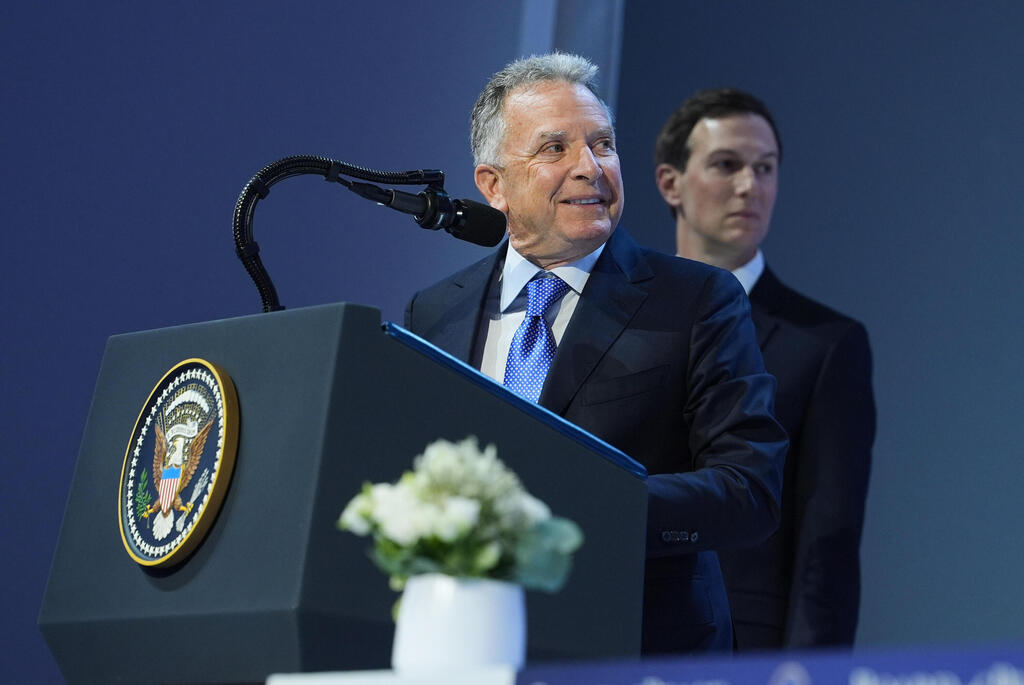
US special envoys Steve Witkoff and Jared Kushner
(Photo: AP Photo/Evan Vucci)
Other officials who spoke with the newspaper said the decision to keep Vance on standby is in line with diplomatic protocol, under which the vice president would attend talks only if they are conducted with a counterpart of similar rank. Accordingly, Iran did not send parliament speaker Mohammad Bagher Ghalibaf, who led its delegation in the previous round in Pakistan and is viewed by the White House as Vance’s counterpart in the negotiations.
White House press secretary Karoline Leavitt said Vance would remain on standby and would travel to Pakistan “if we feel it's a necessary use of his time.” According to sources who spoke with The Washington Post, Vance is pushing a more dovish line than Witkoff and Kushner, who are emphasizing Israeli objectives in the negotiations, including efforts to get Iran to end its support for Hezbollah, Hamas and the Houthis. According to the report, that demand is a “nonstarter” for Iran and could cause the talks to drag on.
Meanwhile, it remains unclear whether the countries' representatives will meet at all, as Iran continues to deny the possibility of such talks. Iranian Foreign Ministry spokesman Esmail Baghaei said Araghchi’s visit was “official” and that messages would be conveyed through Pakistan, not through face-to-face meetings with the Americans. However, a U.S. official stressed that “Witkoff and Kushner received approval from Tehran, otherwise they would not be coming.”
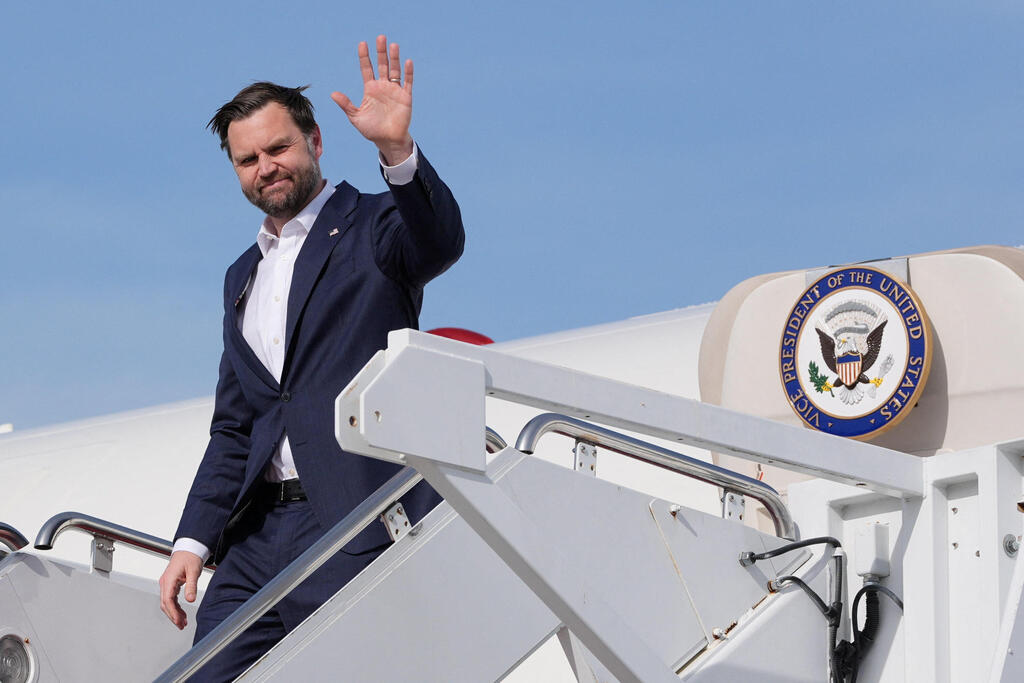
US Vice President JD Vance
(Photo: Jacquelyn Martin/Pool/Reuters)
The New York Times reported that despite the denials, Araghchi is expected to meet in Pakistan with Trump’s envoys. ABC reported, citing a Pakistani official, that the delegations would hold separate meetings with the Pakistanis, and that a direct meeting would take place Sunday only if those talks proceed well.
In an interview with Reuters, Trump said Iran intended to submit an offer that would meet his demands, though he did not say what it would include. Asked with whom the negotiations were being conducted, he replied: “I don't want to say that, but we're dealing with the people that are in charge now.”
The intelligence arm of Iran's Islamic Revolutionary Guard Corps claimed it had thwarted a military attack plan by groups acting for Israel and the United States in the provinces of Kurdistan and Kermanshah.
Iran also executed a civilian named Erfan Kiani, claiming he was a “hired thug of Mossad” who took part in vandalism and violence during anti-regime protests earlier this year. According to the Tasnim news agency, he set fire to public and private property and spread fear and terror in the central city of Isfahan.