

Palestinian Islamic Jihad, an ally of Hamas that also holds Israeli hostages, on Saturday endorsed Hamas’s response to a U.S. plan to end the war in Gaza — a move that could help pave the way for the release of captives still held by both groups.
“Hamas’ response to Trump’s plan represents the position of the Palestinian resistance factions, and Islamic Jihad participated responsibly in the consultations that led to this decision,” the Iran-backed terror group said in a statement.

Hamas, which controls Gaza, said Friday it accepts key parts of U.S. President Donald Trump’s proposal, including an end to the war, Israel’s withdrawal, and the release of Israeli hostages and Palestinian prisoners.
The group’s stance — and its backing by Islamic Jihad — raised hopes among war-weary Gazans who have seen repeated ceasefire efforts collapse amid Israeli airstrikes that have devastated the enclave, created a humanitarian crisis, and displaced millions.
“It’s happy news — it saves those who are still alive, it saves the people. Thank God they agreed. This is enough; we are tired, truly tired,” said Palestinian Saoud Qarneyta, 32.
Others were more cautious, expressing concern that Israeli Prime Minister Benjamin Netanyahu might withdraw from any deal to end the fighting.
“What’s important is that Netanyahu doesn’t sabotage this, because now that Hamas agreed, Netanyahu will disagree — as he usually does,” said Jerusalem resident Jamal Shihada.
The Israeli military’s Arabic-language spokesperson warned Saturday that Gaza City remains a “dangerous” combat zone and urged residents via X not to move north or approach areas where Israeli forces are operating.
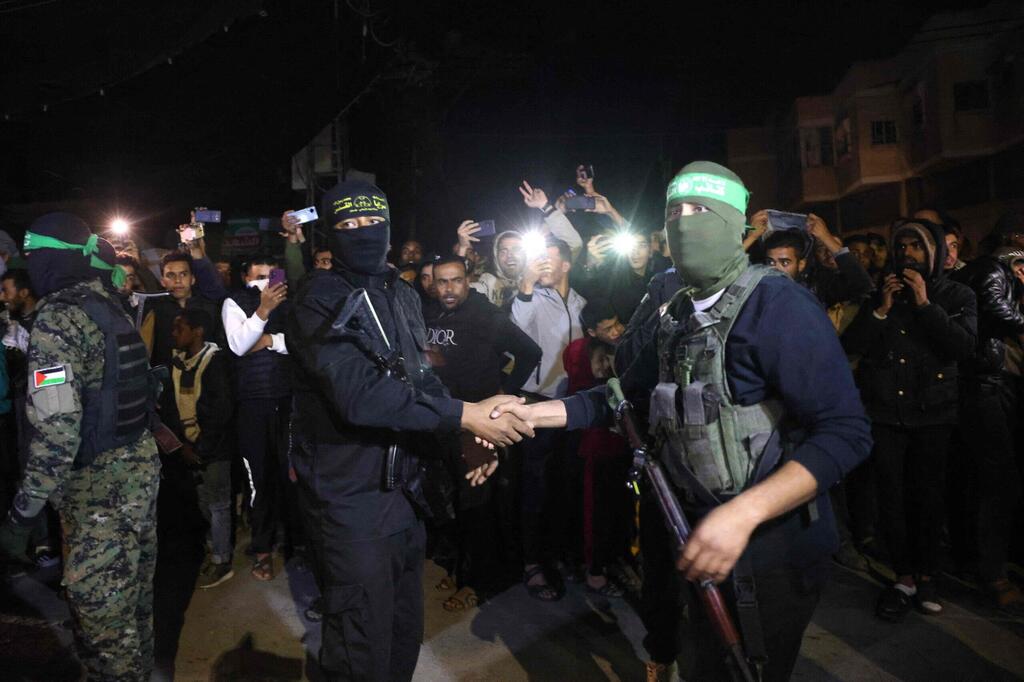
Palestinian Islamic Jihad and Hamas
(Photo: AFP)
Military shift and global reaction
News outlet Axios reported that the Israeli military plans to shift to defensive operations in Gaza and halt its push to seize Gaza City.
Airstrikes continued early Saturday, though at reduced intensity, after Trump called for an end to the bombing, saying Hamas was “ready for peace.” Six people were killed in Israeli strikes across Gaza, including four in Gaza City and two in Khan Younis, according to local authorities and medical sources.
Netanyahu’s office said Israel was preparing for the “immediate implementation” of the first phase of Trump’s plan — the release of Israeli hostages following Hamas’s response. Israeli media later reported that political leaders had instructed the military to scale back offensive activity.
Trump’s proposal and Hamas’s reply drew expressions of support from governments worldwide, including Australia, India, and Canada.
Israel’s military chief of staff said forces had been ordered to prepare for the plan’s first phase but did not specify whether operations in Gaza would be reduced.
Hamas responded to Trump’s 20-point plan after the U.S. president gave the group until Sunday to accept or face unspecified “grave consequences.”
Trump, who has cast himself as the only person capable of achieving peace in Gaza, has invested significant political capital in ending a two-year war that has killed tens of thousands and left Israel increasingly isolated internationally.
On Friday, Trump said he believed Hamas had shown it was “ready for a lasting PEACE” and called on Netanyahu’s government to act.
“Israel must immediately stop the bombing of Gaza so that we can get the hostages out safely and quickly!” Trump wrote on Truth Social.
Before Israel’s latest announcements, families of hostages held in Gaza urged Netanyahu to “immediately order negotiations for the return of all hostages.”
At home, Netanyahu faces growing pressure to end the war — from hostage families and a weary public — while members of his far-right coalition insist Israel must not ease its military campaign.