

IDF Chief of Staff Lt. Gen. Eyal Zamir on Friday distributed his summary of the military’s internal investigations into the Oct. 7 failures, calling for the establishment of an external, state-appointed commission of inquiry. The letter was sent as relations between Zamir and Defense Minister Israel Katz have grown strained following the release of the IDF’s probe findings.
“The IDF has taken responsibility and investigated itself, but the event is not the military’s alone, and it would be wrong to direct the entire spotlight only at the IDF,” Zamir wrote. “To reach the full truth and national-level conclusions, a professional, external and objective commission must be established, as was done after the Yom Kippur War.”
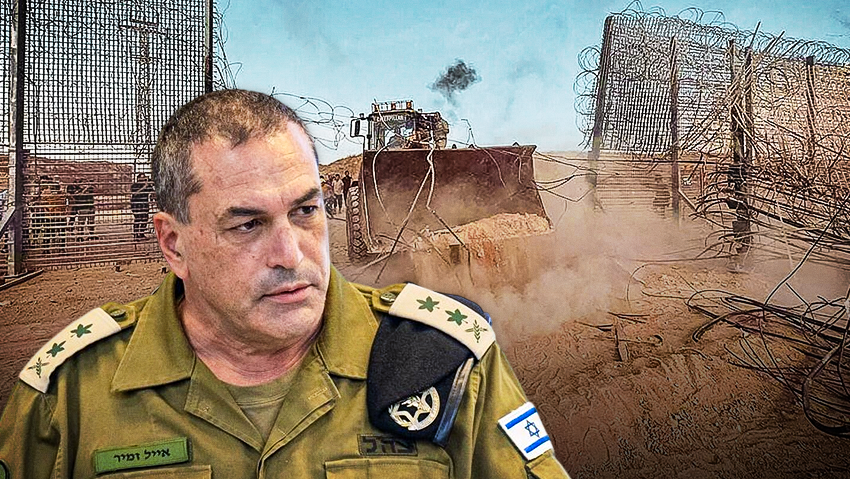
(Photo: IDF)
Zamir said any national review must examine the interface between political and military leadership, the strategic and security concepts that preceded the war, the intelligence assessments and warnings delivered to top officials, oversight processes, and the division of responsibility among agencies.
Addressing criticism of his recent decisions to assign personal responsibility to several commanders, Zamir stressed that the IDF’s internal probes “did not deal with personal accountability. The Oct. 7 failure was systemic and long-standing. Assigning personal blame to commanders who have devoted their lives to the country is a heavy decision that must not be influenced by external pressure and must be made with great care.”
He added that those involved “will carry a heavy burden for the rest of their lives,” and said only an independent state commission with full access to information could make “fair and consequential” determinations regarding personal responsibility. Still, Zamir emphasized that this “does not diminish the IDF’s responsibility.”
Zamir also acknowledged critical intelligence shortcomings, writing that Military Intelligence “did not provide a concrete warning of war.” He cited the Hamas attack plan known as “Jericho Wall,” which had been detected years before but was never fully analyzed or integrated into operational planning.
“The plan was first exposed in 2018 and fully in 2022,” Zamir wrote. “It was not examined in sufficient depth or internalized as required. Discovering an enemy’s attack plan is rare and should have served as a clear operational compass for force buildup and planning.”