

In Colombia, rescue teams were racing against the clock Tuesday in an effort to find survivors in the ruins of buildings that collapsed Monday in the powerful 7.4 magnitude earthquake that shook the country’s west and center.
Overnight, the official death toll climbed to 166 and the number of injured to 570, and it became clear that significant damage had been caused to more than 1,500 buildings, dozens of which collapsed completely. As of Monday night, the official number of missing and unreachable people stood at more than 2,700.
The screams and panic at the moment of the earthquake in the city of Cali, and the destruction in the cathedral in Manizales
(Photo: Reuters)


In Cali, Colombia’s third-largest city and one of the places that suffered the worst damage, at least 85 people were killed. Overnight, professional rescue workers and volunteers could still be seen clearing debris with their bare hands in search of signs of life. In that city alone, home to 2.2 million people, the number of missing stands at 188. There and in other cities, rescuers were seen forming human chains to clear debris from buildings using pickaxes and basic tools, and from time to time raising their hands in the air to signal everyone to be silent, hoping to hear cries for help from beneath the ruins. “We are carrying out all the necessary actions to rescue people alive,” said Andrés Felipe Mejía, one of the volunteers, overnight.
Gallery
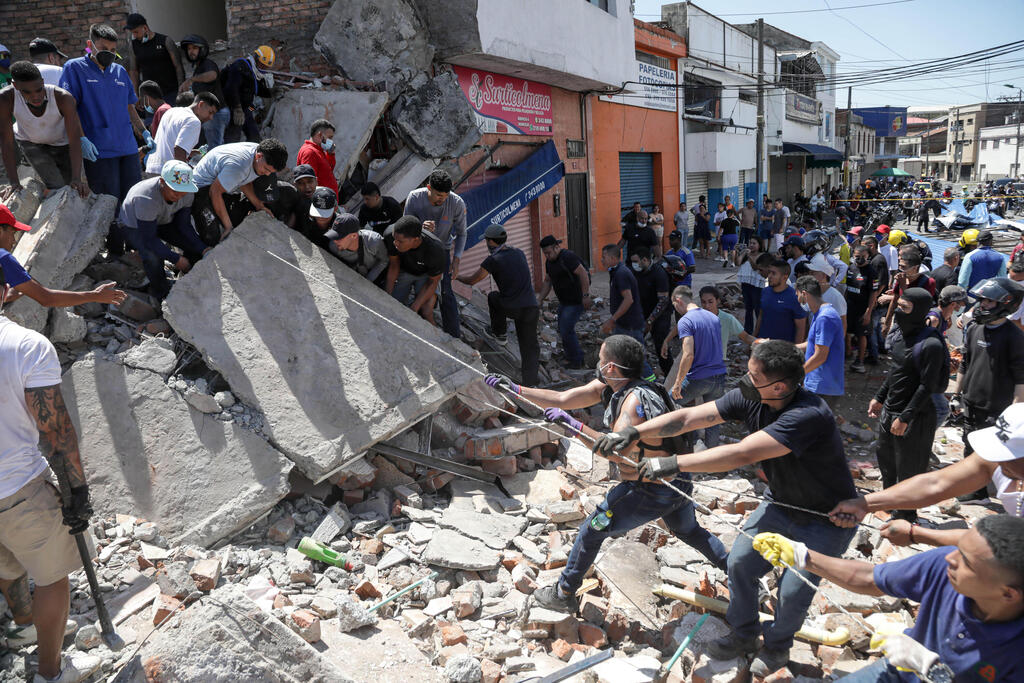
Volunteers help remove large blocks of concrete in an attempt to reach those trapped in the city of Cali
(Photo: Samir Rojas/Getty Image)
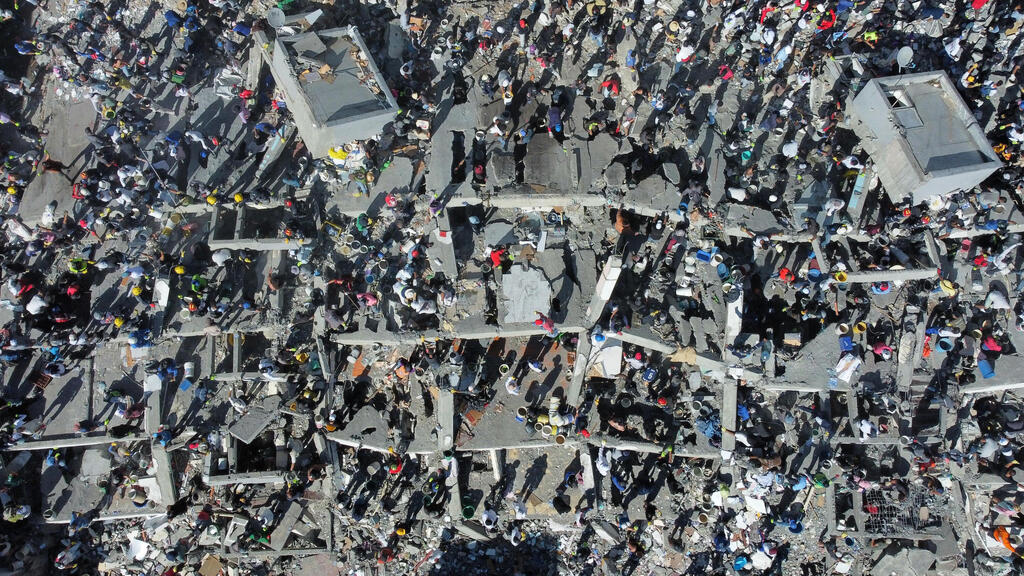
The destruction and searches in Colombia's third largest city
(Photo: Santiago Saldarriaga/AP)
Another volunteer, Nelson Moreno, arrived at one of the disaster sites in Cali to search for a friend trapped under two collapsed five-story buildings. Her father and baby had earlier been rescued injured but alive. “Now we need flashlights and goggles because of the dust so we can continue the operations at night,” he said, surrounded by hundreds of volunteers.
Carmen Yasmín García, a 43-year-old Cali resident who also joined the volunteers, said her team rescued seven people from a collapsed building, but four others and a dog remained trapped. “A moment ago we could still hear scratching sounds, but now we don’t hear anything,” she said. “We still have faith that the dog is alive and that we can get these people out. We need people with rods and shovels. The more people who lend a hand, the better.”
Buildings collapse and survivors jump and flee: Watch what happened during the earthquake in Colombia
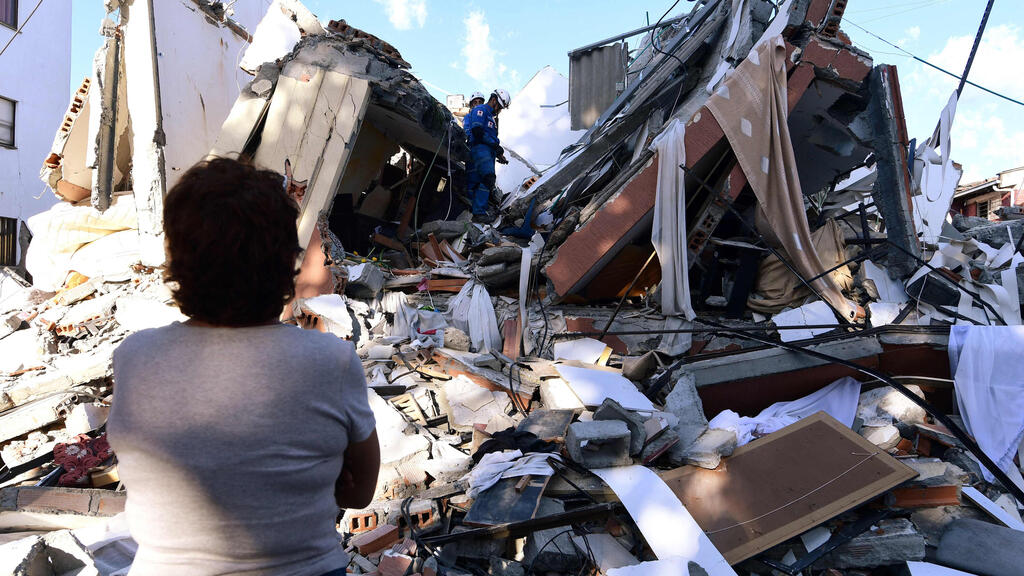
A woman waits for news of her loved ones at the site of a collapsed building
(Photo: Jaime Saldarriaga/ AFP)
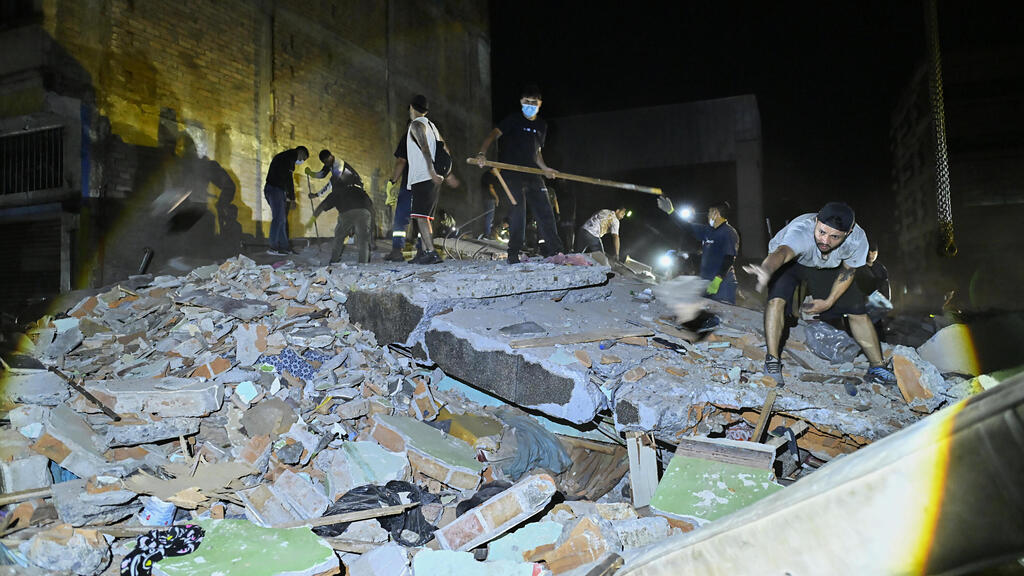
The search for survivors lasted into the night
(Photo: Gabriel Aponte/Getty Images)
Dozens of buildings in Cali were completely destroyed or left dangerously tilted, forcing residents to remain in the streets and preventing them from returning home. Several upper floors of the city’s university hospital, some of them designated for children’s care, also collapsed inward with a roar, leaving patients trapped and forcing about 600 others to evacuate into the debris-strewn streets and receive treatment there.
'People came out naked, jumped from rooftops, like a scene from a movie'
The powerful earthquake struck Monday at 7:34 a.m. local time, 3:34 p.m. in Israel. Its epicenter was at a relatively deep 96 kilometers in San José del Palmar, about 400 kilometers west of Bogotá. The tremor was so powerful that buildings also shook in Colombia’s capital, and residents fled in panic into the streets. No significant damage was caused there, but destruction was reported in dozens of other cities and towns, including Cali, Quibdó, Pereira and Manizales. In one of them, the town of El Cairo, home to about 7,000 residents, about 80% of the buildings were damaged. Significant damage was also caused to seven airports, and their operations were suspended.
Footage of earthquake from the airport in Pereira: Debris falls from the ceiling, passengers have difficulty standing on their feet
Monday’s major quake was also felt in neighboring Ecuador, including in its capital, Quito, as well as in Venezuela and Panama, but no tsunami warning was issued. Since the quake, more than 50 aftershocks have hit Colombia, forcing rescuers to constantly take precautions.
In Pereira, a city located in Colombia’s tourist coffee-growing region, which was already hit by an earthquake that killed 1,200 people in 1999, at least 66 people were killed Monday, and heavy destruction was reported. “We are without electricity. Honestly, it really feels like being in a city of zombies. Honestly, it is very sad,” said Juan David Gaitán, a self-employed worker. Mónica Sánchez, the owner of a small company that makes workplace uniforms, said she and her 12 employees managed to escape from their factory in Pereira at the very last moment, and that one of the factory walls collapsed. “It was shocking — the city simply collapsed around us,” she said.
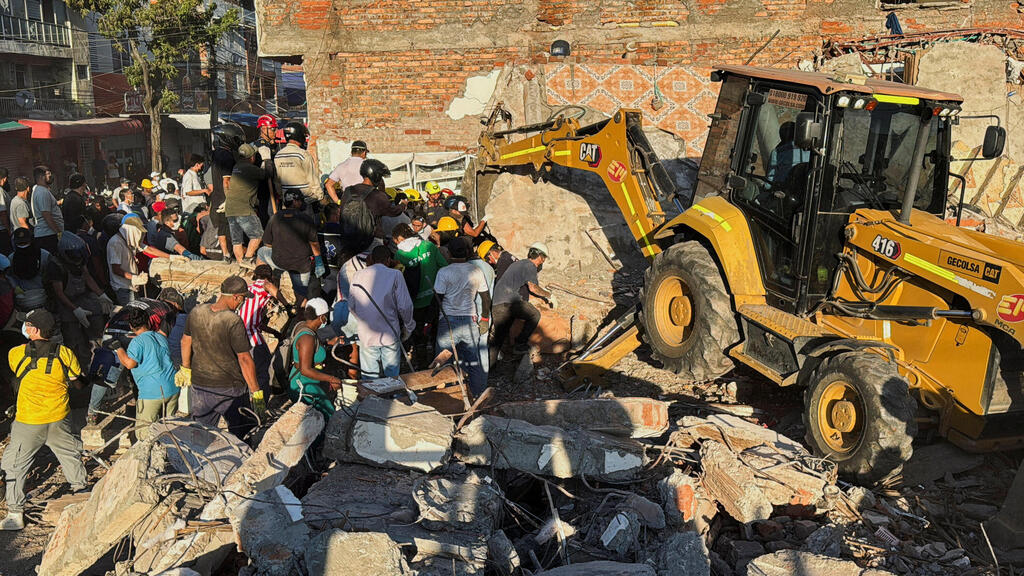
Heavy equipment helps clear rubble in Cali
(Photo: Marco Trujillo/Reuters)
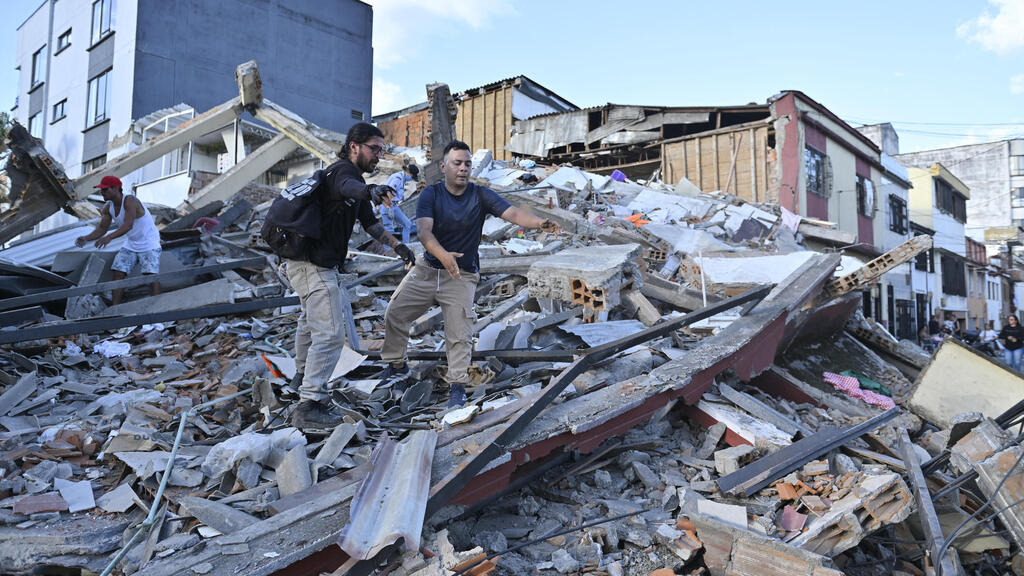
Standing on what was one and entire building
(Photo: Gabriel Aponte/Getty Images)
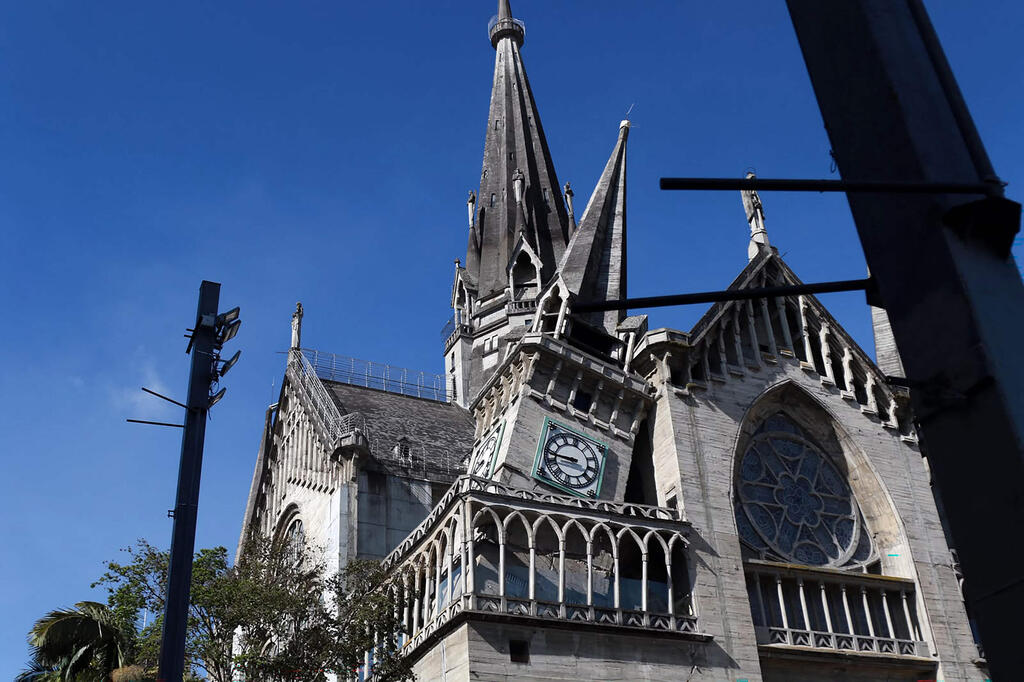
A spire of a historic cathedral collapsed in Manizale
(Photo: Andres Valencia / AFP)
Even before dawn, stunned residents were still describing the apocalyptic scenes they encountered in the moments after the quake. Wilmer Cuesta, a law student who came to help those trapped, said he saw “people coming out naked, jumping from rooftops, from the second floor, desperate people.” Andrés Hernández, who works as a tattoo artist, admitted he still cannot process what happened: “I felt like I was in a scene from a movie, when I just saw the poles, the cables, everything moving. I am worried about my family, my friends.”
President flies to epicenter: 'Chocó will never again be the land of the forgotten'
Colombia’s new president, Abelardo de la Espriella, who took office only three days before the earthquake and is already facing one of the worst disasters to hit the country in decades, declared a state of emergency Monday night and pledged to lead a coordinated rescue operation. “You are not alone!” he told Colombian citizens. After initial reports of looting in Cali, de la Espriella announced that about 1,000 security personnel would be deployed there, and overnight a curfew was declared in Cali and Pereira.
Chocó, the province where the epicenter was located, is one of the poorest and most neglected areas in Colombia, and frequently suffers from clashes between armed groups. Most parts of Chocó can be reached only by boat, through the jungle or by plane, and very little was known about the extent of the damage there.
Panic in the moments after the earthquake in Colombia
Overnight, President de la Espriella flew to Quibdó, the provincial capital, to assess the damage there, and announced that he had mobilized the entire military and police apparatus to address the needs of the region’s residents. He also announced rent subsidies for those displaced from their homes. “Chocó will never again be the ‘land of the forgotten,’” he said.
Monday’s earthquake in Colombia came less than two months after the pair of deadly earthquakes that struck Venezuela in June. The quakes, with magnitudes of 7.2 and 7.5, killed more than 5,000 people and destroyed hundreds of buildings. Colombia and its neighbors are located in the Pacific “Ring of Fire,” an area characterized by intense seismic and volcanic activity caused by the movement of tectonic plates.
Light earthquakes are common in central and western Colombia, but earthquakes with magnitudes above 6 are rare. In 1999, such a quake, with a magnitude of 6.2 near the city of Armenia, killed about 1,200 people. The deadliest earthquake in Colombia’s history occurred in August 1868, killing 70,000 people.