

The top U.S. military commander in the Middle East recommended halting the bombing campaign around the Strait of Hormuz because it had reached the limit of its effectiveness and most designated targets had already been exhausted, Axios reported Sunday.
According to two sources familiar with his position, U.S. Central Command chief Adm. Brad Cooper delivered the recommendation to the Pentagon, the Joint Chiefs of Staff and the White House earlier in the week.
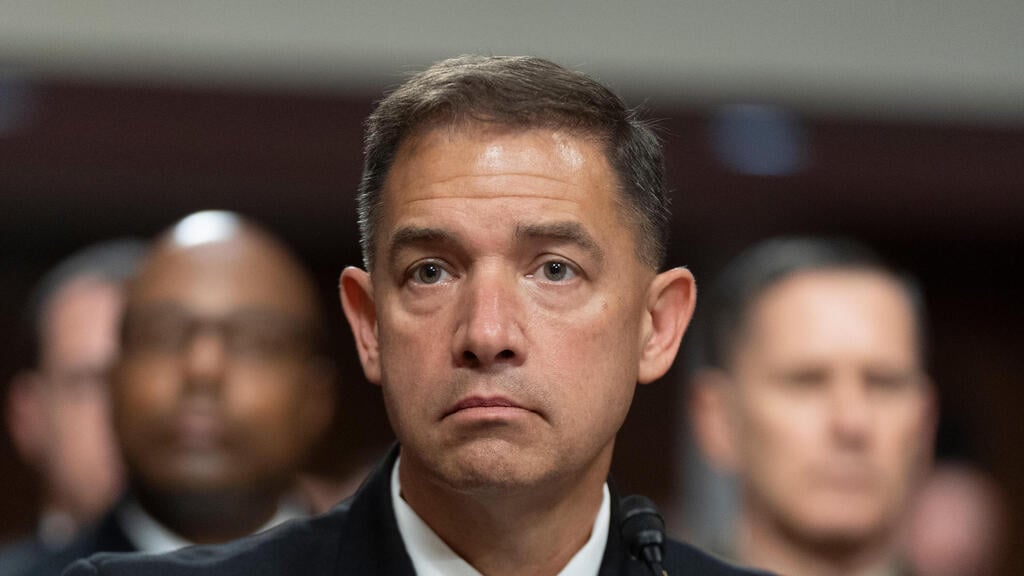
His assessment, together with advice from other military and civilian officials, influenced President Donald Trump’s decision Friday to pause U.S. strikes against Iran, the sources said.
The recommendation reflected an acknowledgment inside the administration that military action — particularly a sustained air campaign — could accomplish only so much without a broader decision to resume major combat operations.
For the first time in two weeks, Trump ordered the military to hold fire and refrain from striking Iranian targets along the country’s southern coast and around the Strait of Hormuz.
The decision followed a meeting with senior advisers and military officials, who presented the president with a new strike plan for that day.
Trump on Iran: 'They would love to make a deal, I don't its time yet, but im willing to listen'


Trump had been leaning toward returning to more extensive combat operations in the days before the meeting, but his position began to shift Thursday evening. By Friday, he had decided to apply the brakes to the bombing campaign.
Cooper reportedly told officials that two weeks of strikes around the Strait of Hormuz had significantly reduced Iran’s ability to attack commercial and military vessels.
He also said most of the targets designated for the campaign had already been struck.
According to the report, Cooper assessed that one possible next step would be to resume major combat operations and attack the remaining 20% of targets identified by the U.S. military during Operation Epic Fury.
But without a decision to return to that level of warfare, he argued that there was no purpose in continuing the more limited bombing campaign conducted during the previous two weeks.
CENTCOM spokesman Capt. Tim Hawkins declined to comment on the report.
The assessment came alongside growing concern over U.S. stocks of air-defense interceptors.
The sources said Joint Chiefs of Staff Chairman Gen. Dan Caine privately warned Defense Secretary Pete Hegseth and Trump that shortages of interceptors could hinder U.S. efforts to protect American forces and regional allies.
The New York Times first reported Caine’s warning.
A spokesman for the Joint Chiefs chairman declined to comment “on confidential military advice the Chairman provides the President.”
More than two days have passed without exchanges of fire between Iran and the United States, following nearly two weeks of reciprocal strikes that extended as far as Jordan.
CBS reported Sunday that Trump suspended the bombing campaign Friday as senior Omani officials traveled to Tehran for face-to-face negotiations.
Two senior regional officials said the strikes were deliberately paused to avoid disrupting the sensitive talks.
“Things are moving in a positive direction, but diplomatic efforts need more time to reach an agreement,” the officials said.
The negotiations reportedly focus on reopening the Strait of Hormuz and regulating the territorial shipping lanes used by vessels passing through the area.
An Iranian official told Reuters that Tehran would hold its fire as long as the United States did the same, although he cautioned that there was “more skepticism than pessimism.”
U.S. Ambassador to the United Nations Mike Waltz said Sunday that Trump was “keeping all options on the table” while also “giving talks [with Iran] some space.”
Waltz told NBC’s “Meet the Press” that negotiations between Washington and Tehran “are ongoing on every level.”
For now, the situation appears to be based on “quiet for quiet,” with both the United States and Iran refraining from further attacks.
It remains unclear, however, whether any agreement reached between Oman and Iran would satisfy Trump. Failure to produce an acceptable arrangement could lead to another escalation.
Israel’s assessment has remained that Washington and Tehran are unlikely to reach a permanent agreement.
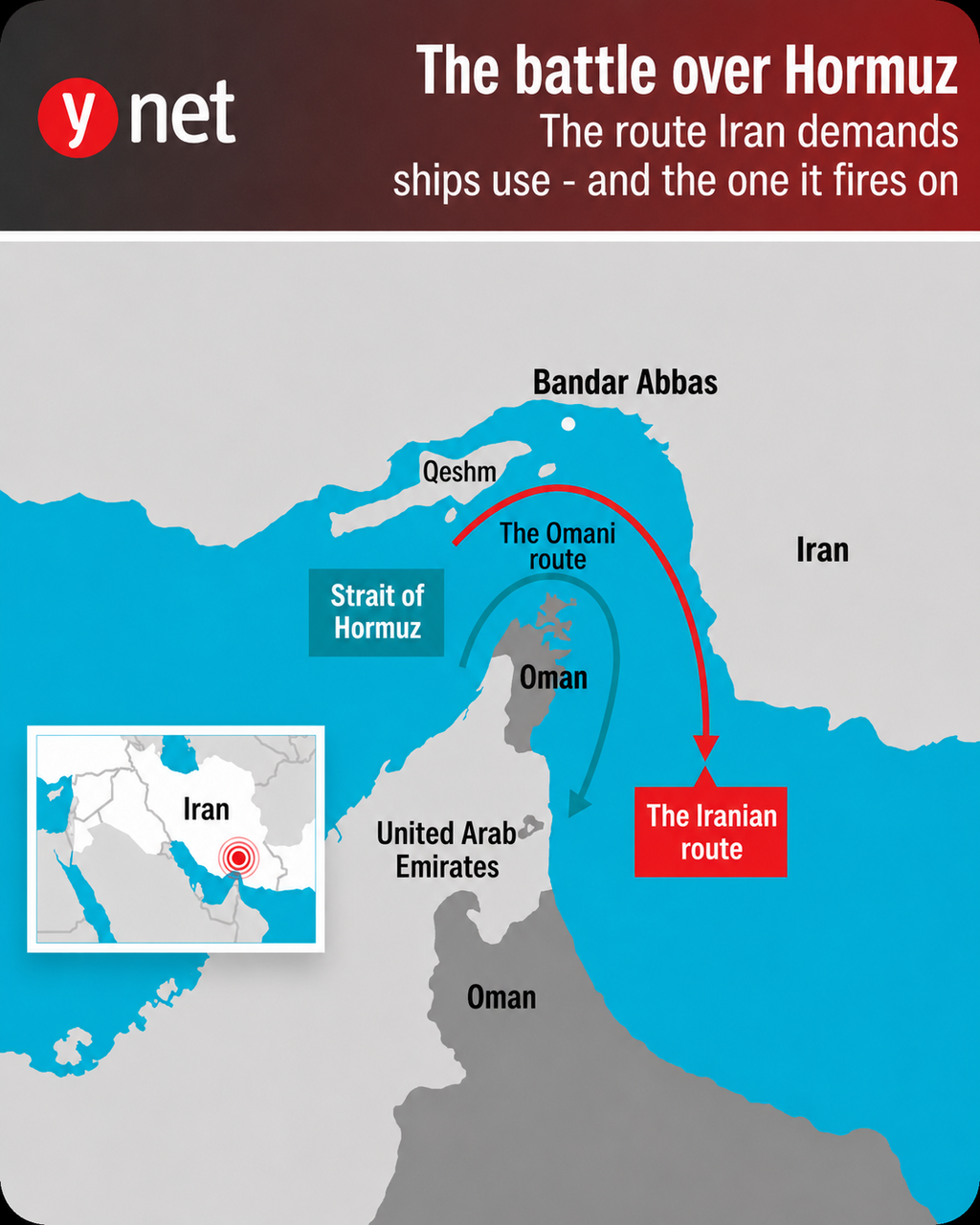
Earlier Sunday, Iranian media reported that an oil tanker that had deviated from a route designated by Tehran struck a naval mine in the Strait of Hormuz.
Since the latest pause in fighting, Iran has demanded that vessels use only the shipping route it established through the strait. Ships using an alternative passage closer to Oman have previously come under Iranian attack, contributing to the escalation with Washington.
Trump warned that if such attacks continued, “for every ship attacked in Hormuz, we will destroy a bridge or power station in Iran, including in Tehran.”
Iran claimed that the tanker was damaged by a mine rather than a direct Iranian strike, leaving the U.S. response uncertain.
The latest American attacks took place overnight between Thursday and Friday, marking the 13th consecutive night of U.S. strikes.
Trump also warned that Iranian funds held by the United States would be used to compensate for damage to vessels.
“Until further notice, from this point forward, any damage caused to ships, cargo or anything related to them will be paid for using Iranian money held and controlled by the United States,” he wrote.
“These damages may be very substantial, but nevertheless, it is the fair and just thing to do.”
The United States and Britain are also continuing discussions over an international conference intended to establish a coalition to protect shipping and clear mines from the Strait of Hormuz.
No final date has yet been set for the meeting.