


William Shakin, a 25-year-old lone soldier from New York who spent months fighting in Gaza with the Golani Brigade’s 13th Battalion, died by suicide after struggling with post-traumatic stress following his combat service.
Shakin moved to Israel after the Oct. 7 attack, leaving his university studies behind and enlisting in the IDF out of a desire to contribute and take part in the war. During his service, he lost friends in combat.
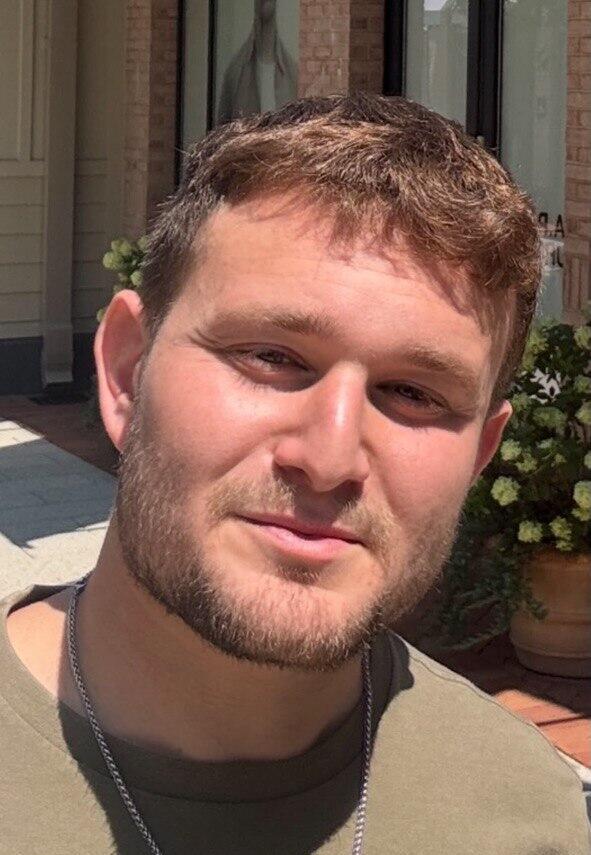
After later returning to the United States, friends said he struggled to cope with his mental state. His parents are now seeking to have him buried in Israel at Mount Herzl, arguing that he was wounded psychologically during his military service and did not receive the support he needed after returning home.
“I spoke to him two or three weeks ago. He seemed relatively normal,” his friend Chaim Meisels said.
According to Meisels, Shakin’s mother sensed that something was wrong. On Sunday morning U.S. time, she tried to reach him but received no response.
“She understood that something wasn’t right,” he said. “She called emergency services, and they found his car. They broke into the car and found a letter in which he wrote, among other things, that he had done everything for containment and that he couldn’t cope anymore. After that, they found his body.”
His friend Alana described Shakin as a committed and deeply caring soldier.
“He was an amazing soldier. He was really tall and strong, and he always did everything in the army, even when he was tired or exhausted,” she said.
She said Shakin had wanted to establish an organization to help lone soldiers enlist in the IDF and had asked her to help him.
“In March, when he entered Lebanon, he told me he was going to die,” she said. “I told him that if he thought that, then he shouldn’t go into Lebanon. While he was there, he sent me messages saying that his friend, Staff Sgt. Tuval Lifshitz, had been killed and that he was going to die too. He said he was dead inside and that he had nothing left in his life.”
More recently, she said, Shakin sent her a message apologizing for frightening her and explaining that he was struggling with post-traumatic stress and trying to stay well.
“He did his regular service and immediately afterward went into reserve duty,” she said. “He was very warm, a good friend, and whenever I asked for help, he was the first to help. He was very sensitive. He had a lot of positive energy and always thought about others before himself.”
She said he had recently returned to New York because living alone in Israel had become too difficult.
“He couldn’t manage and he wasn’t getting help,” she said.
Family seeks burial at Mount Herzl
Shakin’s parents are now asking for him to be buried at Mount Herzl in Jerusalem.
“They say he was wounded in the army and therefore should be buried in the military section at Mount Herzl as the heroic soldier he was,” Meisels said.
He argued that Shakin was never formally recognized as suffering from PTSD during his service and therefore did not receive the assistance and support he needed at the time.
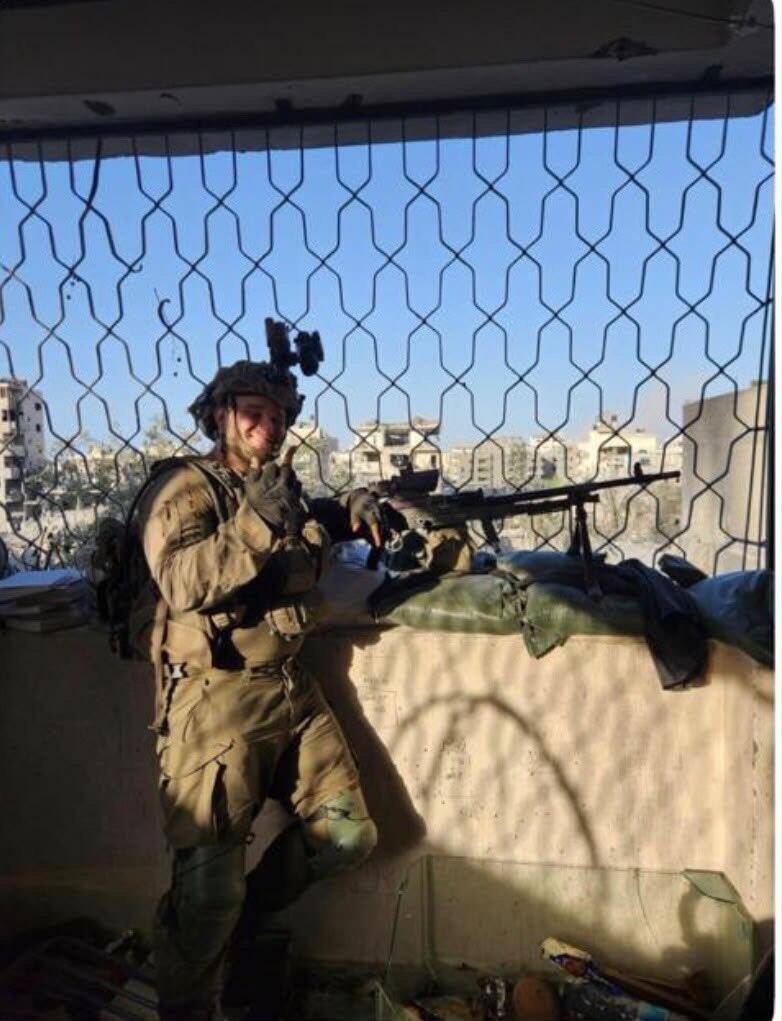
William during his service
According to Meisels, obtaining recognition would have required Shakin to return to Israel and be present for the relevant proceedings, forcing him to leave his family and support network in the United States.
“That simply wasn’t possible,” Meisels said. “The army was not willing to recognize him or treat him remotely and effectively prevented him from receiving treatments such as psychologists and support groups that he needed, which perhaps, had he received them, could have prevented the tragedy.”
‘There’s really no one to turn to’
Meisels said Shakin’s case reflects a broader problem faced by other lone soldiers who return to their countries of origin after military service and struggle to obtain mental health treatment.
“There are dozens more soldiers suffering from PTSD who are not getting the help they need because they returned to their families,” he said.
He said former lone soldiers in the United States often have few options when they need assistance.
“A soldier who lives here and needs help has no one to really turn to,” he said. “There is a private organization trying to help, but there is a limit to what they can do because they depend on private donors.”
Meisels said he volunteers with a support organization founded by former lone soldiers that seeks to assist others living in the United States.
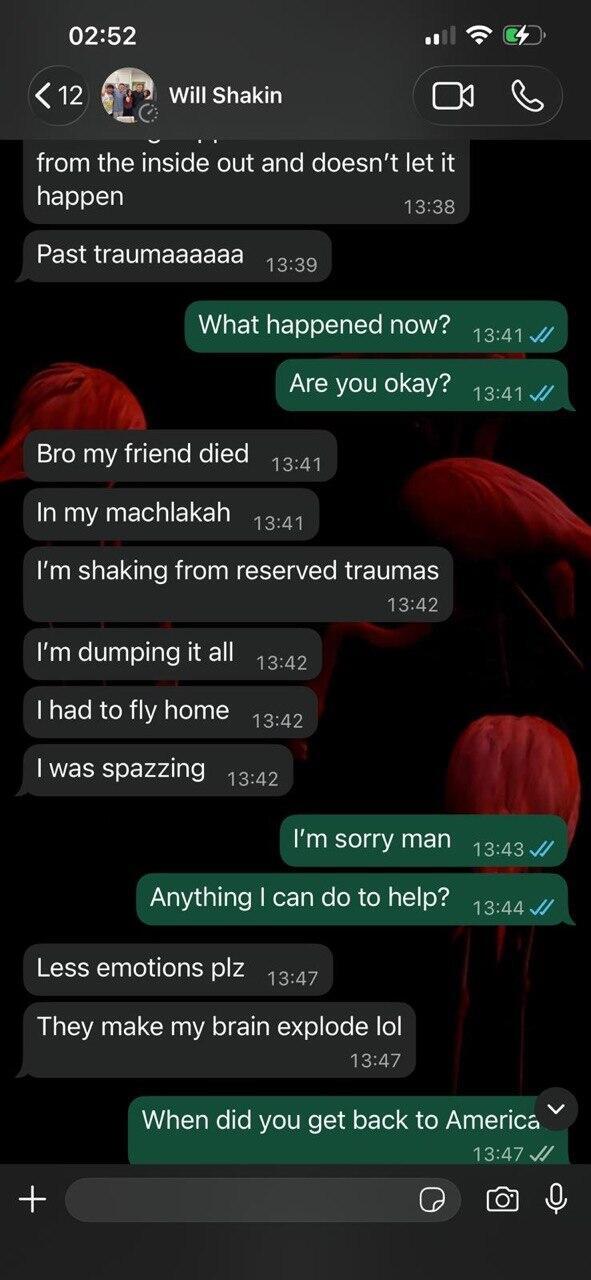
William’s correspondence
“We want to help every soldier who was a combat soldier and needs help in the United States,” he said. “In this case, unfortunately, we weren’t able to.”
The Defense Ministry expressed condolences to Shakin’s family but disputed claims that he was required to be physically present in Israel in order to seek recognition and assistance.
“We share in the profound grief of the Shakin family,” the ministry said in a statement. “Unfortunately, no application for recognition in William’s name was found.”
The ministry said its Rehabilitation Department works to make services accessible to wounded veterans, including remotely and independently.
“There is no requirement to be present in Israel when submitting an application for recognition, and it can be filed digitally through the department’s website,” the ministry said.
It added that after recognition is granted, a medical committee hearing can also be held by Zoom when coordinated in advance.