


IDF Spokesperson Brig. Gen. Effie Defrin revealed on a military podcast that he has dealt with post-traumatic stress disorder stemming from his military service, during which he was seriously wounded in the Battle of Wadi Saluki during the Second Lebanon War.
“It took me many years to understand what was happening to me because this is not a regular injury. ‘Post-trauma’ sounds like some kind of curse, a form of madness. It’s not a regular injury. I remember that at first people asked me, ‘What’s wrong with you? You’re not missing an arm, you’re not missing a leg.’ It’s an invisible injury, you can’t see it on a person. It’s something you carry deep inside and it affects your behavior.”
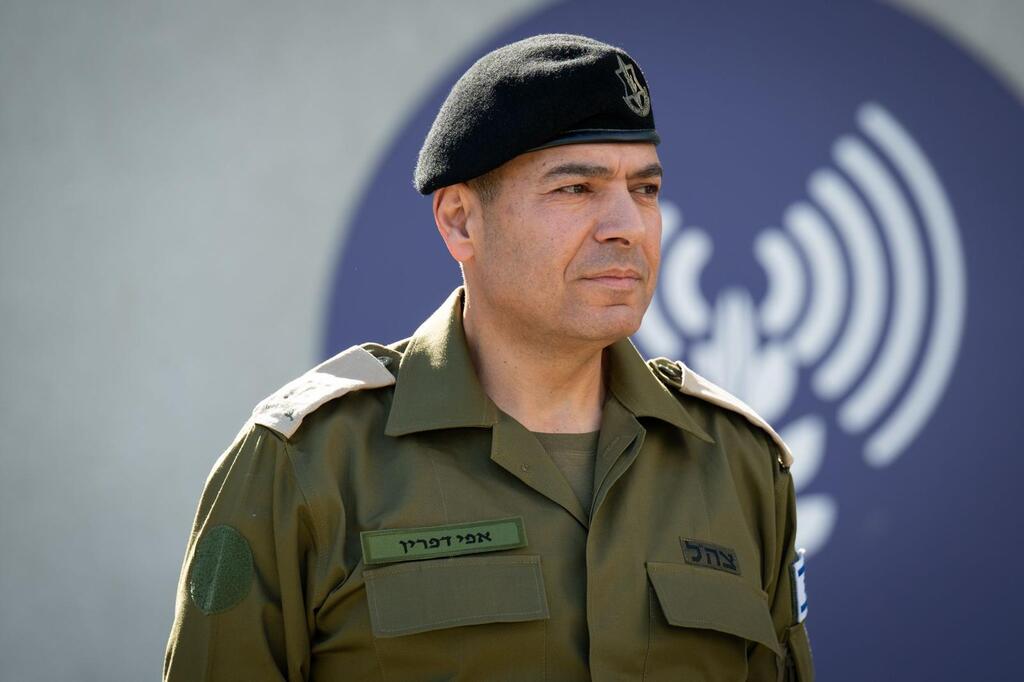
IDF Spokesperson Brig. Gen. Effie Defrin
(Photo: IDF Spokesperson)
According to Defrin, “There are symptoms that can harm those around you if you don’t handle them properly. If you are aware of it and know how to take care of yourself, you help not only yourself but also your immediate family, your subordinates, the people you work with and those around you. That is why it is important for me to say this: I meet people who were in combat, especially after this long war that has been going on for almost three years, and my advice is first of all to take care of yourself. If you are a hero, if you are brave, go get help and take care of yourself.”
Defrin said: “I told the soldiers that when I returned to the battalion, I pushed it aside and repressed it. And it causes harm. I don’t know what damage I caused to those around me and to my immediate family. I raised wonderful children, but I am sure I affected them in one way or another. I am their father. I took care of myself, I stopped, I got treatment and I came back.”
When asked how treatment helped him, Defrin replied: “There are wounds you never fully get rid of. It’s not only the moment when they shot at me and hit me, no, it’s many different symptoms. It is not called post-traumatic stress for no reason. It is an event where the body is under stress and feels it is not going to survive the situation, sometimes repeatedly. And when you come out of that experience, it stays with you for many years.”
He said: “The most well-known thing is slamming doors. It drives me crazy. Here at Camp Aviv, I always complain to the gardener about the leaf blower, that also drives me crazy. For each person, it manifests itself in different ways. I remember myself at the beginning, before I understood what was happening: you’re driving in the summer and suddenly there is a flash of sunlight that freezes you for a second, and you feel like you’re in the tank again and people are shooting at you. And you’re in the middle of Tel Aviv, at the beach or anywhere else where it can catch you. And many other things happened as well.”
“When you are aware of it and know how to take care of yourself and overcome those moments, it helps a great deal,” Defrin concluded.