


Opposition leader Yair Lapid acknowledged Monday that he is no longer certain the liberal bloc can win the next election, as new polls show his Yesh Atid party losing support and infighting intensifies among government critics.
“For nearly two years, every time I came in here and you asked me about the next elections, I said, ‘We will win.’ We — meaning the bloc, the liberal camp. I can no longer say that,” Lapid told lawmakers at the start of his faction’s weekly meeting.
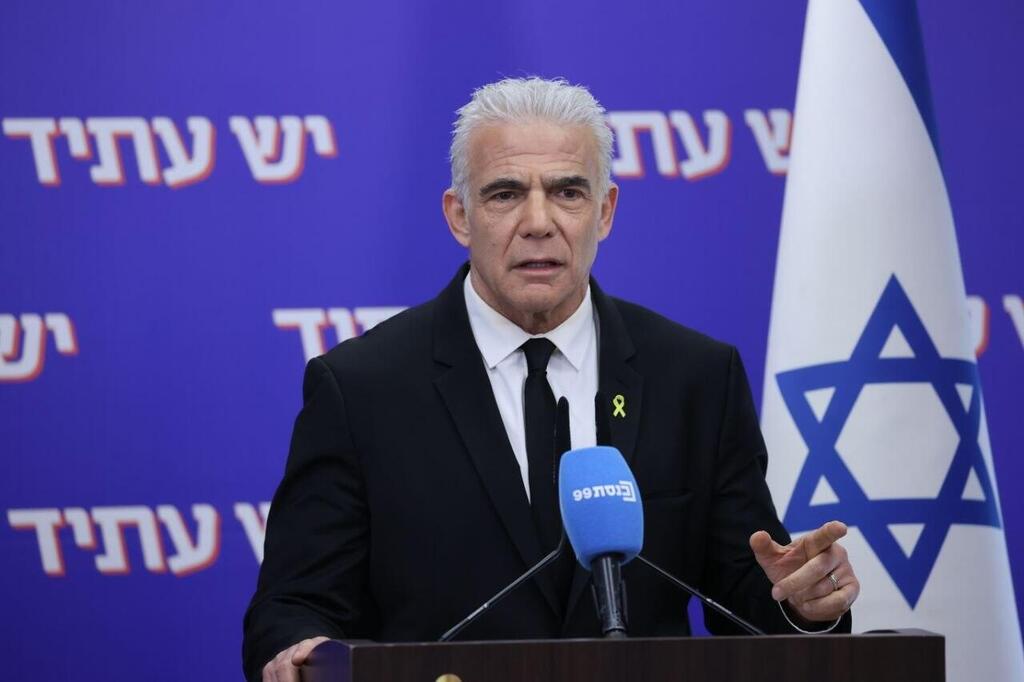
He cited recent public surveys, as well as unpublished in-depth polling, that he said indicate it is “no longer certain” the liberal camp will prevail.
“If we don’t come to our senses — we will lose. If we continue working against each other — we will lose,” he said.
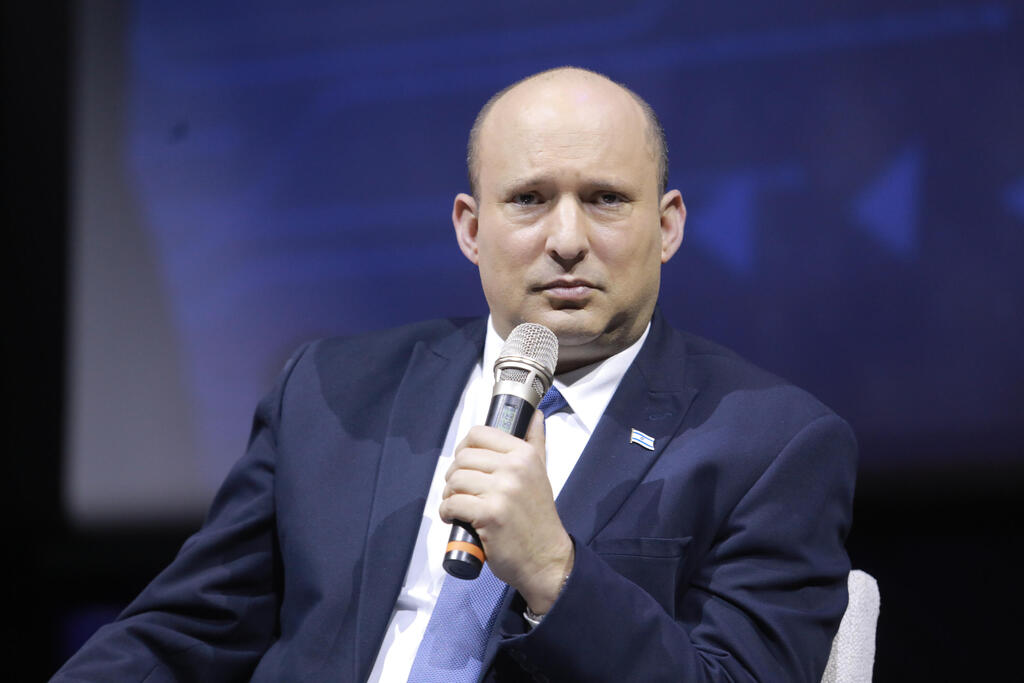
In remarks widely seen as directed at rivals within the opposition, including Naftali Bennett and Yair Golan, Lapid warned against attacking fellow parties to gain seats at Yesh Atid’s expense.
“You don’t win elections by constantly talking about how the opposition has failed just to shave off another mandate from Yesh Atid,” he said. “If Yesh Atid is not strong, the camp will not win.”
Lapid described the upcoming vote as the “most difficult and most critical” in the country’s history and accused Prime Minister Benjamin Netanyahu of having “no problem cheating and lying and trying to steal the election.”
(Photo: Dana Kopel)
Seeking to win back voters, Lapid said Yesh Atid offers certainty. “This is not the time for gambles. When you vote Yesh Atid, you are 100% certain we will not bow and enter another Netanyahu government,” he said. He also ruled out joining a coalition with ultra-Orthodox parties that, in his words, would continue “extortion and draft evasion.”
Lapid, who served briefly as prime minister under a rotation agreement in 2022, said forming a government “is not a hobby — it is a profession. I am the only one in the camp who has done it.”
He concluded: “Because the camp is so fragmented, the key to victory is Yesh Atid. If it is not strong, the camp will lose.”
Rivals outline positions as bloc fragments
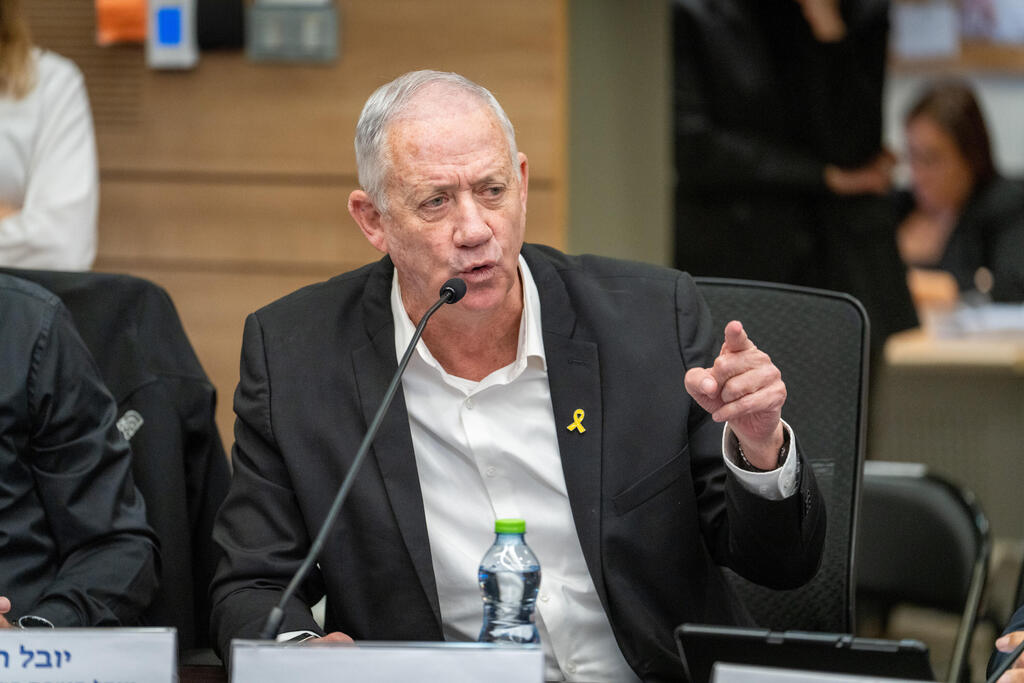
At his faction meeting, National Unity chairman Benny Gantz said the next government “will not be afraid to carry out tree plantings in the Negev and will not be afraid to send police into Bnei Brak,” a predominantly ultra-Orthodox city. He said it would not hesitate to enlist ultra-Orthodox men into the military and encourage Arab citizens to perform civilian national service.
(Photo: Shalev Shalom)
“Before ‘only not Bibi’ or ‘only Bibi,’ the mission is to remove the extremists from the wheel and restore security and governance,” Gantz said, referring to Netanyahu by his nickname. “The Ben-Gvir era is over. We will remove the extremists from the wheel.”
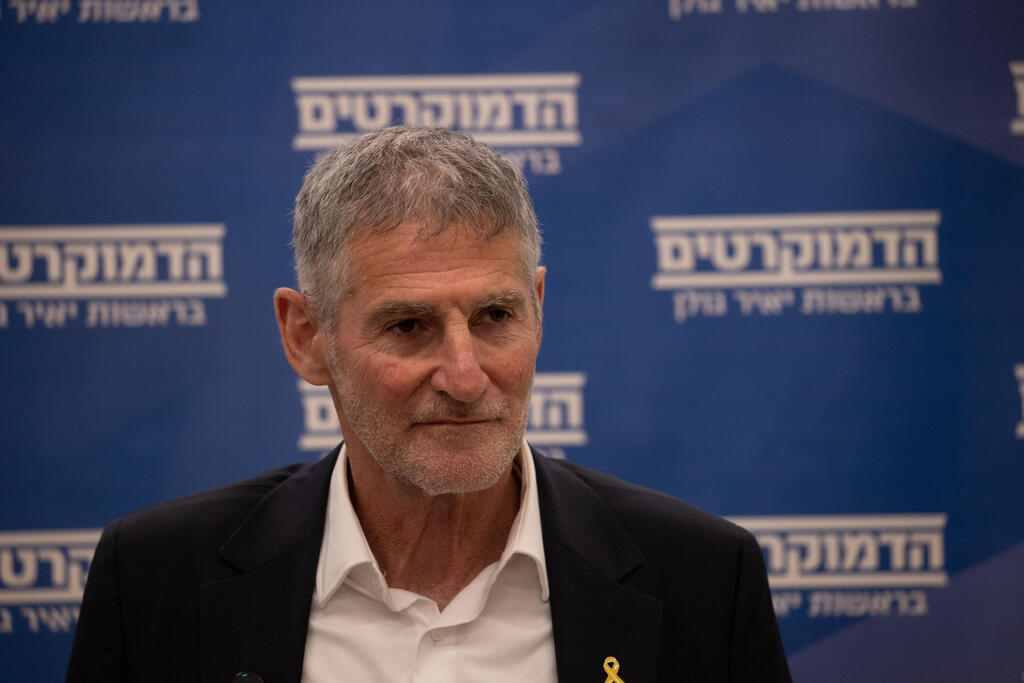
Yair Golan, head of The Democrats party, announced that Omri Ronen, a leader in the Brothers in Arms protest movement against the government’s judicial overhaul, had joined his party. Brothers in Arms is a grassroots organization of military reservists who have led demonstrations in recent years.
“We are here to fix,” Golan said, adding that he hopes to update his party’s agreement with Meretz in the coming days but declined to provide details.
(Photo: Alex Kolomoisky)
Gadi Eisenkot, a former military chief who recently launched his own party after splitting from Gantz, was among opposition leaders contacted by Yisrael Beiteinu chairman Avigdor Liberman as part of efforts to coordinate positions ahead of the vote.
Ronen called the coming election “the most fateful in the country’s history” and said he could not “sit on the sidelines and hope things will be fine.”
Meanwhile, Finance Minister Bezalel Smotrich, head of the Religious Zionism party, condemned what he described as shocking images from Bnei Brak showing violence against female soldiers. He called the incidents “a glaring warning sign” and renewed his push for legislation that would require ultra-Orthodox men to serve in the military.
“We are at a complex social crossroads,” Smotrich said. “We must pass a draft law that truly brings about the enlistment of our ultra-Orthodox brothers and their integration into bearing the security burden.”
Liberman sets ‘red lines’ for opposition
As opposition parties debate potential alliances and leadership arrangements, disagreements are also emerging over post-election scenarios.
Liberman said in private conversations that he is concerned some opposition leaders have not pledged to refuse to join a Netanyahu-led government after the election.
“In the end, the goal is to replace Netanyahu and bring 62 or 63 seats to form the next government,” Liberman said.
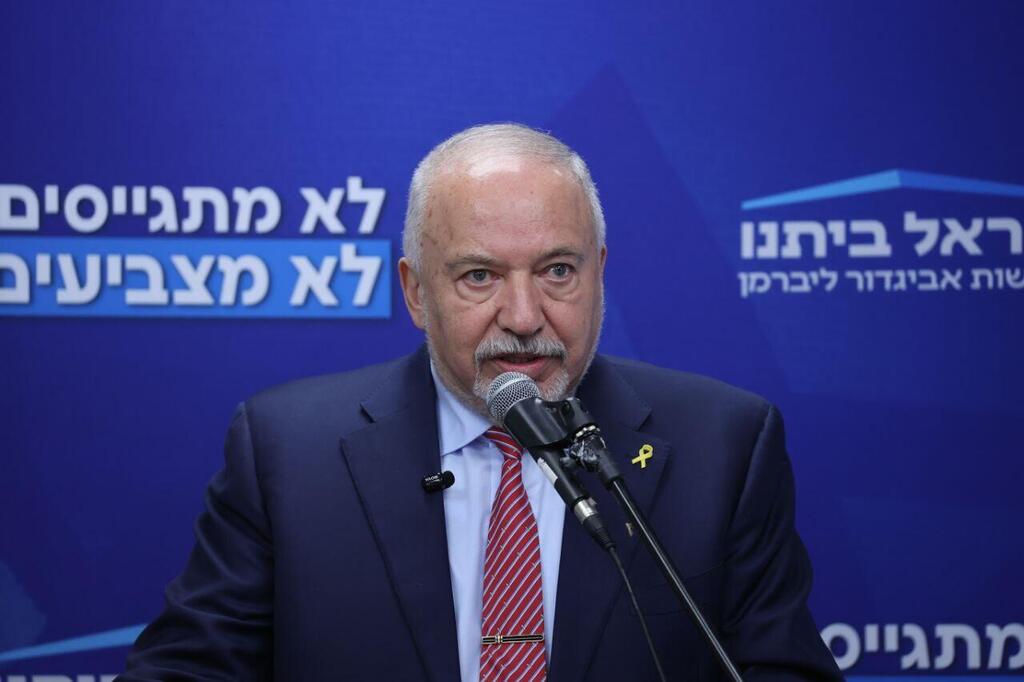
(Photo: Alex Kolomoisky)
In a letter to Bennett, Lapid, Eisenkot and Golan — but not to Gantz, whom he does not consider part of the bloc — Liberman demanded commitments to two “red lines”: that no new government be formed with the support or participation of Arab parties, and that there be no cooperation with Netanyahu in the absence of a clear victory, even if offered a rotation agreement or parity government.
“Past experience shows that a purely technical alliance, without prior agreement on core principles, can lead to governmental instability, zigzagging and defections between camps,” Liberman wrote, citing past lawmakers who switched sides.
He also laid out conditions for the next government, including universal military conscription, adoption of a constitution, mandatory core curriculum studies in all schools, appointment of a single chief rabbi, public transportation on the Sabbath and civil marriage. He called as well for a state commission of inquiry into the Oct. 7 attack and for limiting a prime minister to two terms.
“The public has the right to know what government will be formed and what its central goals will be,” Liberman wrote.