

Turkey is voicing growing concern over the possibility of Israeli military action on its soil, after last week’s targeted strike in Doha killed senior Hamas figures. Israeli ministers have declined to rule out similar operations in Turkey, deepening diplomatic rifts between the two countries.
Turkish Defense Ministry spokesman Rear Adm. Zeki Akturk warned in Ankara on Thursday that Israel would “further expand its reckless attacks, as it did in Qatar, and drag the entire region, including its own country, into disaster.”
Gallery
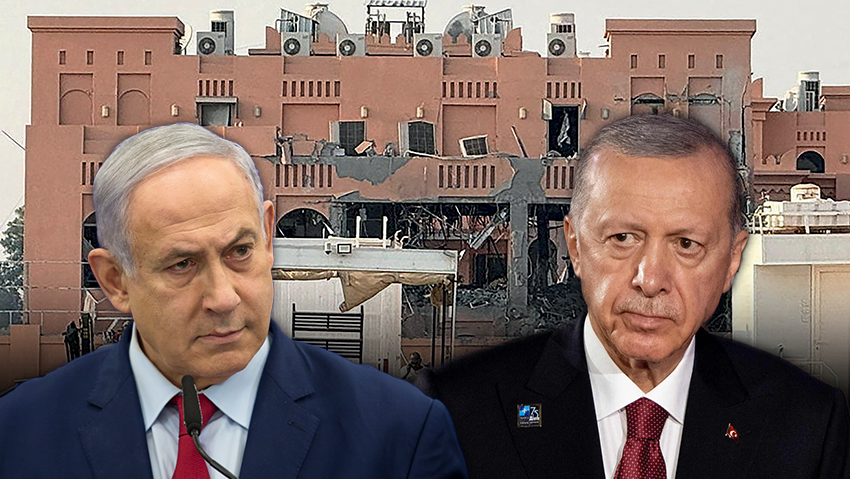
"Israel could drag entire region into disaster"
(Photo: Ibraheem Abu Mustafa/Reuters, Andrew Harnik/ Getty Images/ AFP, Amir Levy/ Getty Images)
Israeli Minister Ze'ev Elkin said Sunday that Hamas leaders “should not be allowed to rest anywhere in the world.” Speaking to Ynet, he added, “We will pursue them and settle accounts with them wherever they are.”
Energy and Infrastructure Minister and Security Cabinet member Eli Cohen echoed this stance in an interview with the Saudi news site Elaph, saying, “Anyone affiliated with Hamas cannot sleep soundly anywhere in the world—including Istanbul.”
Cohen was asked whether the United States had been informed in advance of the Israel Defense Forces' strike on the villa in Doha. “Israel and the United States are absolutely coordinated,” he said. “The U.S. is our greatest ally, particularly President Trump, who promotes stability in the region.” When pressed further, he said, “They received a general notice. We didn’t tell them, ‘We’re doing this now.’”
He also accused Qatar of undermining regional stability and aligning itself with the Muslim Brotherhood. “Qatar is not just an enemy of Israel; it’s an enemy of the entire moderate Islamic axis,” Cohen said. “It funds Iran and is one of only four countries that provide safe haven to terrorists—Iran, Qatar, Turkey, and Lebanon.”
Israel-Turkey tensions at a historic low
Ties between Israel and Turkey have steadily deteriorated over the past decade and are now at their lowest point, largely due to the war in Gaza and geopolitical rivalry in Syria. Turkish President Recep Tayyip Erdoğan, a longstanding supporter of Hamas, has intensified his rhetoric against Israel and compared Prime Minister Benjamin Netanyahu to Adolf Hitler.
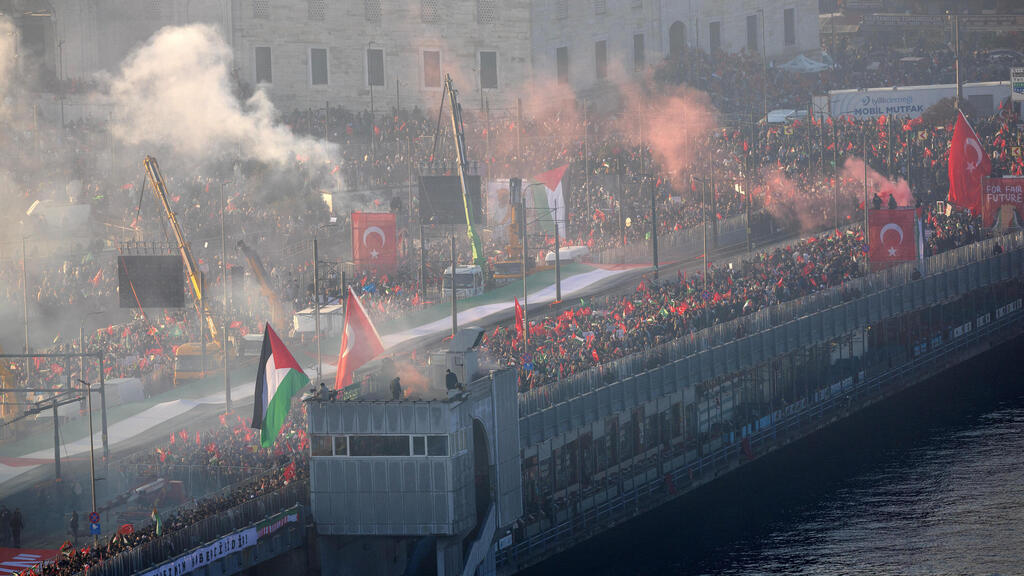
Pro-Palestinian protest in Istanbul earlier this year
(Photo: Reuters/ Murad Sezer)
Israeli officials have long accused Turkey of allowing Hamas to operate from its territory, including fundraising and command activities. Some of the group’s senior leaders are believed to live in Turkey. Erdoğan’s close ties with Qatar—where he is expected to attend a summit of Arab and Muslim leaders this week—have raised concerns in Ankara that Israel could expand its aerial operations to include targets in Turkey.

(Photo: Reuters/ Murad Sezer)
Nevertheless, Turkish officials emphasize that, unlike Qatar, Turkey is a NATO member with the alliance’s second-largest army and advanced defense industry. Erdoğan recently inaugurated the “Steel Dome” air defense system and announced plans to accelerate missile production.
Syria and the Eastern Mediterranean
While Western analysts see a direct Israeli strike on Turkish territory as unlikely, they do not rule out the possibility of limited operations against Hamas targets inside Turkey. Some believe the Doha strike may actually strengthen Erdoğan’s support for Hamas.
The fallout is likely to be felt most acutely in Syria, where Turkey backs the emerging transitional government and Israel continues to expand its airstrikes and support for the Druze community. In the Eastern Mediterranean, observers warn of increased Israeli alignment with Greece and Greek Cyprus to challenge Turkish influence in northern Cyprus.
Despite the military posturing, Turkey is also pursuing diplomatic channels. In April, officials held quiet talks with Israel to establish a mechanism for avoiding clashes in Syria, following an Israeli strike on a base Turkey had planned to use. This month, Turkey signed a new military cooperation agreement with Damascus aimed at reducing friction with Israel.
Erdoğan is now looking to Washington to set clear boundaries for Netanyahu—but as one expert in Ankara put it, “The strike in Qatar showed there are no limits to what the Israeli government is willing to do.”