

"The blonde got behind the wheel. Two figures are in the vehicle. They are starting to leave." A woman in her 50s allegedly operated one of the fastest, most efficient and reliable delivery operations in northern Israel. She reached dozens of kibbutzim and moshavim, large and small cities — even during missile launches and the most intense days of the war — and outperformed the region's familiar delivery services. But according to a lengthy investigation conducted by the Northern District Police, the professional and courteous service was actually intended to maintain drug distribution routes.
According to the indictment filed against the woman, she sold drugs across wide areas of northern Israel, at times with her minor daughters in the vehicle. In some cases, according to the indictment, she went door to door and sold drugs to customers while her daughters accompanied her.
The deal caught on camera - and the view from the drone
(Photo: Police spokeswoman)


"This is one of the longest-running and most extensive trafficking cases I know," said Chief Warrant Officer Mor Asraf, head of the crime investigations team at the Beit She'an Police Station, who led the investigation.
After two months of intelligence work and investigation, an indictment was filed against the woman.
"Through technological work we carried out while extracting information from the defendant's cellphone, we were shocked to discover the scale and duration of her activity," Asraf said. "She reached dozens of kibbutzim, dozens of moshavim, large and small cities, from the northern border to Haifa and the Krayot area. From the testimonies we collected in the case, we learned that she made deliveries while the northern border was being bombarded and shelled and was effectively a combat zone, putting the lives of her minor daughters, who accompanied her on many of the deliveries, at risk."
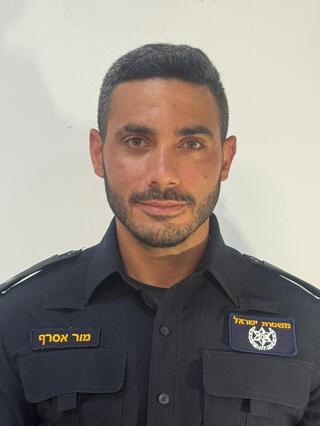 Chief Warrant Officer Mor AsrafPhoto: Police spokeswoman
In May, the first intelligence reports about drug trafficking activity in the kibbutzim of the Beit She'an Valley and Gilboa areas began reaching intelligence officers at the Beit She'an Police Station.
"The intelligence indicated a woman who was driving a private vehicle, selling drugs and poisoning our young people," Asraf said.
Beit She'an police took the initial intelligence lead and began developing it through a focused investigation.
"We began collecting more information about the trafficking operation and within several days understood that we were dealing with a northern resident woman in her 50s," Asraf said. "A station surveillance team began 'working on her.' The team followed her for about two months and managed to document several drug deals live, including a sale to a 17-year-old kibbutz resident. Everything was documented on surveillance cameras and in some cases we tracked her with the help of a drone. We identified that in most of the deals, a girl was sitting in the front passenger seat of the vehicle, accompanying her mother to 'work.'"
Gallery
The accused in the case. 'Driving in a private vehicle, selling drugs, and poisoning our youth'
Raised to stay away from drugs
For many days, police investigators followed the suspect and were effectively her "shadow," accompanying her throughout northern Israel from the moment she left her home until she returned.
On July 12, she was seen selling drugs near Kibbutz Sarid in the Jezreel Valley. Shortly afterward, Beit She'an police raided her vehicle and arrested her while her teenage daughter was inside.
Police searched her vehicle and home and found about 4 kilograms of cannabis and cannabis oil at both locations, divided into bags and prepared for distribution.
"The bags were divided into 10- or 20-gram portions, according to the customer's order, and each 10 grams were sold for 450 shekels," said Deputy Commander Ofer Gur of the Beit She'an Police Station. "If you calculate the value of the 4 kilograms seized based on the price per portion, it amounts to hundreds of thousands of shekels. Our assessment is that she would travel to central Israel once every two weeks and stock up on several kilograms of drugs, then return north. We estimate she earned tens of thousands of shekels a month."
During the investigation, police seized the suspect's mobile phones and were surprised by what they found.
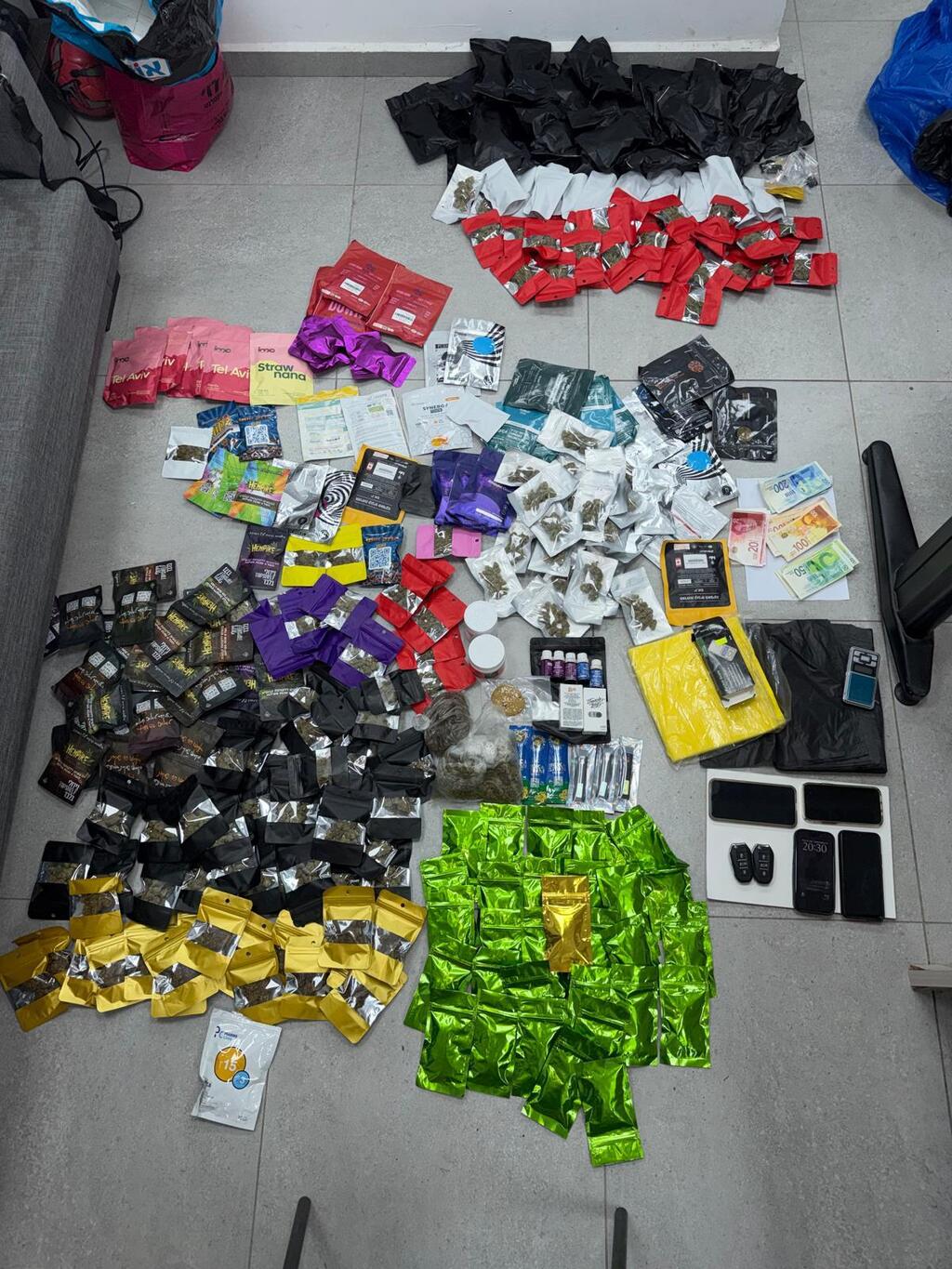
The drugs seized from the woman. 'Transactions worth hundreds of thousands of shekels'
(Photo: Police spokeswoman)
"Analysis of her cellphone data shows she began trafficking about a year ago, and from the very beginning she was already reaching all parts of northern Israel," Asraf said. "Analysis of her Telegram application revealed many hundreds of transactions."
According to him, "The sale began when customers contacted her through several groups called 'Carlos the Cat' and 'The Vampire.' She responded immediately and contacted customers by cellphone. After the customer left a phone number, they coordinated a location, time, quantity and price, and then she set out according to a route she planned between deals. Delivery times were fast. She reached customers within 30 to 40 minutes, and customers received fast and inexpensive service. That is how she built a reputation for herself."
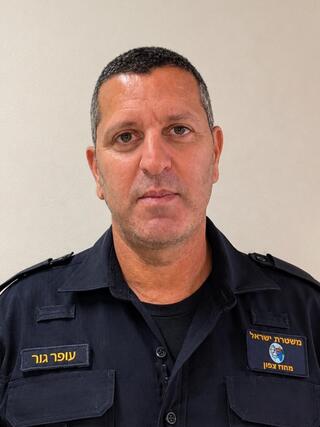 Deputy Commander Ofer Gur Photo: Police spokeswoman
Asraf said the suspect sold several cannabis strains, some of which she even offered at a "bargain" price of 250 shekels per 10 grams.
"On the day the mother was arrested, we also detained her two minor daughters. They are normative girls, one of whom is still a high school student. During some of the mother's interrogations, she told us that she had educated her daughters to stay away from drugs and not touch them, and the girls indeed stayed away. They understood that drugs are dangerous and that it is best to avoid them and, in general, not to start because of the risk of addiction."
Changing wigs
"When I analyze the trafficking data in this case, I come away very concerned," Asraf said. "I am troubled by the scope of the trafficking and the accessibility of drugs through apps. Apps and digital platforms have made drugs far more available and easier to obtain. In the past, a customer living near the northern border would have had to travel from home to a bus station in central Tel Aviv to buy a few grams, act like a criminal and risk traveling south. Today, he sits at home and receives the delivery within half an hour, straight to his living room, with speed and availability greater than any familiar food delivery service."
Testimonies from the suspect's customers indicated that she changed wigs every few days to conceal her identity. Some customers described her as having red hair, others said she had blonde hair and some insisted she arrived with black hair.
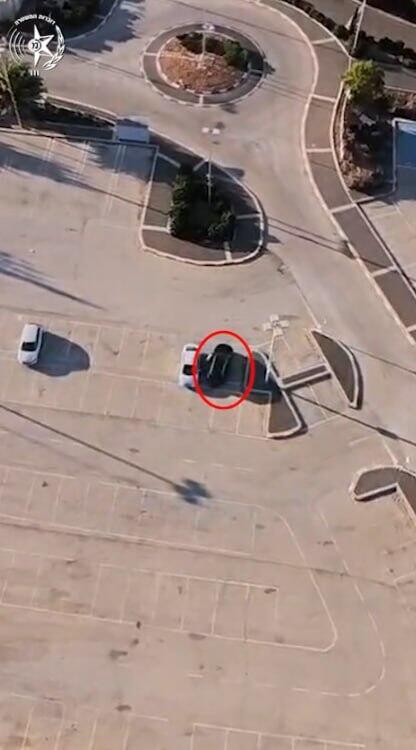
A transaction filmed live by a drone.
(Photo: Police spokeswoman)
Asraf added: "We filed an indictment that includes 11 different customers who carried out numerous transactions with her. Although hundreds of different customers were identified, we decided to file charges involving only some of the customers in order to conduct a faster legal proceeding. Our goal is to convict her as a drug dealer and we have evidence of a huge number of additional transactions."
The indictment, filed at the Tiberias Magistrate's Court by attorney Gili Beilin Yaakov from the Prosecution Division of the Valleys District Police, details dozens of drug deals allegedly carried out by the suspect with 11 different customers from northern Israel.
She is charged with 11 counts involving the export, import, trafficking and supply of dangerous drugs, conspiracy to commit a crime, using a vehicle to commit an offense and inducing a minor to use drugs while being responsible for her.
"The defendant operated a drug trafficking network and the sales method worked as follows: Buyers contacted another person through the Telegram application and various groups and agreed on the type of substance, quantity and price," the indictment states. "The buyer sent an address and phone number, the other person transferred the transaction details to the defendant and she delivered the drug to the buyer by calling from her operational cellphone, using a blocked number, coordinating her arrival time and calling again when she reached the agreed location. In the vast majority of transactions, the defendant arrived at the meeting point accompanied by one of her minor daughters," prosecutor Beilin Yaakov wrote in the indictment.
Attorneys Ben Maoz and Eden Amos, who represent the defendant, said: "After all the headlines and dramatic statements heard at the beginning of the investigation, an indictment was ultimately filed containing individual transactions involving the sale of cannabis in small quantities, compared with the picture police attempted to present at the outset. The 'balloon' inflated by police through publications and statements burst, and a significant and dramatic gap emerged between the impression they attempted to create and the indictment that was actually filed.
"We have only now received the full investigation materials and will study them thoroughly and carefully. We are convinced that as the legal proceedings progress and all evidence is examined in court, the full factual picture will emerge, which will be substantially different from the picture police initially attempted to portray to the public."