


Prime Minister Benjamin Netanyahu and Defense Minister Israel Katz canceled their participation in a military ceremony Wednesday evening and were set to hold a security discussion as Israel closely monitored the renewed confrontation between the United States and Iran.
The move came after a night of strikes in the Persian Gulf and sharper rhetoric from U.S. President Donald Trump, who said he viewed the ceasefire with Iran as effectively over. The meeting had been scheduled to focus on Israel’s memorandum of understanding with the United States, but was also expected to address Iran.
Donald Trump says the US probably hit Iran overnight


President Isaac Herzog and IDF Chief of Staff Lt. Gen. Eyal Zamir were expected to attend the graduation ceremony at the National Security College, scheduled for 7 p.m.
In Jerusalem, officials said Israel was on high alert and preparing for the possibility that fighting could quickly resume. Still, the prevailing assessment was that the current U.S.-Iran clash would not escalate into a full-scale war, at least not before the U.S. midterm elections.
Israeli officials had long assessed that Washington would struggle to reach a permanent agreement with Tehran and that the American strategy was to buy time until the midterms, keeping oil prices low and avoiding disruption to the World Cup.
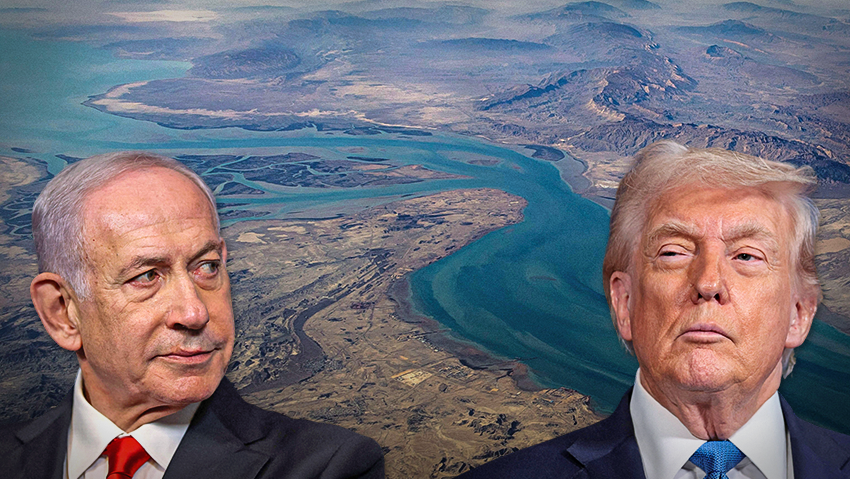
Prime Minister Benjamin Netanyahu and Defense Minister Israel Katz canceled their participation in a military ceremony
(Photo: REUTERS/Stringer, JOE RAEDLE/AFP, REUTERS/Jonathan Ernst)
“Anyone who said Trump turned his back on us was wrong. Talk of defeat was premature,” a senior Israeli official said.
Israeli officials said Trump was now being driven primarily by economic pressure on Iran. One senior official said Trump’s moves had removed “100% of the economic pressure” from himself and the United States, while perhaps easing only “20% of the economic pressure” on Iran.
“The economic pressure on Iran intensified greatly during the months of ‘Operation Lion’s Roar,’” the official said.
The official said Israel had expected that this pressure would not make Trump blink on the nuclear issue or other demands.
“At the moment, it appears Trump is standing firm on his demands. Right now both sides are insisting, and that is a good sign,” the official said. “The most dangerous thing for us is a bad agreement, and the best thing is for the situation to remain as it is. Whether he returns to fighting after the midterms or not remains an open question. I don’t want to be a prophet. But that is not the most important point. The important point right now is economic pressure.”
The official said the Iranian regime had been hit militarily in its nuclear and missile programs, and internally in its “repressive forces, command, leadership, whatever you want.”
“Now the event that will bring it down is only the economy,” he said. “They are in severe distress. You can see the rial continuing to erode. There is very serious economic hardship there, and that must continue.”
The official added that Israel did not like the U.S. fuel exemption, but did not view it as dramatic.
“He would have given them $40 billion so they would lose $400 billion, certainly now that they canceled it,” the official said. “We need to keep aiming for very strong economic pressure, along with all kinds of moves we are making. This can bring down the regime, and in my view that is Israel’s supreme goal.”
On the possibility of renewed fighting, the official said a return to war could serve that goal, but was not the only means.
“Here, too, you see Trump does not turn his back so quickly,” the official said. “Yes, he has U.S. interests, and there are the midterm elections, and it is also in our interest that he wins them. That is why we did not attack this agreement.”
The latest escalation began Tuesday when Iran attacked three vessels crossing the Strait of Hormuz along a route Tehran does not accept. The memorandum of understanding states that Iran must guarantee safe passage for commercial vessels without payment and hold dialogue with Oman on the future management and maritime services in the strait.
The vessels crossed through the southern part of the Strait of Hormuz near Oman, not through the route Iran demands all vessels use in coordination with Tehran.
In response, the United States struck more than 80 targets in Iran overnight, while Tehran said it attacked more than 85 targets in Bahrain and Kuwait. Iran claimed that one member of Iran’s Revolutionary Guard Corps and two other people were killed in the U.S. strikes.
Kuwait’s state news agency said the military intercepted two ballistic missiles and 13 drones without damage.
Hours after the strikes, Iranian officials continued to insist that fire on commercial vessels would stop only if Tehran’s authority in the strait were recognized.
“Recognition of the new Iranian regime in the Strait of Hormuz is the only way,” wrote Ibrahim Azizi, chairman of the Iranian parliament’s National Security and Foreign Policy Committee.
Iranian President Masoud Pezeshkian accused Washington of behaving in line with its familiar foreign policy of “bending rules, bullying, creating obstacles and deception.”
“Iran rejects such games. We firmly stand by our rights,” he said.
Speaking alongside the NATO secretary general in Ankara earlier Wednesday, Trump said he did not like Iran “at all” and said he considered the ceasefire over, though he added that negotiations could continue.
“We hit very, very hard last night at the very dangerous people of Iran,” Trump said. “They are sick. Something is wrong with them. They stopped with the funerals and instead began firing missiles yesterday at ships. So we hit them very hard last night, very hard. I would say 20 times harder.”
Trump also said negotiating with Iran was “a waste of time.”
“They are a bunch of liars. Really. All my life, that is what I did, deals. In everything I did, I succeeded. Then I deal with these people and say to myself: This is a different school. They are liars, they are cheaters, they are sick people. They have hurt their own people,” he said. “To be honest, I don’t want to waste my time on them. Now, I’ll let our great negotiating team continue talking if they want, but I don’t see it. I don’t like these people.”
U.S. Defense Secretary Pete Hegseth, who had been expected to visit Israel, canceled his trip.
In a later statement alongside Ukrainian President Volodymyr Zelensky, Trump warned that the United States would strike Iran again Wednesday night.
“We’re going to hit them very hard tonight,” Trump said. “Maybe we’ll continue without an agreement. It will be easier. Because these people lie and cheat. We reached understandings in closed rooms, and then they went out to the media and lied that we had not reached understandings. They are cuckoo, something is wrong with them. For 47 years, they were the bully of the Middle East, but they are not bullies anymore. It is very simple: We will not let them obtain a nuclear weapon.”