

“The Islamic Republic of Iran reaffirms that it will not seek or develop nuclear weapons. The Islamic Republic of Iran will maintain the current status quo of its nuclear program.” These are two clauses in the memorandum of understanding signed by Iran and the United States, but new satellite images of a secret site are raising questions over whether Tehran truly intends to uphold the agreement.
Fox News reported that a leading U.S. research institute that monitors Iran’s nuclear program has warned about the regime’s uninspected underground site in the Zagros Mountains. Inspectors from the International Atomic Energy Agency (IAEA) have not been allowed to visit the site, known as “Pickaxe Mountain.” According to researchers, the fortified facility raises doubts about Iran’s willingness to comply with the terms of the memorandum of understanding reached with the Trump administration.
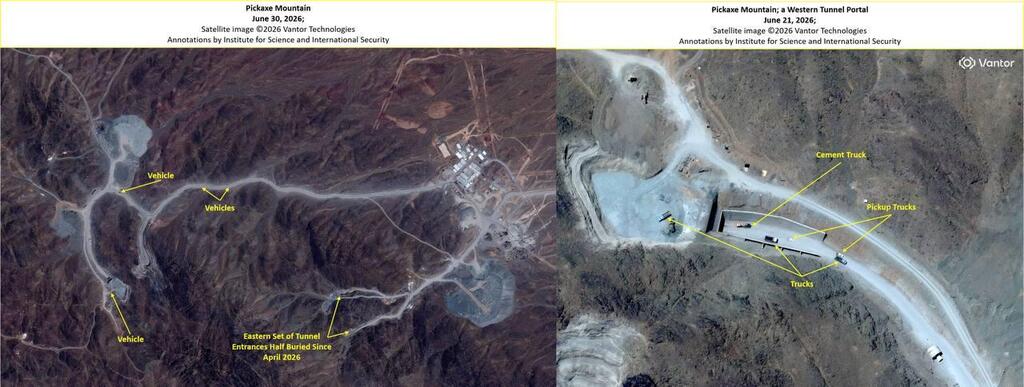
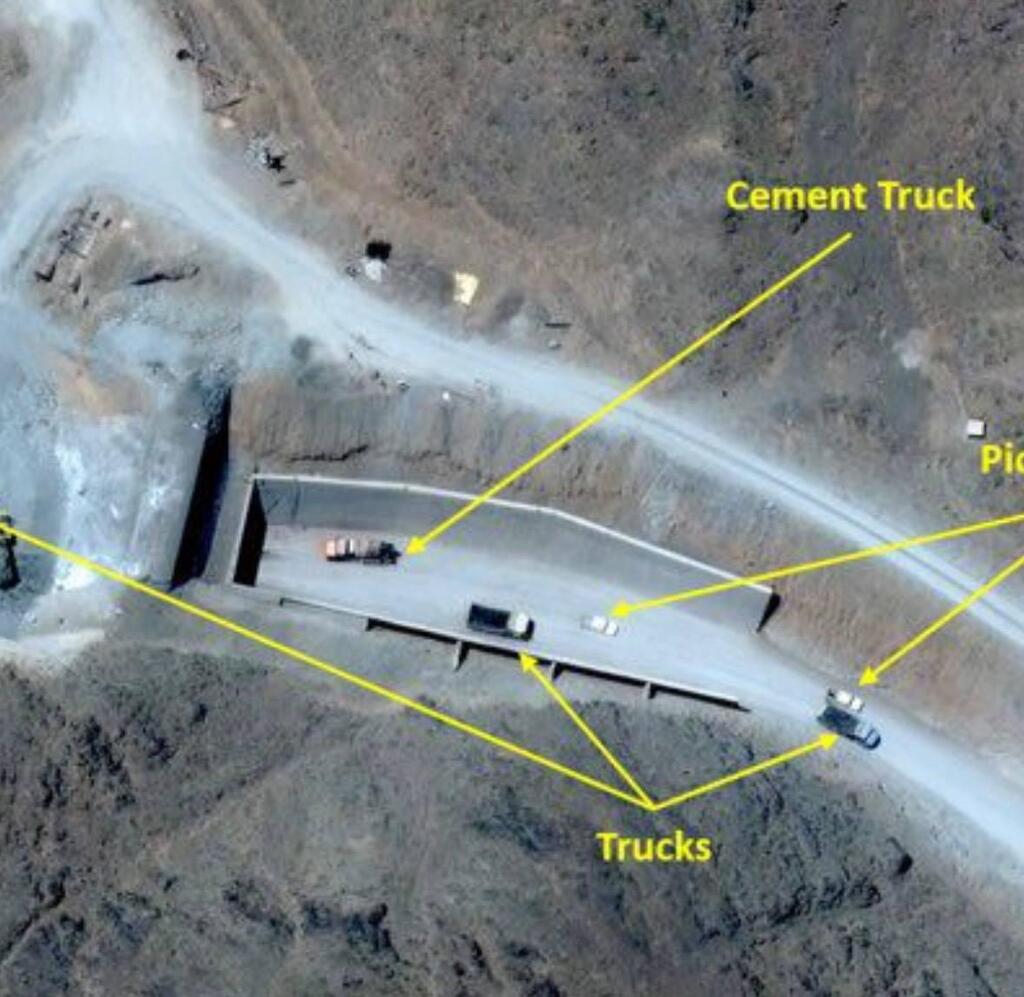
(Photo: X)
The Institute for Science and International Security (ISIS), based in Washington, published a detailed analysis of new satellite images from late June 2026, indicating that activity at the mountain is continuing. According to the institute, “Vehicle traffic can be seen on roads leading to the western tunnel entrances, indicating that work inside the tunnel complex, as well as reinforcement of the entrances, is still ongoing.
The memorandum of understanding signed between the United States and Iran requires Iran to maintain the status quo, and should therefore prohibit construction work at any nuclear-related facility, including at Pickaxe Mountain.”
Spencer Faragasso, a senior fellow at the institute, wrote on X: “The continued work at the mountain is deeply troubling. It has been ongoing consistently since at least 2020. In my assessment, this is an insurance policy by Iran in case negotiations fail, so it will already have a nuclear facility in an advanced stage of construction. We assessed that the mountain complex is large enough to contain a uranium enrichment facility. If Iran is serious about negotiations, it should stop construction at the mountain as a gesture of goodwill. But what can one expect from such a cruel and cunning regime?”
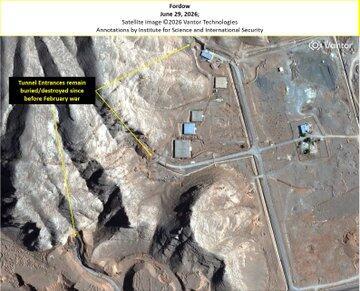
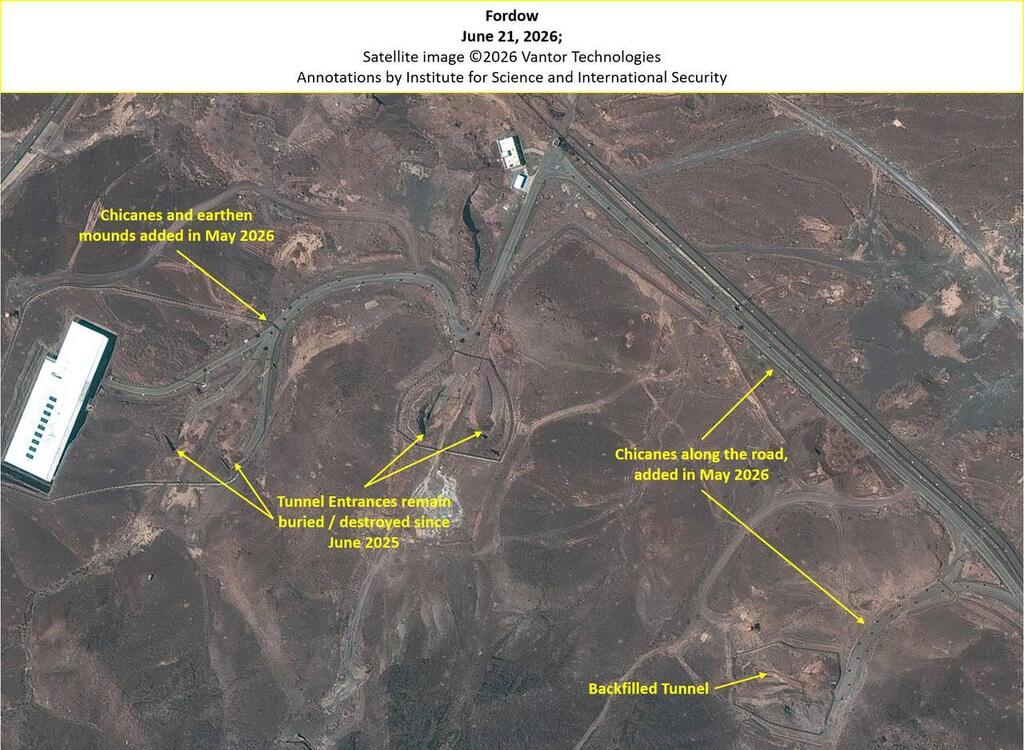
Fordow. Earthen berms added on roads leading to tunnel entrances
(Photo: X)
(Photo: X)
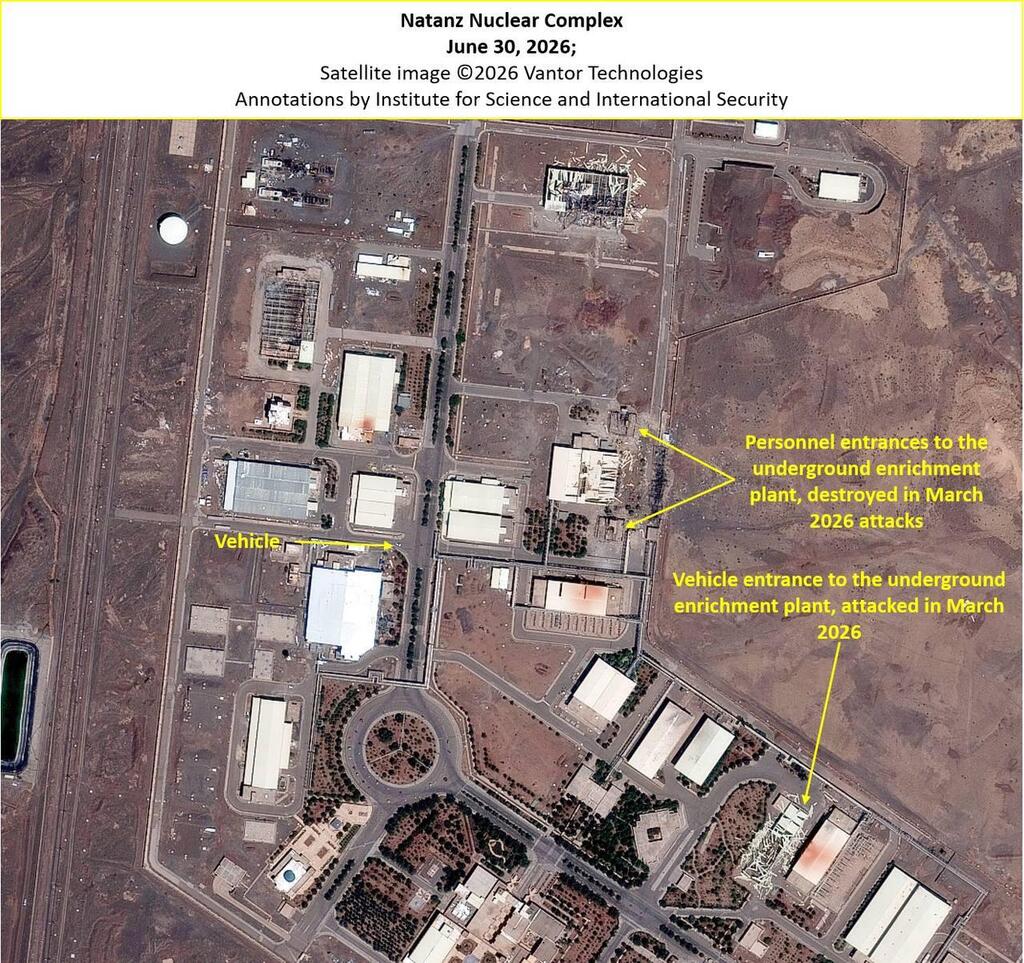
Natanz. Access routes to the enrichment halls have not been restored
(Photo: X)
While work at the mysterious site has not stopped, no unusual activity has been seen at Iran’s three main nuclear sites, which the United States bombed on the final day of Operation Rising Lion last year.
According to satellite images published by the institute, only limited activity was seen at Natanz: “The access roads to the underground enrichment halls have not been restored. The worker entrances are still destroyed, and the vehicle entrances remain severely damaged. A single vehicle was seen on the road outside the pilot fuel enrichment plant, which was destroyed in June 2025 and then covered by Iran.”
According to the institute, as of June 29, 2026, no activity was observed at Isfahan, where the tunnel entrances remain covered with earth. Regarding the Fordow site, buried in a mountainside near the holy city of Qom, the report said: “As we previously reported, between May 10 and May 18, Iran added passive defensive measures in the form of berms, rocks and other objects along the roads leading to the tunnel entrances. Their placement creates a series of sharp turns, indicating that they were not intended to block the road, but to slow the rapid entry and exit of vehicles. The satellite image from June 21 shows that the objects along the road are still in place, and the tunnel entrances at Fordow also remain covered with earth.”
First published: 01:24, 07.05.26