


Yashar party chairman Gadi Eisenkot on Monday morning reached out to Naftali Bennett, Avigdor Lieberman and Yair Golan, asking them to meet and coordinate their next moves.
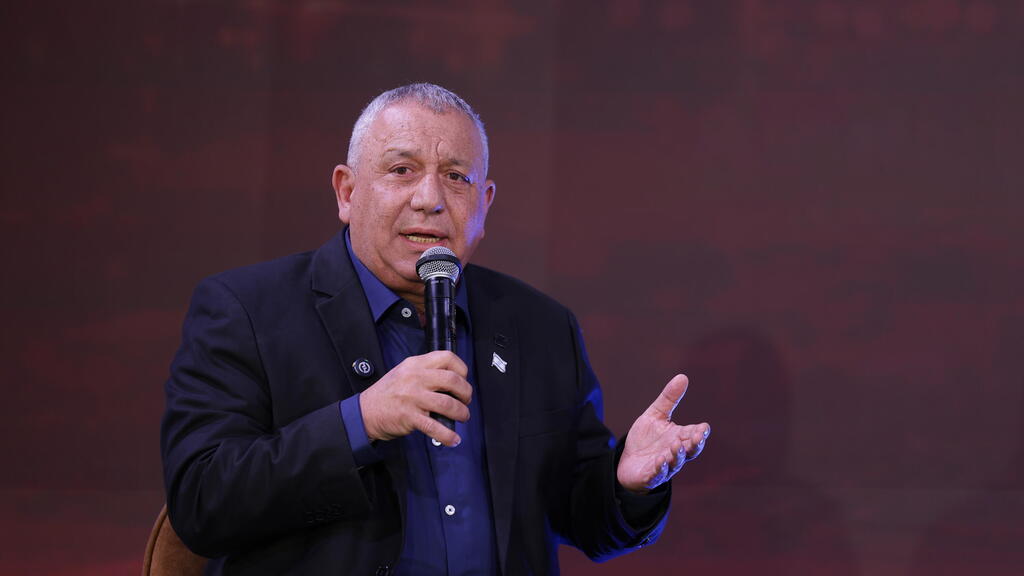
Eisenkot described the proposed meeting as an effort at “synchronization and coordination in order to secure victory through 61 Zionist and statesmanlike votes.”
On Sunday night, Bennett and Lapid announced their joint run at a press conference. Bennett will head the joint party, whose name will be “Yachad,” meaning “Together.”
During his remarks, Bennett appealed directly to Eisenkot.
“Gadi, our door is open to you as well,” he said.
“Soon we will return to a government of ‘we,’ not ‘I,’” Bennett added. “We will lead the people on the path in which a large majority of Israeli citizens believe, the path of the Zionist liberal right: diplomatic and security strength, together with a home for the entire Israeli public. Every Israeli will feel wanted, loved and respected here, even if they did not vote for me. Better days will soon come for all the people of Israel.”
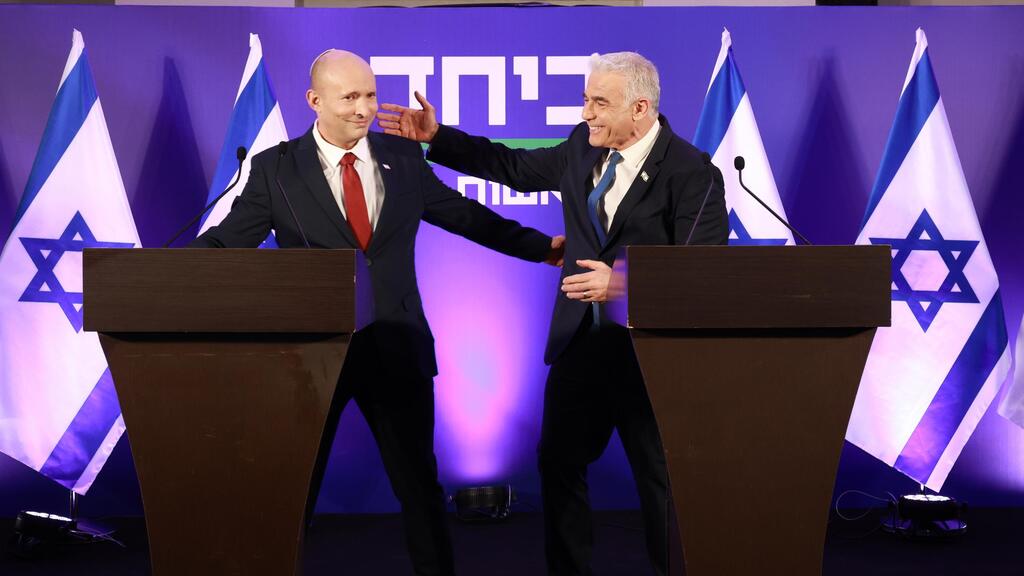
Naftali Bennett and Yair Lapid
(Photo: Dana Kopel)
After Bennett and Lapid’s statement, Eisenkot said Sunday night that he had spoken with both of them.
“They are my partners on this path; they made a decision and I congratulate them,” he said. “The only goal before my eyes, and I told both of them this, is victory for a Zionist, statesmanlike coalition. A coalition of hope in the most critical election the State of Israel has faced since its establishment, and I hope this will be the goal of all the partners.”
“For this victory to happen,” the former IDF chief of staff added, “we need to bring in more votes. That is our only test. Every merger must be examined responsibly, with judgment and at the right time. I am committed to creating worthy and good leadership that will work for all Israeli citizens and bring the change and rehabilitation our country so badly needs.”
Bennett and Lapid signed their agreement on Saturday night. Bennett initially offered Eisenkot the chance to join a party under his leadership, but Eisenkot declined.
In the joint party, Bennett will have a majority of the realistic slots, while “open windows” will be left to allow Eisenkot to join.
The decision followed Bennett’s argument that the upcoming election cannot be won while the bloc remains split, and that the bloc has been hurt by its internal divisions. Bennett and Lapid conducted polls before the dramatic decision to unite forces, and met several times in the week before the agreement was signed.