


Is Iran shifting to a war of attrition against Israel’s civilian rear? A look at the past two days suggests that may be the case. Sirens have been sounding across Israel with growing frequency, and in some cases, early warnings have instructed residents to remain close to protected spaces, only for no siren to follow. Under military censorship rules, the number of missiles in each barrage cannot be specified, but officials say the barrages have been limited, in some cases involving only a handful of missiles.
Security officials say Iran may be adopting an attrition strategy aimed less at mass salvos and more at forcing repeated disruptions across broad areas. Instead of firing large barrages, they say, Tehran may now be launching roughly 10 to 12 missiles a day in multiple separate waves, triggering more alerts over wider territory.
Footage from the Jerusalem Iranian missile hit



The result is that Israelis are repeatedly entering and leaving shelters and safe rooms, struggling to maintain any normal daily routine as the home front is worn down over time.
“They may simply be firing single missiles in very close succession, perhaps to generate more sirens. We will examine that,” one security source said. “Overall, only a small number of missiles are being fired.”
Israeli officials say the pattern points to a dispersal of launches rather than a concentrated effort. At the same time, the military has identified a shift in launch areas inside Iran. In recent days, Iranian forces have begun firing ballistic missiles from central Iran, after intense Israeli strikes in western Iran.
“The fire from that area comes after the IDF degraded most of the regime’s launch capabilities in western Iran through hundreds of strike sorties during the war,” the military said.
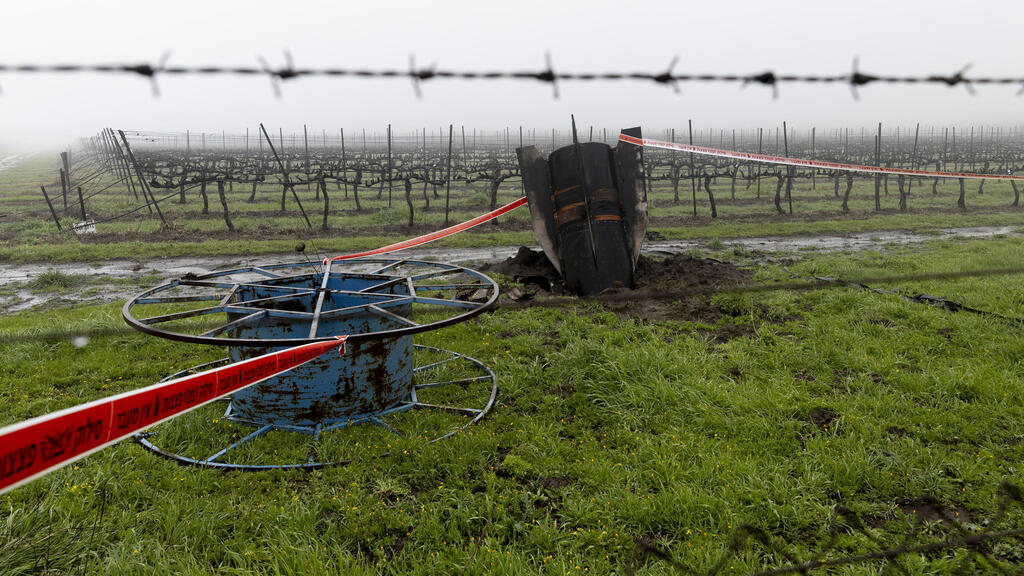
Interception debris in an orchard in the Golan Heights
(Photo: Amir Levy/Getty Images)
A review of the numbers shows that aside from the first two days of the war, when Iran launched about 100 missiles toward Israel, there has been a steady decline in the number of missiles fired in each barrage. The drop to single-digit launches per wave began on March 4 and has continued since.
Security officials describe mounting difficulties within the Iranian regime in carrying out large, coordinated barrages from multiple commands across the country. Orders are not being transmitted in an orderly fashion, they say, and Iran is struggling to move weapons and missiles from place to place.
According to those officials, about 60% of Iran’s surface-to-surface missile capability has been damaged so far, with some assets buried in tunnels whose entrances have been blocked and others destroyed outright.
The number of missiles launched in each barrage is significantly lower than during Operation Rising Lion in June last year. During the 12-day war, about 550 missiles were fired at Israel. So far in the current conflict, officials say, about 340 have been launched. In Israel’s defense establishment, those figures are well below what many expected after 20 days of fighting, when assessments had warned of hundreds of missiles in a single barrage.
Still, despite the lower numbers and the more optimistic assessments inside the security establishment, the nonstop succession of alerts and the urgency surrounding them are being felt directly across Israel’s civilian rear.
“It is beginning to behave like attrition,” the security source said. “Set aside the fact that if they could fire larger barrages, they would. In practice, this is functioning as attrition.”
The greatest concern, officials say, is public complacency. After repeated alerts, some people may become less vigilant, ignore instructions to enter protected areas and expose themselves to greater danger.
“The biggest fear is indifference on the home front, that from one siren to the next people will no longer be as alert as they were at the beginning, will give up on entering protected spaces, and the risk will rise,” the source said. “It is important to continue listening to Home Front Command instructions.”
Another factor widening the impact is the increased use of missiles with separating warheads, which have become a central feature of the current campaign. These missiles carry a warhead packed with dozens of smaller bomblets, each weighing between roughly 3 and 8 kilograms. The higher the missile breaks apart, the wider the area over which the bomblets are dispersed, and the more people are drawn into the warning zone.
Iranian cluster missile
In several cases, officials said, such missiles carried around 80 small submunitions, spreading the threat over an even larger radius.
For civilians who follow instructions and remain in protected spaces, the direct danger from these weapons may be limited. But officials say the broader effect is again one of exhaustion, increasing the number of people forced into shelters and repeatedly interrupting daily life.
That has been compounded by changes in coordination between fronts. At the start of the campaign, launches from Lebanon and Iran were not synchronised. In recent days, however, some barrages have come in close succession or as combined attacks.
The timetable for the war’s end remains unclear. Israeli military officials describe the operational approach in Iran as methodical and prolonged, based on the understanding that the regime has entrenched itself over decades and cannot be dismantled through a single blow. Instead, they say, the campaign requires gradual, deepening action.
The cumulative effect of Israeli strikes, according to those assessments, is increasingly evident in Iran’s difficulty transmitting orders and in slower decision-making processes, leaving the regime in a state of growing functional instability.
As for Hezbollah, the IDF says it is continuing operations against the terror group across multiple areas in Lebanon, including the south, Beirut’s Dahieh district, Tyre, Nabatieh and areas north of the Litani River, striking military, economic and logistical infrastructure.
IDF forces operate in Lebanon
(Video: IDF)
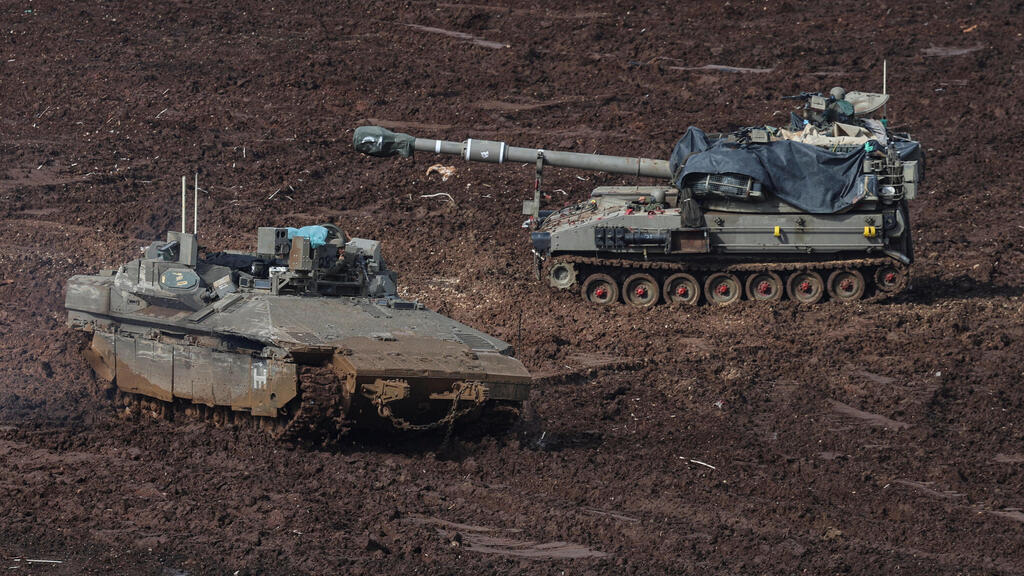
IDF forces near the Lebanon border
(Photo: Tyrone Siu/ Reuters)
Among the targets were fuel stations owned by the organization, which Israeli officials say generate significant revenue for the terrorist group and were struck as part of an effort to damage its financing.
At the same time, officials say internal pressure on Hezbollah inside Lebanon is rising, alongside growing concern over the erosion of the Iranian axis and developments in other arenas, including Syria.
The IDF is currently operating several divisions of ground forces along the border, carrying out both defensive and offensive missions. At this stage, Israeli officials estimate that about 600 terrorists have been killed in IDF operations in Lebanon since the beginning of the campaign. Additional forces are expected to join in the coming week as part of an effort to deepen pressure on the enemy.
The military is also continuing operations in southern Syria, including targeted strikes against terrorist cells in an effort to thwart threats and preserve the demilitarized zone. The activity is being carried out consistently as part of the broader campaign against the Iranian axis.
Overnight, the IDF also struck a headquarters and weapons at military camps belonging to the regime of President Ahmad al-Sharaa in southern Syria, after Druze civilians were attacked in the Sweida area. The military said it “will not allow harm to Druze in Syria and will continue to act for their protection.” Defense Minister Israel Katz later said Israel “will not allow anyone to harm the Druze.”