

A little more than a day after the Russian-Chinese proposal to delay sanctions failed at the U.N. Security Council, at 3 a.m. Sunday renewed U.N. sanctions on Iran came into force under the “snapback” mechanism. This followed accusations that the Islamic Republic violated the 2015 nuclear deal and amid the collapse of nuclear talks with the United States.
With the Security Council’s green light, the heavy sanctions returned 10 years after they were lifted. They include an arms embargo; a ban on uranium enrichment and reprocessing; a ban on launching ballistic missiles capable of carrying nuclear warheads or engaging in related activities, and on transferring ballistic missile technology; the freezing of Iranian assets worldwide and travel bans on Iranian officials and companies; and authorization for countries to search Iranian aircraft and ships to ensure they are not carrying prohibited goods.
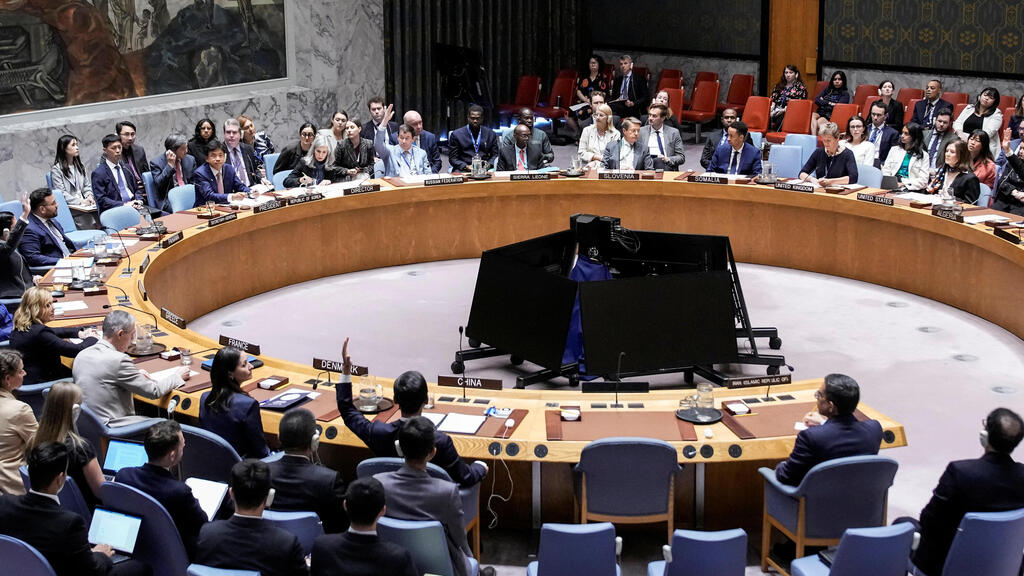
However, in both Europe and the United States officials stressed as the sanctions took effect that this does not mean diplomacy is over. U.S. Secretary of State Marco Rubio called on Tehran “to agree to direct talks, in good faith,” urging all countries “to implement the sanctions immediately to put pressure on Iran.”
The foreign ministers of Britain, France and Germany issued a joint statement saying they would continue “to seek a new diplomatic solution that will ensure Iran never obtains a nuclear weapon.” In the meantime, they urged Tehran “to refrain from any step that will increase escalation.”
According to the International Atomic Energy Agency, Iran is the only non-nuclear state that has enriched uranium to a high level of 60%, near the technical threshold of 90% required for a nuclear bomb. Tehran denies such military ambitions but insists on its right to civilian nuclear energy, primarily for electricity generation.
The 2015 nuclear deal between Iran and the world powers set the enrichment limit at 3.67%. According to the IAEA, Iran currently has about 440 kilograms of uranium enriched to 60%, a stockpile that, if enriched to 90%, European experts say could provide material for 8 to 10 nuclear bombs.
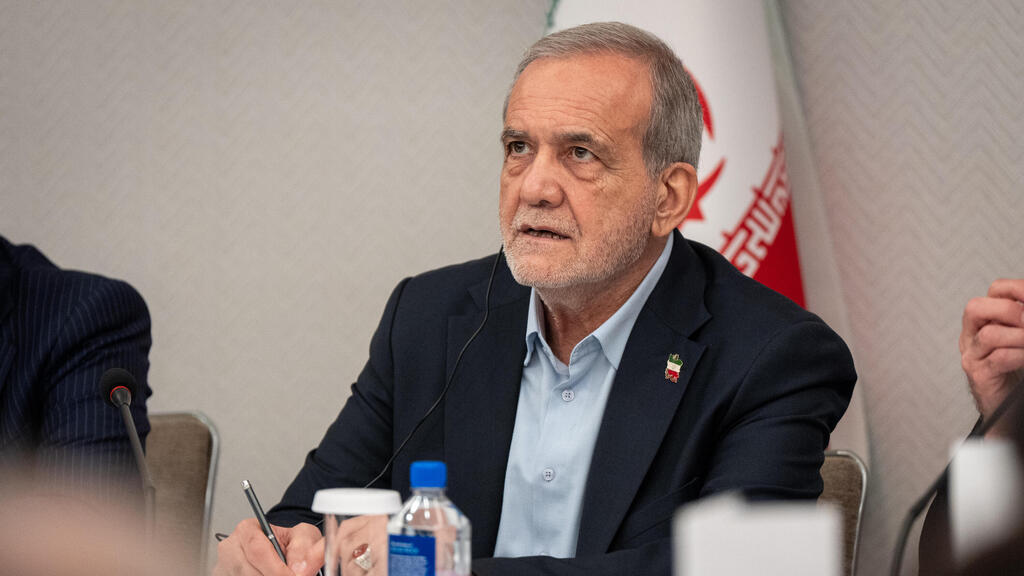
Iranian President Masoud Pezeshkian watches the proceedings in NY
(Photo: Angelina Katsanis/AP)
Iranian President Masoud Pezeshkian said Saturday that the United States had demanded Iran hand over all its enriched uranium in exchange for a three-month suspension of sanctions, calling the request “unacceptable.” He told state television: “They want us to give up all our enriched uranium. In a few months they will have a new demand.”
Britain, France and Germany — the so-called E3 — triggered the snapback mechanism at the end of August, allowing the renewal of sanctions lifted under the 2015 deal within 30 days. Even before the official return of sanctions, Tehran recalled its ambassadors to the three countries “for consultations.”
High-level meetings took place last week on the sidelines of the U.N. General Assembly in New York in an attempt to find a diplomatic solution. But the E3 concluded that Tehran had not made “concrete gestures” to meet their three conditions: renewing negotiations with the United States; granting IAEA inspectors access to sensitive nuclear sites at Natanz, Fordow and Isfahan; and implementing a process to secure the enriched uranium stockpile.
4 countries supported delay, 9 opposed: ‘Serious consequences’
On Friday, only four Security Council members supported the Russian-Chinese initiative to delay the reimposition of sanctions for six months. Nine countries voted against and two abstained. Russia’s U.N. envoy warned that the renewed sanctions “could have serious consequences and may lead to escalation in the Middle East. Iran did everything to appease the Europeans and the United States, but Western powers refused to compromise.” China’s envoy said that “Iran repeatedly sent positive messages” and added that “a delay would keep the diplomatic track open.”
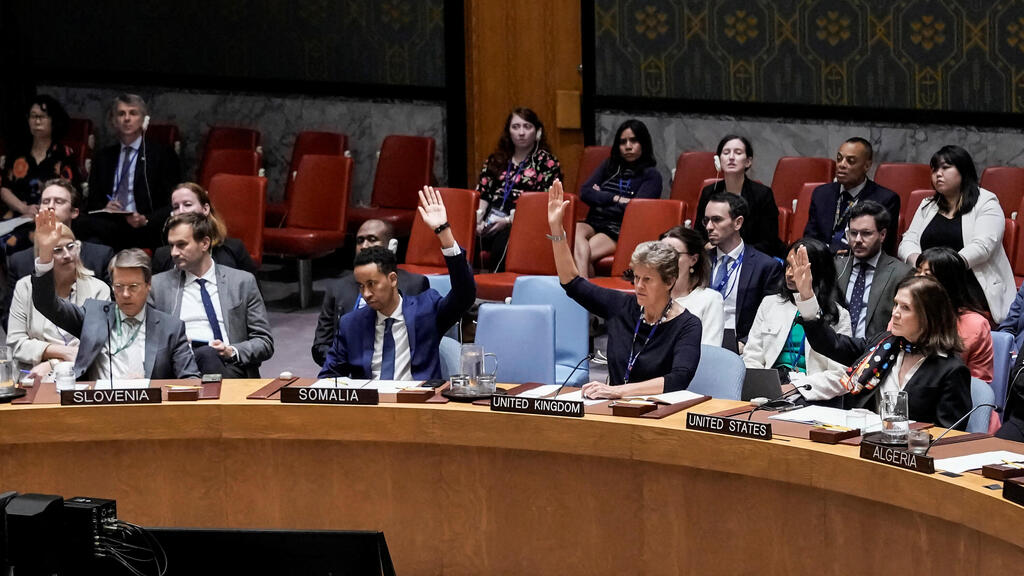
Vote at the UN Security Council meeting
(Photo: Eduardo Munoz/Reuters)
By contrast, France’s U.N. ambassador said during the debate that “European states tried several times to reach a solution with Iran — and Tehran preferred to reject everything. The return of sanctions does not mean the end of diplomacy with Iran.” U.S. officials also said the move does not rule out the possibility of lifting sanctions later through a diplomatic process.
After the vote, Pezeshkian said: “We are ready to be transparent about our highly enriched uranium. We have no intention of leaving the Nuclear Non-Proliferation Treaty.” Iranian Foreign Minister Abbas Araghchi criticized European countries. “We submitted several proposals to prevent a new crisis, but France, Germany and Britain chose confrontation instead of dialogue,” he asserted.
This is the snapback mechanism that restored sanctions on Iran
France, Britain and Germany, together with China, Russia and the United States, were parties to the 2015 nuclear agreement with Iran, under which nearly all international sanctions on the country were lifted in exchange for significant restrictions on its nuclear program. But in 2018, then-President Donald Trump — encouraged by the Israeli government under Prime Minister Benjamin Netanyahu — announced that Washington was withdrawing from the deal, arguing that, while lifting sanctions had slowed Iran’s nuclear program, it had also enabled Tehran to expand its terrorist activity in other ways.
Following the U.S. withdrawal and the full reimposition of American sanctions — even as the other countries remained committed to the agreement — Tehran began rolling back more and more of its commitments to the deal. It argued that European states had failed to compensate it for the U.S. pullout and that the agreement was no longer of use. Earlier this year, before the 12-day war with Israel and the US, Iran had already amassed more than 400 kilograms of uranium enriched to 60%, just short of the 90% level required to develop a nuclear weapon.
US President Trump at the UN General Assembly: 'American bombers dropped heavy bombs on Iran and destroyed its nuclear facilities'
(Video: UN)


Against this backdrop, and after seven years of hesitation, France, Britain and Germany announced they would trigger the return of all pre-deal sanctions on Iran if no new nuclear arrangement was reached by the end of August. The 2015 nuclear deal was anchored in a U.N. Security Council resolution that included the snapback mechanism, which defines how U.N. sanctions on Iran would be reinstated if necessary.
According to the snapback provision, if the countries party to the deal determine that Iran is in significant violation, they can activate the mechanism and refer the matter to the Security Council. Once triggered, the council must within 30 days adopt a resolution extending the sanctions relief granted to Iran in 2015. If it does not adopt such a resolution, all previous U.N. sanctions on Tehran automatically return to force.