

Nearly five days after a failed attempt to execute her with two lethal injections, convicted murderer Christa Pike remained unconscious Monday in a Tennessee hospital, with her lawyers saying it could be several more days before her fate becomes clear.
Little information has been released about Pike’s condition since the failed execution. She is known to be hospitalized under guard while doctors try to clear the massive dose of the lethal drug pentobarbital from her body.
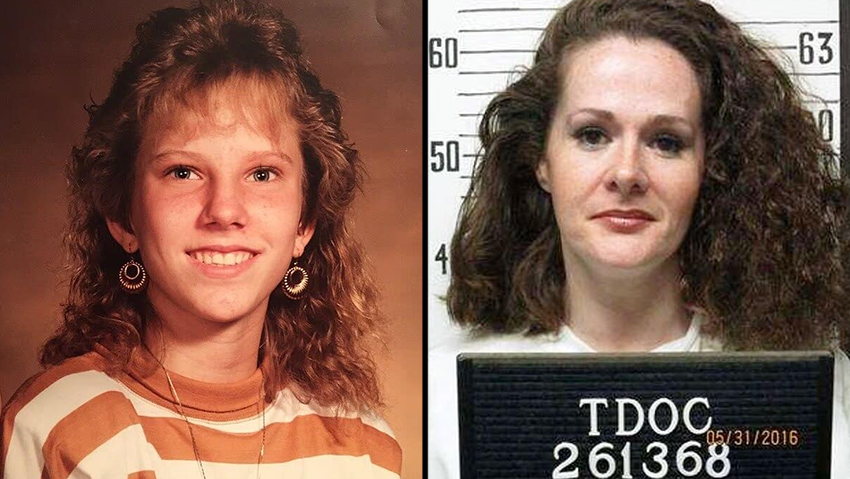
In an interview with CNN on Sunday, Pike’s attorney Stephen Ferrell was asked whether she had regained consciousness at any point since the execution attempt. “Not to my knowledge,” he said.
Ferrell said that before the execution, Pike had granted medical power of attorney to another person, who is now protecting her privacy. “I’m not sure exactly what that person has been told,” he said.
Speaking about what Pike experienced before she was rushed to the hospital, Ferrell said: “We don’t know right now, and we may never know, what kind of torture she went through during this process, where her consciousness was, what physical pain she experienced and what psychological torture she endured.”
Pike, whose case has received extensive international media coverage in recent days, was just 18 when she murdered her classmate Colleen Slemmer on Jan. 12, 1995.
Slemmer was studying with Pike and Pike’s boyfriend, Tadaryl Shipp, in a vocational training program in Knoxville. Prosecutors said Pike feared Slemmer was interested in Shipp and, in a fit of jealousy and rage, lured her to an isolated area on the University of Tennessee campus, where Pike and Shipp tortured and brutally murdered her.
Pike slashed Slemmer more than 100 times with a box cutter and struck her with a large piece of asphalt. Shipp carved a pentagram into her body, a star-like symbol associated with Satanism.
The crime scene caused widespread alarm at the time amid the “satanic panic” of the 1980s and 1990s in the United States, when rumors circulated about supposed satanic cults abducting people, including children, and subjecting them to ritual abuse.

Pike sobs after being sentenced to death in 1996
Pike’s 1996 death sentence made her one of the youngest women ever sent to death row in the United States.
Her attorneys and supporters later argued that capital punishment was excessive given her very young age when she committed the crime and untreated mental illness, following a childhood marked by neglect and severe sexual abuse, including rapes at ages 11 and 17. She was later diagnosed with bipolar disorder and post-traumatic stress disorder.
Ferrell has stressed that during the sentencing phase of Pike’s trial, her defense lawyers did not present jurors with critical information about her background or argue that her young age should be taken into account.
He has also pointed to advances in understanding adolescent brain development and argued that Pike’s death sentence was unusually severe. Pike’s boyfriend, Shipp, who was 17 at the time of the murder, was sentenced to life in prison with the possibility of parole because of his age.
Prison chief resigns, Trump asks: ‘How does that happen?’
Last week, Tennessee Gov. Bill Lee rejected Pike’s clemency request, while the Supreme Court also declined to stop the execution.
Just an hour before the originally scheduled execution time on Wednesday, another court unexpectedly issued an order temporarily blocking the sentence while it considered several of Pike’s claims. Hours later, the execution was allowed to proceed.
Pike was set to become the first woman executed in Tennessee in more than 200 years. The procedure began Wednesday evening local time. The execution team first administered one dose of pentobarbital intended to kill her.
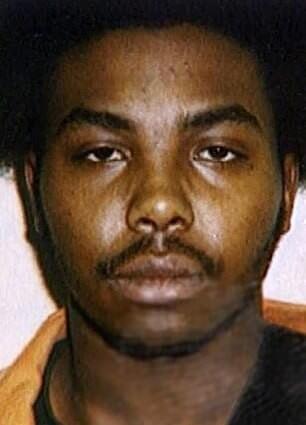
Tadaryl Shipp
When the drug failed to produce the expected result, the team administered a second dose, as required by the protocol. Pike still survived. Witnesses who attended the execution, as well as her attorneys, said that during the procedure she complained: “I feel like my arm is going to explode.” At another point, she asked: “Is it supposed to happen like this?”
Witnesses said she could be heard crying, whimpering and breathing heavily throughout the procedure. Even when they were removed from the viewing room more than two hours after entering, they said they could still hear Pike snoring loudly behind the closed curtains.
Pike was taken to a hospital unconscious, with her arms swollen and blistered from the injected drug, but still alive. She was intubated and placed on a ventilator.
Following the failed execution, Lee announced that executions in Tennessee would be suspended through the end of the year and ordered an independent investigation into the state’s capital punishment system, led by former federal prosecutor Ed Stanton.
Tennessee Correction Commissioner Frank Strada announced his resignation Saturday following the failure.
The botched execution became a national controversy and also drew a reaction from U.S. President Donald Trump.
“How does that happen?” Trump said the following day. “It should be easy to do. It shouldn’t be particularly difficult.”
If Christa wakes up: ‘She may not be legally competent’
It remains unclear what will happen to Pike’s death sentence. Her attorneys have already asked Lee to commute her sentence to life in prison, but Ferrell said Tennessee has not yet announced whether it intends to try to execute Pike again.
“If she recovers, she may not recover fully, and there may be questions about her legal competency,” he said.
Pike’s lawyers believe problems with the intravenous lines may have caused the pentobarbital to flow into her body tissue rather than properly entering her bloodstream.
“Apparently, at no point did anyone on the execution team realize that the IV lines were not properly placed or that the veins had blown, and that the pentobarbital was entering, in whole or in part, into Ms. Pike’s tissue,” her attorneys wrote in a court filing.
The filing noted that Pike had previously argued that executing her would constitute cruel and unusual punishment because of her particular physical conditions, including thrombocytosis, post-traumatic stress disorder and small veins.

Tennessee Gov. Bill Lee
(Photo: AP)
Meanwhile, as they prepare for future legal proceedings, Pike’s attorneys asked a court over the weekend to order Tennessee correction officials to preserve all written records, correspondence, photographs and video footage from the attempted execution.
Officials from the Tennessee Department of Correction and the state attorney general’s office have remained almost completely silent since Pike was taken to the hospital.
Like many other states that use capital punishment, Tennessee maintains strict secrecy around many details of its executions, from the identities of those involved in the procedure to how the drugs are manufactured and obtained and what quality-control testing they undergo.
“The state of Tennessee needs to start telling its citizens exactly what it is doing, so that through the democratic process the people of Tennessee can decide whether this is what they want done in their name,” Ferrell told CNN.