


The IDF’s Home Front Command said Sunday it will narrow the geographic scope of early warning alerts for missiles launched from Iran, two weeks into the war, in an effort to reduce notifications in areas not at risk from a strike or interceptor debris.
Until now, early warning areas were divided into four broad regions: north, south, central and Jerusalem. Under the new system, the country will be divided into 21 separate alert zones to more precisely target warnings.
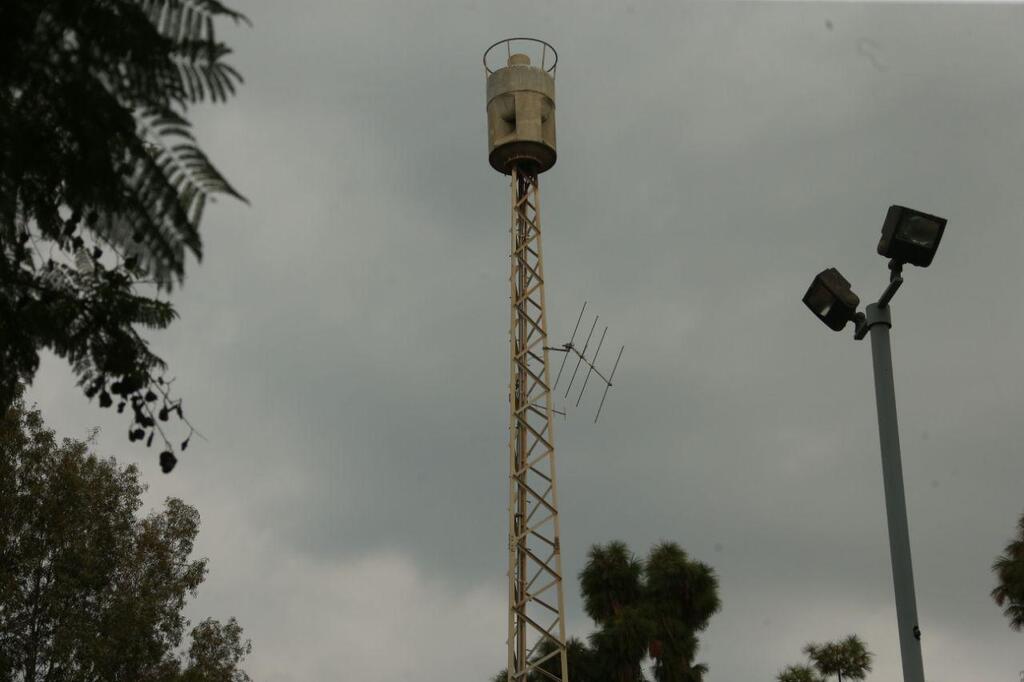
Air raid sirens
(Photo: Moti Kimchi)
The Home Front Command said the change followed a lengthy professional review and technological adjustments aimed at improving accuracy.
“The technology is based on operational data and experience and will significantly reduce false alerts,” the Home Front Command said in a statement.
The system factors in projected impact areas and the possible fall of interceptor debris when determining where to send warnings. Officials declined to publish the full list of the new alert zones.
Authorities said the upgrade is intended to prevent residents from receiving early warnings that are not relevant to their location while allowing emergency routines to continue. Protection guidelines for civilians remain unchanged.
Residents who receive an early notification are advised to move closer to the most appropriate protected space in their area. When a siren sounds, people should enter a protected space and remain there until an official all-clear is issued.
The alert system includes sirens, the Home Front Command mobile app and cell broadcast messages sent through mobile networks. Because cell broadcast alerts are transmitted through wide regional cellular antennas rather than specific zones, officials said a siren may sometimes sound without a prior notification, or vice versa. In cases of uncertainty, residents are advised to enter a protected space.
Separately, Defense Minister Israel Katz approved a gradual reopening of schools starting Monday in several areas classified as “yellow,” including the Arava, the southern and western Negev, western Lachish, the Dead Sea region, the West Bank, the Jordan Valley, the Beit Shean Valley and communities near the Gaza border.
Other areas remain classified as “red,” where distance learning will continue.
Local authorities in areas designated “yellow” may still decide, in coordination with the Education Ministry, to keep schools closed or limit educational activities. Municipalities may also request approval to operate educational frameworks beyond the regional plan, subject to review with the Home Front Command and the Education Ministry.
Where educational activity is permitted under Home Front Command guidelines, students may attend school, though parents may decide whether to send their children based on personal circumstances. Local authorities and schools are expected to update families on how frameworks will operate in their communities.