

U.S. intelligence officials have raised concerns that a proposed $24 billion sale of F-35 fighter jets to Saudi Arabia could expose some of the aircraft’s most sensitive technology to Chinese espionage, The New York Times reported, citing American officials familiar with internal assessments.
The planned package includes 48 F-35s and a spare engine. President Donald Trump announced the sale in November 2025, a day before hosting Saudi Crown Prince Mohammed bin Salman at the White House. The deal has since moved forward, with the State Department sending it to two congressional committees in June for informal approval.
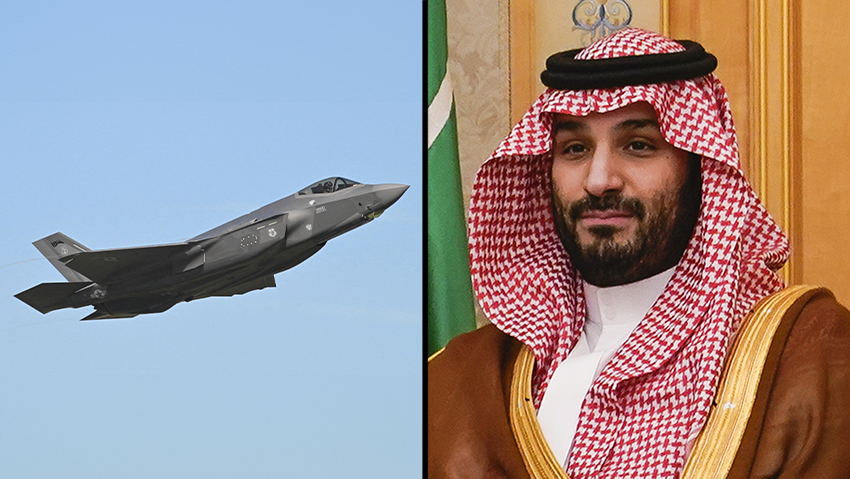
(Photo: Nathan Howard/AP, Reuters/Jana Rodenbusch)
According to the Times, intelligence analysts have warned that China could potentially gain access to F-35 technology through espionage in Saudi Arabia or through the kingdom’s expanding military and security relationship with Beijing.
A recent Defense Intelligence Agency report examined Chinese military access to Saudi bases and the kingdom’s use of Chinese telecommunications equipment. It also questioned whether U.S. and Saudi officials could adequately secure sites housing sensitive F-35 systems.
Pentagon officials are particularly concerned about protecting the jet’s advanced radar and surveillance technology. The report also raised questions over whether Riyadh would agree to limit contact between Chinese military or intelligence personnel and facilities connected to the aircraft.
Another concern is the presence of equipment made by Chinese telecommunications giants Huawei and ZTE. U.S. intelligence officials have asked whether Saudi Arabia would be willing to remove such technology from communications infrastructure and defense installations tied to the F-35 program.
The warnings echo concerns raised during Trump’s first term, when Washington agreed to sell F-35s to the United Arab Emirates after Abu Dhabi normalized relations with Israel in 2020. That deal was later reviewed as the UAE strengthened military, intelligence and technology ties with China, and the sales process was ultimately halted.
Saudi Arabia has long been one of the largest buyers of U.S. weapons, but it also maintains significant defense ties with Beijing. The kingdom purchases ballistic missiles from China, while the Chinese military has helped Saudi Arabia develop missile production facilities and improve its missile capabilities, according to the Times.
The proposed F-35 sale has also raised concerns in Israel, the only country in the Middle East that currently operates the aircraft. U.S. law requires Washington to preserve Israel’s qualitative military edge in the region when approving major weapons sales to neighboring states.
Previous U.S. administrations conducted lengthy classified reviews to determine whether arms sales could undermine that advantage. Some Israeli officials have expressed reservations about the Saudi deal, as they did over the proposed sale to the UAE.
The Saudi military, meanwhile, has faced growing pressure to improve its capabilities. Crown Prince Mohammed has sought for years to acquire F-35s, and the kingdom’s armed forces have struggled to defend against attacks from Iran during the current U.S.-Israeli war with Tehran, the Times reported. Fighting between Saudi Arabia and the Iran-backed Houthis has also resumed.
Congress could still complicate the deal. Lawmakers and aides have been pressing the administration over the intelligence warnings, according to the report.
The sale also comes as Trump has agreed to help Saudi Arabia develop a civilian nuclear program, another initiative that has prompted security concerns because the crown prince has said Riyadh would seek nuclear weapons if Iran obtained them.